We have done the LA to Las Vegas drive with kids enough times that I have a system. Not a Pinterest-perfect system. A survival system. The kind assembled from experience and occasional desperation. It was refined over multiple trips with two daughters who have very different tolerances for boredom and very similar tolerances for requesting snacks they do not actually need.
The drive is about four and a half hours without traffic. That means it is almost always more than four and a half hours. We leave at 7:30 AM because anything later and you are stuck behind everyone else who also decided to go to Vegas that weekend. We also leave early because children on a road trip are more manageable before noon than after. This is not a theory. This is empirical data from nursing twelve-hour shifts and parenting simultaneously.
The Route to Vegas, and Why the Timing Matters
The whole trip is essentially one road: Interstate 15, northeast out of the LA basin, up through the Cajon Pass. From there it is across the high desert past Victorville and Barstow, then the long empty run to Baker and on into Nevada, the final stretch before Vegas. There are really only a couple of decision points on the whole drive, which is a blessing with kids in the car. You are not navigating; you are just enduring.
The timing is the single biggest lever you have. Friday afternoons and Sunday-evening returns are the worst. That is when the whole of Southern California seems to funnel onto the 15 at once, and a four-and-a-half-hour drive can balloon past seven. A weekday departure or an early-morning weekend start matters. It is the difference between a manageable trip and a parking lot in the desert. We leave early not because we are virtuous but because we are strategic.
The First Hour: Do Not Blow Your Ammunition
The most common mistake on a road trip with kids is deploying your best entertainment in the first hour. The tablets come out immediately, the headphones go on, everyone is happy. Then at hour two, the battery is dead or someone is bored with the movie and you have nothing left. You are in Barstow. There is nothing in Barstow.
Our rule: no screens for the first forty-five minutes. This sounds cruel but it works. The girls look out the window, we talk. We play the license plate game or I Spy, or we just listen to the playlist. By the time we are past the valley and heading into the desert on the way to Vegas, everyone is mentally warmed up. The tablets feel like a genuine reward rather than the default.
The Baker Stop Is Non-Negotiable
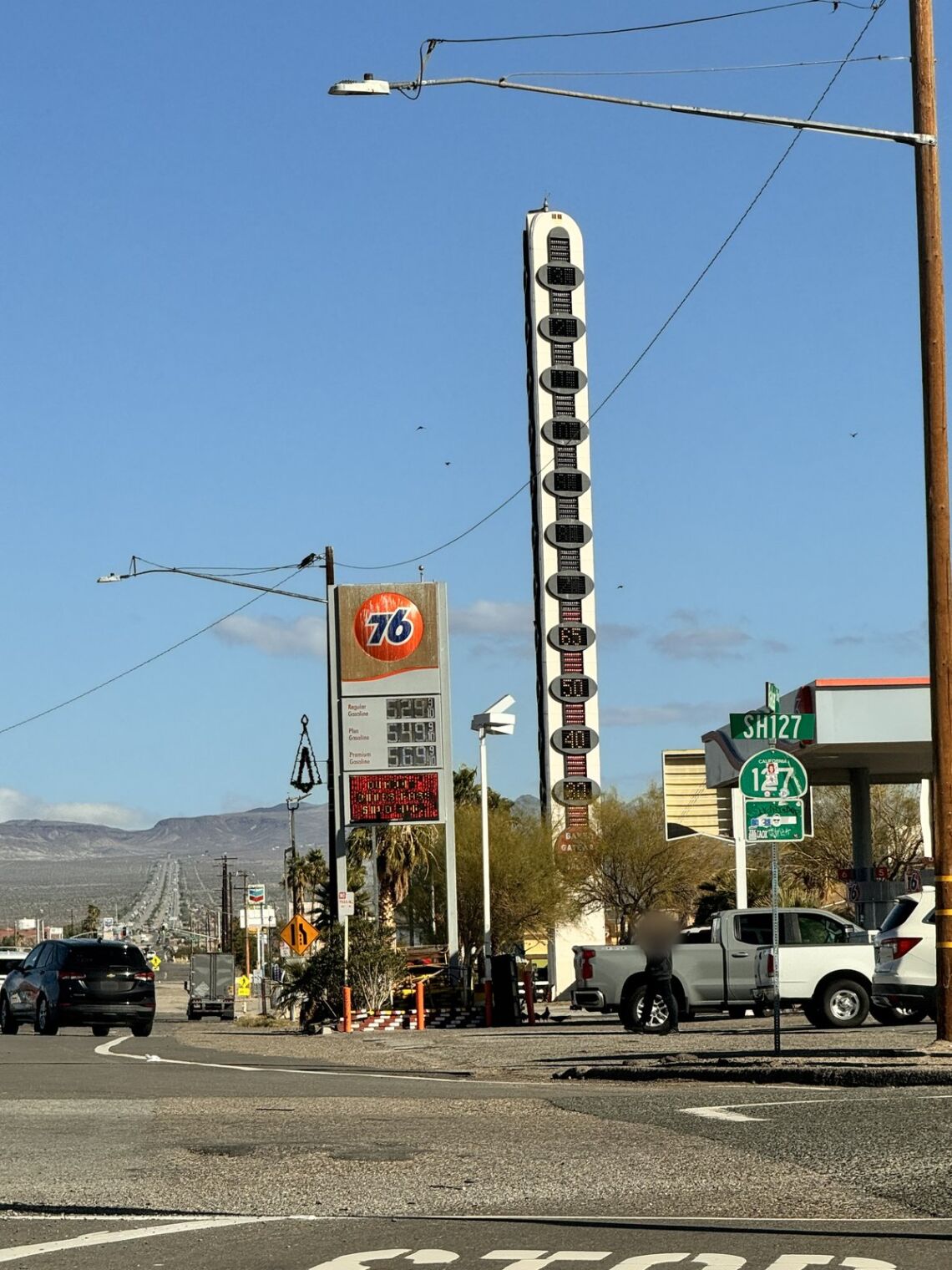
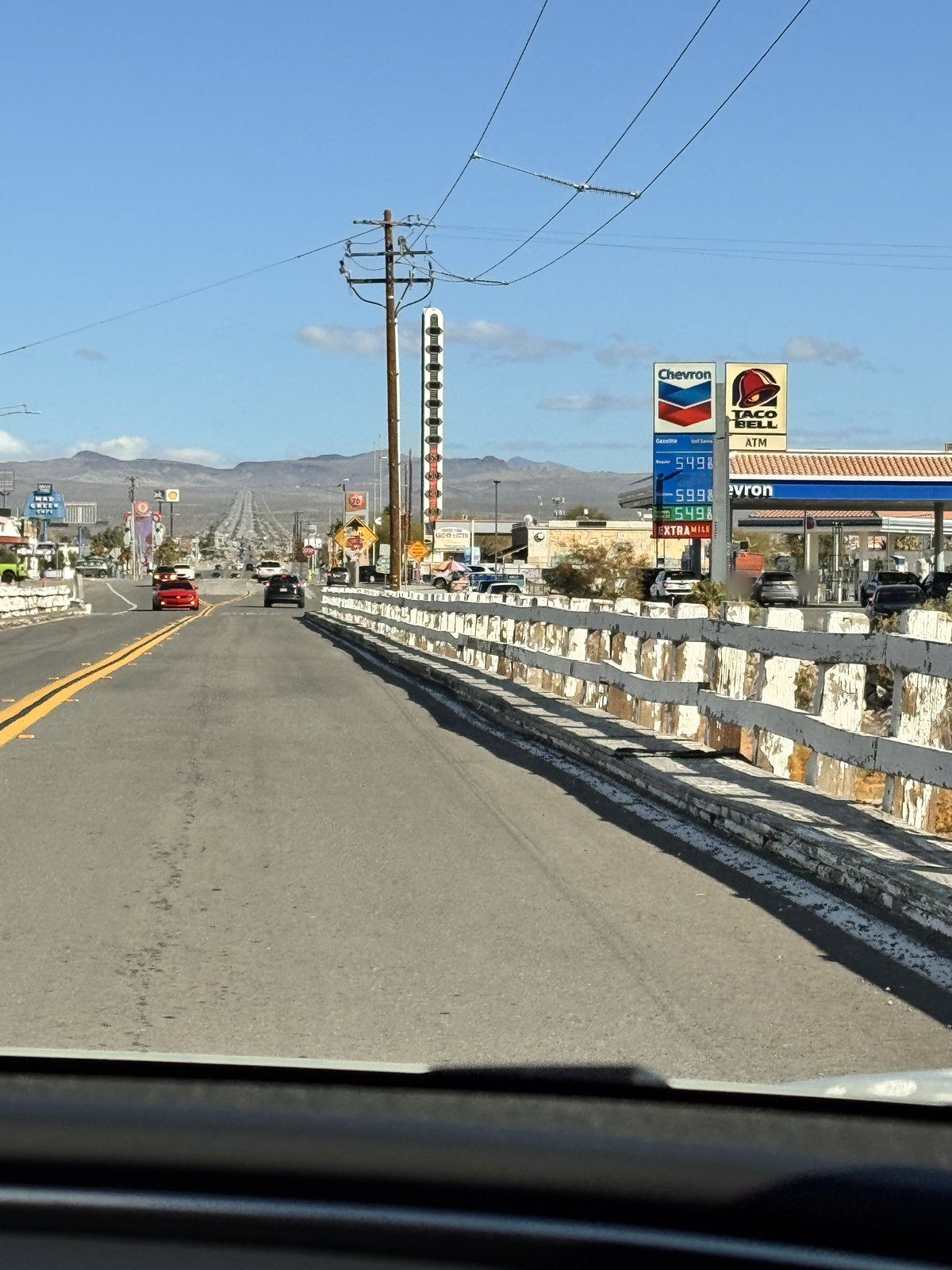
About halfway through, we stop in Baker. The Mad Greek is the place — shakes, gyros, food that is aggressively average. Somehow it is perfect in the context of desert highway travel. More importantly, Baker has the World’s Tallest Thermometer, which at the time of writing is registering something obscene. Our daughters have found this genuinely fascinating every single time we have stopped there. Some roadside attractions do not age. The thermometer is one of them.
For the record, the thermometer is exactly 134 feet tall, a number chosen on purpose. It commemorates the 134-degree temperature once recorded in nearby Death Valley, one of the highest ever measured on Earth. It has stood along the I-15 in Baker since 1992. Telling the girls the story behind it — that someone built a fourteen-story sign in the middle of the desert just to brag about how hot it gets — buys me a solid ten minutes of amazed questions. Facts are free entertainment on a road trip; use them.
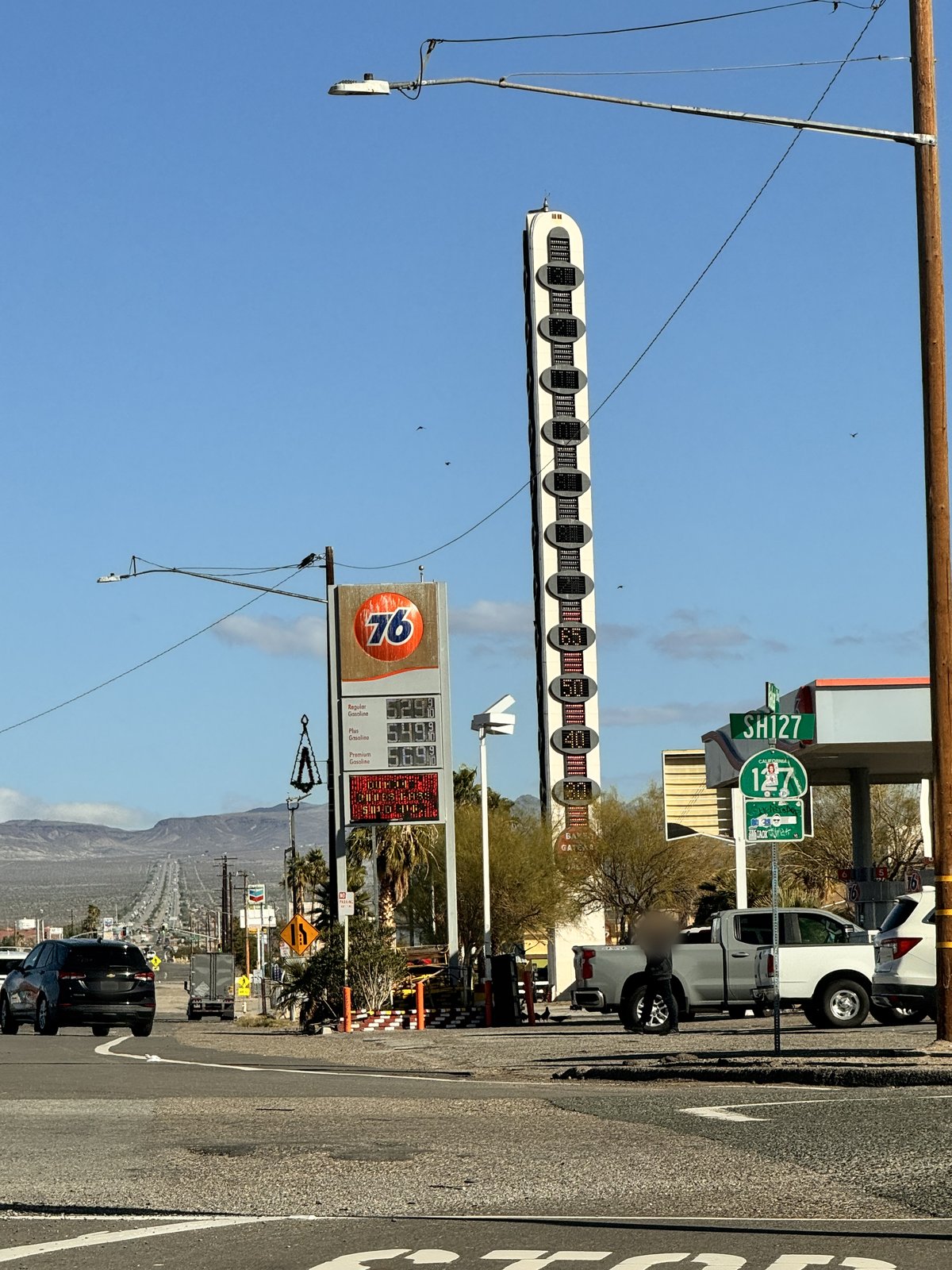
The stop also serves a practical purpose. Everyone gets out of the car, stretches, uses the bathroom, runs around in the parking lot briefly, and resets. After Baker, the final stretch to Vegas feels manageable because everyone has moved their body. I learned this in nursing. Patients who mobilize regularly recover faster, and the same principle, scaled down, keeps a car full of children from unraveling in the last hour.
The Vegas Road Trip Snack Strategy
For the drive to Vegas, I pack snacks in a small cooler. It lives in the back seat between the girls. Each snack is portioned before we leave — individual bags or containers. That way nobody is reaching into a family-sized bag and triggering a conflict over who got more. I use the same logic I use when dividing medications: precise, pre-measured, and not open to negotiation.
What travels well: cut fruit in a container, string cheese, crackers with individual nut butter packets, popcorn in pre-portioned bags. Something sweet that is small enough to feel like a treat without causing a sugar spiral works too. What does not travel well: anything requiring a utensil, anything with a strong smell. Also skip anything that will melt in the desert heat between the cooler lid and the child’s mouth.
One more thing the desert teaches you fast: water beats juice. The Mojave is dry and hot, the car is climate-controlled in a way that quietly dehydrates everyone. And a thirsty child is a cranky child. I bring more water than seems reasonable and ration the sugary drinks. A sugar spike at hour three in a confined space is its own special kind of regret.
The New Toy Trick
This one came from a colleague at the hospital who has four kids. She has the calm demeanor of someone who has truly seen everything. Before a long trip, buy two or three small inexpensive things — a small activity book, a pack of stickers, a tiny puzzle. Just do not tell the kids. About two hours in, when everyone is restless and the conversation topics have run dry, it is time. Produce the items one at a time. The novelty of an object they did not know existed is disproportionately effective. I do not know the psychology behind this, but I have tested it extensively. It works every time on every LA to Vegas drive.
The Vegas Bingo Card
For the last forty-five minutes, once you can start seeing the edge of Vegas in the distance, it is time for a game. We play Vegas Bingo. I print simple cards at home with things to spot. Look for a neon sign, a limousine, a casino name, someone in a sequin outfit, a fountain. The girls go slightly feral trying to be the first to spot everything. It turns the most boring part of the drive — the suburban sprawl leading into the Strip — into a competition. We roll into whatever hotel we have booked with everyone in a genuinely good mood.
Prep the Car Before You Prep the Kids
The trip that goes sideways is usually the one where the car was not ready. It is rarely the one where the kids melted down. Before we head into the desert toward Vegas I do a quick check the night before. The stretch past Baker is genuinely remote, and you do not want to discover a problem out there. Here is my short list:
- Full tank of gas before you leave. Gas out in the desert is pricier and stations are sparse between towns.
- Tires checked and topped up; desert heat is hard on underinflated tires.
- A charged power bank plus car chargers for every device, because a dead tablet at hour three is a crisis.
- Extra water in the trunk, beyond what is in the snack cooler, in case you get stuck.
- A small trash bag hung on a headrest — the single most underrated road-trip item.
- Sunshades for the back windows; the afternoon sun in the desert is brutal on little faces.
Getting Around the Strip Once You Arrive
Driving gets you to Vegas. It does not make getting around Vegas easy. After a week on the Strip with the girls, here is how each option actually worked for us.
Walking: Closer on the Map Than in Real Life
From the Venetian, Caesars Palace looks like it is right next door. It is not. Between escalators, pedestrian bridges, and casino floors, a “five-minute walk” regularly turned into forty minutes, through crowds and cigarette smoke that are not much fun with an 8-year-old. Short hops are fine. Anything farther needs wheels.
Your Own Car: Slow Valet and Paid Parking
Having our car felt like freedom until we needed it. Calling it up from the Venetian valet took a long time at busy hours, and most Strip resorts now charge for parking. We mostly left the car parked and used it for the drive home.
Uber and Lyft: Fine, Once You Find the Pickup Zone
Rideshare cars cannot pick up at the front entrance of most Strip hotels. You follow signs to a designated pickup area, usually near the self-parking garage, which can be a long walk with tired kids. The one time Uber clearly won was at the Shark Reef Aquarium at Mandalay Bay. The aquarium is so deep inside the hotel that the rideshare lounge was closer than the front door, the wait was about five minutes, and the area was well organized.
Taxis: Our Pick With Kids
This surprised me, because at home I am an Uber person. But Vegas taxis line up right outside the hotel lobby, and an attendant waves you into the next cab. No hike to a garage, no hunting for a pickup zone. The cabs were older than the Ubers, but once we added Uber’s fees and the surge pricing after shows let out, the fares were close to the same.
Our verdict: walk short distances, keep your own car parked, use Uber when the rideshare lounge is closer than the lobby, and take a taxi from the front door the rest of the time.
Frequently Asked Questions
How long does the LA to Vegas drive really take with kids?
Plan for the four-and-a-half-hour base time plus at least a thirty-to-forty-minute stop in Baker. That puts it around five and a half hours door to door to Vegas on a good day. On a bad-traffic weekend it can be significantly longer, which is exactly why we leave early.
Is there anywhere good to stop besides Baker?
Barstow has the bigger cluster of chain restaurants and gas if you need it earlier. But Baker is the classic midpoint on the way to Vegas, and the thermometer makes it worth holding out for. We treat Baker as our one real stop and keep everything else quick.
What is the best time to leave?
Early morning, every time. A 7:30 AM departure gets you ahead of the crowd. It also gets the kids through the hardest hours while they are still fresh. Avoid Friday afternoons and Sunday evenings heading into Vegas if you possibly can.
That is the whole system. It is not glamorous. It is a four-and-a-half-hour project management exercise with snacks and occasional bribery. And, yes, a 134-foot thermometer in the middle of the desert. But we arrive happy, the kids arrive excited. And Brad arrives without having been asked “are we there yet” more than six or seven times. Which, for this drive, is a resounding victory. Once we’re actually in Vegas, the reward is easy. Check out our roundup of the best luxury restaurants in Vegas kids will love.