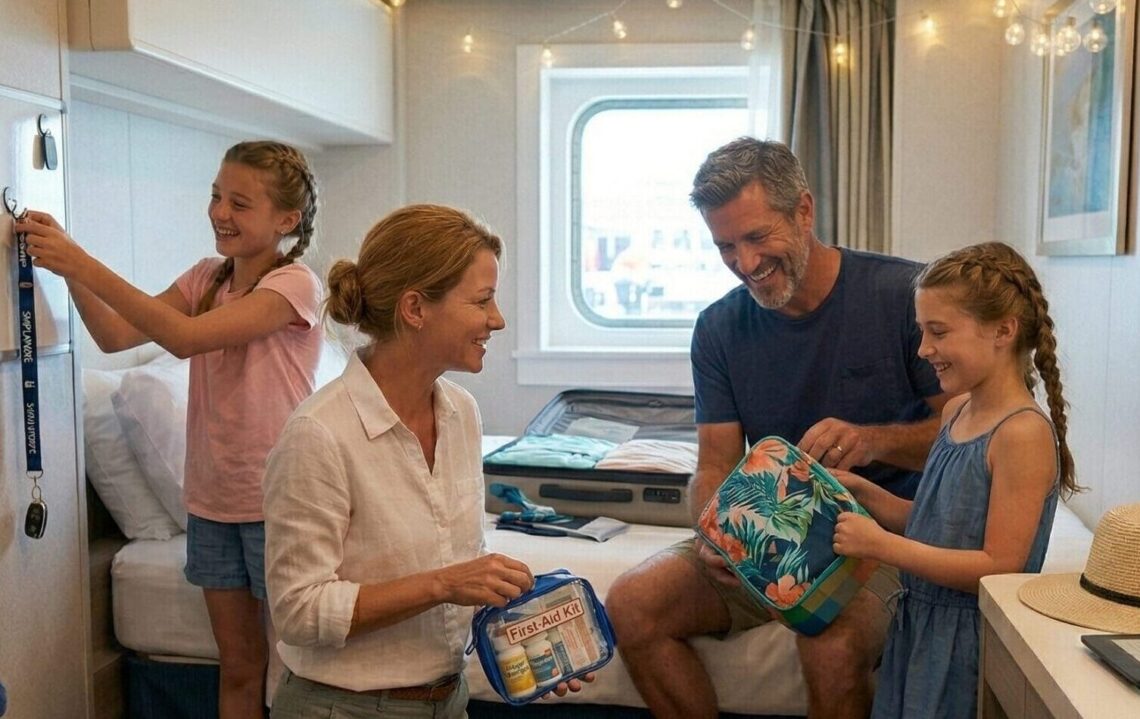
We’ve been on four cruises together as a family, and every trip has taught us something about packing that the last one didn’t. This list is what we actually bring now — and, more usefully, what we’ve learned to leave behind.
Most cruise cabins are small no matter how nice the ship is, so the goal isn’t to pack for every scenario — it’s to pack light enough that the cabin still feels like a place to relax.
Getting Organized in a Small Cabin
Outlets are the first problem. Older ships may only have one North American outlet in the whole cabin, so a small power strip or multi-port charger is worth the suitcase space.
- Packing cubes: They keep a small cabin from turning into a pile of clothes by day two.
- Over-the-door shoe organizer: A cheap way to add storage the room doesn’t otherwise have.
- Magnetic hooks: Cabin walls are usually metal, and hooks free up drawer space fast.
What to Wear
Cruise dress codes have loosened up — “formal night” tuxedos have mostly given way to “cruise elegant” — but it still helps to have a plan.
Daytime
Moisture-wicking, light-colored fabrics hold up best in the sun. Bring two swimsuits so you’re never putting on a wet one, and pack water shoes if you’re headed anywhere with rocky beaches.
Evening
Dining rooms and theaters run cold from the air conditioning. A pashmina or light cardigan for the women, a blazer or button-down for the men — either covers 90% of “elegant” nights.
A Small Health Kit Goes a Long Way
The onboard medical center exists, but it keeps limited hours and charges consultation fees, so it’s worth packing for the small stuff yourself. As a nurse, I’d rather over-pack a first aid kit than deal with a blister or heartburn derailing a port day.
- Probiotics: Starting a week before you sail can help with the richer food and time-zone shifts.
- Anti-gas and bloating relief: High-sodium ship food adds up.
- Motion sickness: If you’re heading into rough water, it’s worth asking your doctor about options before you go rather than figuring it out on the ship.
- Hydrocolloid bandages: They act like a second skin for blisters and stay on through the pool.
- Antiseptic spray: Faster than wipes when you’re on a sandy beach.
Packing for Port Days
Your packing strategy has to shift the moment you leave the ship — a lot of the standard advice is really just about the ship itself and skips the logistics of getting on and off it.
- A dry bag (10L or 20L): Essential if your cruise uses tender ports, where you take a small boat to shore. It protects your phone and camera from salt spray and doubles as a beach safe.
- Broken-in shoes only: Never bring brand-new shoes on a cruise — you’ll likely walk 10,000+ steps a day between ship corridors and port tours. Look for actual arch support, not just something that looks the part.
- A portable battery pack: Using the ship’s app and Wi-Fi all day drains a phone fast, and most lines now require their app for dinner reservations and activity schedules.
- A waterproof phone pouch: Worth it for any excursion involving water.
Before You Go
- Download offline maps for your port cities while you still have home Wi-Fi.
- Download offline language packs if you’re headed somewhere the signage and menus won’t be in English.
- Reef-safe sunscreen: A growing number of ports, including in Hawaii and the Virgin Islands, legally require it — traditional oxybenzone-based sunscreen may not be usable on excursions there.
- Pack half the clothes, bring double the money. You’ll spend most of the trip in a swimsuit or cover-up, and you’ll want the suitcase room for what you bring home.
=”wp-block-heading”>Frequently Asked Questions
Q: Can I bring my own bottled water or soda? A: Each cruise line has a different policy. Most allow a small amount (usually a 12-pack) of canned soda per person, but bottled water is often prohibited to reduce plastic. Check your specific line’s “Prohibited Items” list before you head to the port.
Q: Is there a laundry service onboard? A: Yes, but it is expensive. I recommend packing “sink suds” (small packets of laundry detergent) for washing small items in your cabin sink. Hanging them on your magnetic hooks in the shower will have them dry by morning.
Q: Do I really need a passport if it’s a closed-loop cruise? A: Technically, for many U.S. “closed-loop” cruises (starting and ending in the same port), a birth certificate and ID may suffice. However, as someone who has seen travel plans go sideways, bring the passport. If you have a medical emergency in a foreign port and need to fly home, you cannot do so without a passport.
Read More from Culinary Passages
- The Ultimate Guide to Elite Cruise Specialty Dining
- The Brutally Honest Truth About the $5,000 Concierge Upgrade
- 7 Expensive Luxury Cruise Packing Mistakes
- 7 Expensive Luxury Cruise Packing Mistakes
- How to Look Luxuriously Comfortable: The Ultimate Style Guide
- How to Take Your Dog on a Cruise
- Must-Have Travel Items: Stunning Tips and Secrets for Stress-Free Trips
- A Unique Camel & Mexican Outback Adventure in Cabo San Lucas
- Cruising on the Carnival Firenze: Mediocrity at Best!