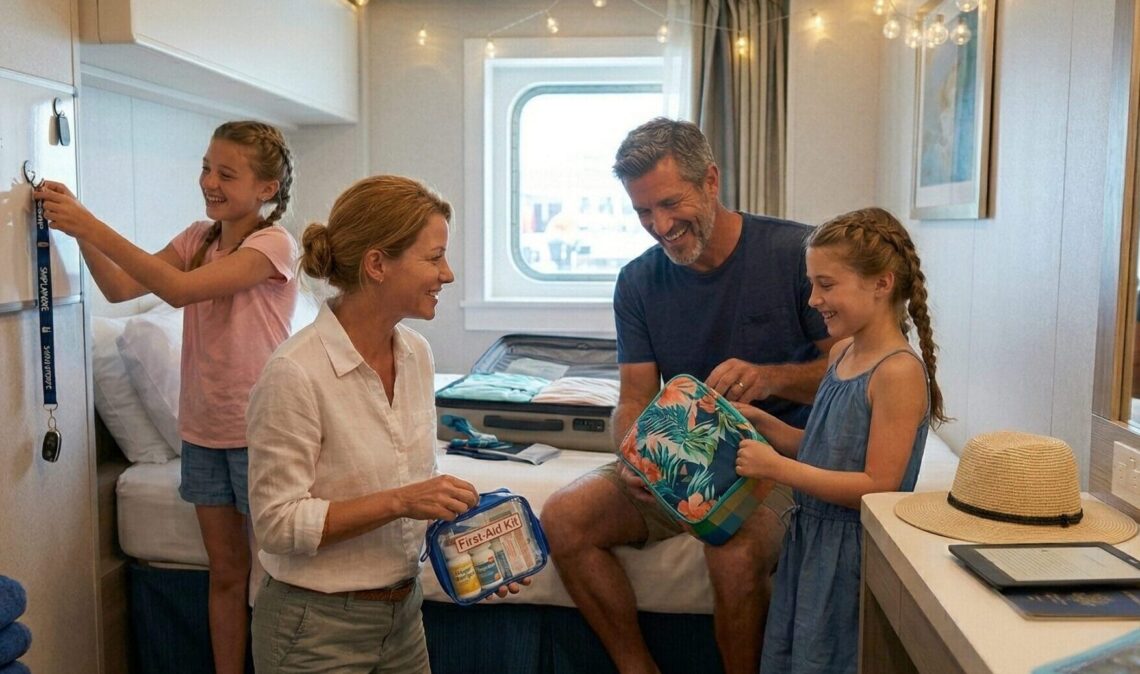
Stepping onto a cruise ship for the first time is an experience unlike any other. There is the salt air, the towering scale of the vessel, and the immediate realization that for the next week, this floating city is your home. Now you have to figure out how to fit those packing essentials in your tiny cabin. After embarking on more than 30 cruises across various lines and oceans, I have learned that the difference between a seamless vacation and a stressful one, often comes down to what is inside your suitcase.
Many “packing lists” online are generated by AI or written by people who have cruised once. This list is different. It is built on three decades of trial and error, including the specific logistics of navigating cabin life, sea days, and port excursions. If you are preparing for your first voyage, here is exactly what you need—and more importantly, what you don’t.
The Cruise Cabin Reality Check
Before we dive into the suitcase, we have to talk about the space. Most cruise ship cabins are masterclasses in efficiency, but they are small. According to Cruise Lines International Association (CLIA), the industry has seen a massive shift toward “smart ships” that optimize every square inch, but storage remains at a premium.
1. The “Power” of Organization Packing
You will quickly find that there are never enough outlets. Older ships might only have one North American outlet and one European outlet.
- Non-Surge Power Strip: This is non-negotiable. However, it must be non-surge protected. Surge protectors are a fire hazard on ships and will be confiscated by security.
- Magnetic Hooks: Most cabin walls are made of metal. Heavy-duty magnetic hooks allow you to hang wet swimsuits, hats, and lanyards, keeping the limited counter space clear.
2. The “Embarkation Day” Packing of the Carry-On
Your large luggage will be whisked away at the pier and may not arrive at your room until late evening. Pack a “Day One” bag with:
- All medications (in original bottles).
- Swimwear and sunscreen.
- A change of clothes for dinner.
- Travel documents and passports.
Mastering the Cruise Dress Code
The biggest anxiety for first-timers is “Formal Night.” While the era of ball gowns and tuxedos has largely shifted toward “Cruise Elegant,” you still need a strategy.
Daytime Packing: Functional and Breathable
Whether you are on the Lido deck or exploring a port in Hawaii, comfort is king. Pack moisture-wicking fabrics. If you are headed to a tropical destination, the National Oceanic and Atmospheric Administration (NOAA) recommends lightweight, light-colored clothing to reflect heat and UV rays.
- Two Swimsuits: Never put on a wet swimsuit. Always have one drying while the other is in use.
- Water Shoes: Essential for rocky beaches or protecting your feet on hot pool decks.
Evening Packing: The Layering Strategy
The dining rooms and theaters are notoriously chilly due to high-powered air conditioning.
- For Women: A pashmina or light cardigan is a lifesaver.
- For Men: A light blazer or button-down shirt works for 90% of “elegant” nights.
The “Nurse Tips” Section: Health and Wellness Packing at Sea
As a Registered Nurse with 15 years of experience, I look at packing through a clinical lens. Staying healthy is the only way to enjoy your investment.
- Motion Sickness Prevention: Don’t wait until the ship is rocking. If you are prone to sea sickness, start your preferred remedy (like Meclizine or ginger lozenges) 24 hours before embarkation.
- Hydration is Key: Cruise food is notoriously high in sodium, which leads to “cruise ankles” (edema). Carry a collapsible water bottle and aim for 2-3 liters of water daily.
- The “Shipboard First Aid Kit”: The onboard medical center is excellent but expensive. Pack a small kit containing:
- Ibuprofen or Acetaminophen.
- Anti-diarrheal medication.
- Band-aids and antibiotic ointment for blisters caused by walking in ports.
- Antacids (for those late-night pizza runs).
- Sun Protection: The sun’s reflection off the water intensifies UV exposure. According to the Skin Cancer Foundation, you should reapply SPF 30 or higher every two hours when outdoors, especially at sea where the breeze masks the heat of a burn.
The “Pharmacy in a Pouch”: A Nurse’s Clinical Guide to packing Over-the-Counter Essentials
While the onboard medical center is world-class, it often operates with limited hours and high consultation fees. As a nurse, I’ve seen minor ailments—like a simple blister or a touch of heartburn—derail a vacation because the traveler wasn’t prepared. To keep your “Culinary Passages” adventure on track, your medical kit should be more than just a box of Band-Aids.
The Digestive Defense
Cruising is, at its heart, a culinary journey. You will likely be eating richer foods, more frequently, and across different time zones.
- Probiotics: Start taking these a week before you sail to prep your gut flora.
- Anti-Gas and Bloating: High-sodium ship food can lead to significant discomfort.
- The “Scopolamine” Discussion: While I cannot prescribe, I always suggest cruisers speak to their primary care provider about a prescription patch if they are heading into famously rough waters, like the Gulf of Lions or the Tasman Sea.
Wound Care for Port Days
Shore excursions in places like Hawaii or Mexico often involve hiking or water sports.
- Hydrocolloid Bandages: These are a nurse’s secret weapon. They act like a second skin for blisters and stay on even in the pool.
- Antiseptic Spray: Faster and cleaner than wipes when you’re on a sandy beach.
Shore Excursion Logistics: What Your Suitcase Needs for Port
Your packing strategy must shift the moment you leave the ship. After 30 cruises, I’ve realized that most people pack for the ship but forget the logistics of the shore.
The “Dry Bag” Necessity
If your cruise includes “Tender Ports” (where you take a small boat to the pier), a 10L or 20L dry bag is essential. It protects your phone, camera, and dry clothes from salt spray. It also serves as a great “beach safe”—you can clip it to your chair or take it into the shallow water with you.
Footwear: The “Broken-In” Rule
As a nurse who spends 12 hours a day on her feet, I cannot stress this enough: Never bring brand-new shoes on a cruise. The average cruiser walks between 10,000 and 15,000 steps a day between the long ship corridors and port tours.
- Walking Sandals: Look for brands with arch support (like Vionic or Birkenstock).
- Versatile Sneakers: A pair of white leather sneakers can transition from a morning walking tour to a casual lunch on the deck without looking out of place.
Technology and Connectivity
While many go to sea to disconnect, modern cruising relies heavily on apps. Most lines, such as Royal Caribbean or Carnival, require their app for dinner reservations and activity schedules.
- Portable Battery Pack: Using the ship’s Wi-Fi and app all day drains phone batteries quickly.
- Waterproof Phone Pouch: Vital for shore excursions like snorkeling or boating.
Toiletries: Don’t Rely on the “Mystery Soap”
Most ships provide a generic “all-in-one” hair and body wash in the shower. If you value your hair texture, bring your own travel-sized shampoo and conditioner.
- Conditioner: The salt air and chlorine will dry out your hair instantly.
- Lip Balm with SPF: Lips burn easily at sea and are often overlooked.
What to Leave at Home
Do not pack the following:
- Clothes Irons/Steamers: These are strictly prohibited fire hazards. Use a wrinkle-release spray instead.
- Towels: The ship provides beach towels for both the pool and shore excursions.
- Hardcover Books: Bring an e-reader. Space is too tight for bulky books.
The Rule of Halves
The best advice I received before my first of 30 cruises was this: Lay out all the clothes and all the money you think you need. Then, take half the clothes and double the money. You will likely spend most of your time in a swimsuit or a cover-up, and you’ll appreciate the extra room in your suitcase for souvenirs.
Cruising is about freedom and discovery. By packing smart, you move the focus away from “What did I forget?” and toward “What should we do next?”
Connectivity and the “Digital” Packing List
In 2026, a cruise packing list isn’t just physical—it’s digital. We must address the tech-heavy reality of modern sailing.
Downloading for Offline Use
Shipboard Wi-Fi is significantly better than it was a decade ago, but it can still be spotty in the middle of the Atlantic.
- Google Maps: Download the offline map for your port cities (like Vancouver, Ensenada, or Honolulu) while you are still on home Wi-Fi.
- Google Translate: Essential for Mediterranean or Asian itineraries. Download the local language pack so you can read menus or pharmacy signs without needing a data signal.
The AirTag Strategy
With the current state of global air travel, luggage delays are a reality. I place an Apple AirTag in every checked bag. Seeing that my suitcase is actually on the ship provides a level of “vacation zen” that no drink package can match.
Sustainable Cruising: Eco-Friendly Packing
The cruise industry is under immense pressure to be more sustainable. You can help (and save money) by packing with the environment in mind.
- Magnetic Cabin Hooks: Instead of using plastic organizers, these metal hooks are durable and reusable for life.
- Rebuildable Toiletries: Avoid the “travel size” section at the drugstore. Invest in high-quality silicone squeeze bottles. It reduces plastic waste and allows you to bring the salon-quality products your hair will need after a day of salt and sun.
- Reef-Safe Sunscreen: Many ports (especially in Hawaii and the Virgin Islands) now legally require reef-safe formulas. If you bring traditional oxybenzone-based sunscreen, you may find yourself unable to use it during your excursion.
Frequently Asked Questions
Q: Can I bring my own bottled water or soda? A: Each cruise line has a different policy. Most allow a small amount (usually a 12-pack) of canned soda per person, but bottled water is often prohibited to reduce plastic. Check your specific line’s “Prohibited Items” list before you head to the port.
Q: Is there a laundry service onboard? A: Yes, but it is expensive. I recommend packing “sink suds” (small packets of laundry detergent) for washing small items in your cabin sink. Hanging them on your magnetic hooks in the shower will have them dry by morning.
Q: Do I really need a passport if it’s a closed-loop cruise? A: Technically, for many U.S. “closed-loop” cruises (starting and ending in the same port), a birth certificate and ID may suffice. However, as someone who has seen travel plans go sideways, bring the passport. If you have a medical emergency in a foreign port and need to fly home, you cannot do so without a passport.
Read More from Culinary Passages
- The Ultimate Guide to Elite Cruise Specialty Dining
- The Brutally Honest Truth About the $5,000 Concierge Upgrade
- How to Unlock Cellular Recovery: The Surprising Truth About Wellness Cruises
- 7 Expensive Luxury Cruise Packing Mistakes
- A Nurse’s No-Nonsense Guide to Luxury Cruise Wellness
- How to Look Obscenely Rich While Being Insanely Comfortable: The Ultimate Guide to Luxury Travel Wear
- How to Take Your Dog on a Cruise
- Must-Have Travel Items: Stunning Tips and Secrets for Stress-Free Trips
- A Unique Camel & Mexican Outback Adventure in Cabo San Lucas
- Cruising on the Carnival Firenze: Mediocrity at Best!
About the Author
The creator of Culinary Passages (Ginger Graham), is a Registered Nurse with nearly 15 years of experience in bedside and procedural nursing. Based in Los Angeles, she blends her clinical eye for detail with a passion for global travel and the local culinary scene. Having completed over 30 cruises, she specializes in helping travelers navigate the world with health, style, and a foodie’s perspective. When not at the hospital or on a ship, she can be found exploring great restaurants with her family.