I am a nurse and I spend shifts on my feet in compression socks and comfortable shoes, and I also like to dress well when I am not at the hospital. These two things coexist. When I fly, I want to be comfortable for the duration of the flight and also look like someone who made a deliberate choice about what to wear. This is not actually a difficult problem to solve, but the way people talk about travel comfort as though it requires abandoning all aesthetic standards is tiresome.
The Actual Problem With Air Travel Clothing
The problem is not comfort versus style. The problem is that people optimize for one long flight rather than the total travel day. You are wearing these clothes from your house to the car to the terminal to the plane to the terminal to wherever you are staying. That is often eight to twelve hours. Whatever you wear needs to work for all of it, including the airport, which is neither a living room nor a fashion show but something in between.
What I Actually Wear to Stay Comfortable
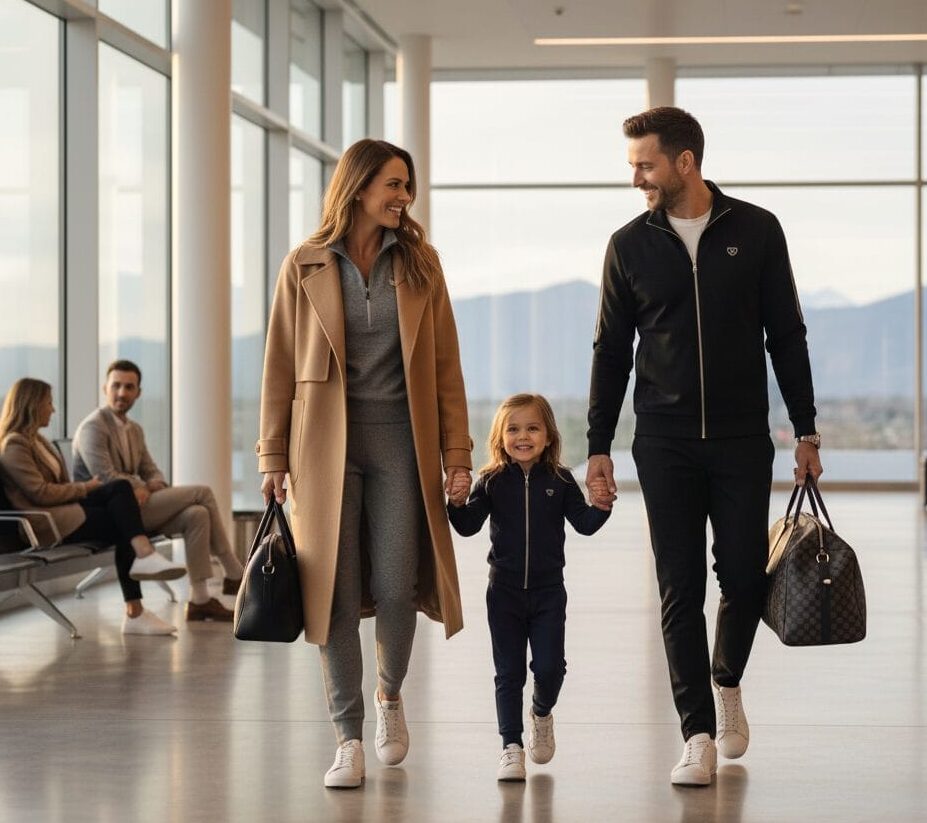
A straight-leg trouser in a technical fabric (the Quince version of this is inexpensive and holds up well) paired with a fitted merino sweater or a linen button-down covers almost every flight situation. It reads as put-together. It is comfortable enough to sleep in. The trouser does not wrinkle in a way that matters after a flight. The merino regulates temperature better than cotton, which is useful on planes where you cannot predict whether it will be cold or warm.
The unsung hero of the whole outfit is a layer you can add and remove without a thought — a large, soft scarf or wrap that doubles as an airplane blanket, or an unstructured jacket that survives being balled into the overhead bin. Cabin temperature is genuinely unpredictable, and being able to adjust without digging through your bag is the difference between comfortable and miserable. I build every travel outfit around one warm layer I can shed, because the plane is always either too cold or, briefly, too warm.
The One Medical Non-Negotiable
Compression socks on flights over four hours. This is not a fashion recommendation, it is a medical one — I am a nurse and the circulatory effect of prolonged sitting at altitude is real, particularly if you are over forty. Wear the compression socks under whatever you wear. Nobody sees them and your legs will feel substantially better when you land.
A brief, honest caveat on that, because I would say the same thing to a patient: general graduated compression socks are a comfort measure that many travelers find helpful, not a treatment. If you have a history of blood clots, circulation problems, diabetes, or any specific medical concern, talk to your own doctor about what is right for you and what compression level to use. For most healthy travelers, staying hydrated, moving your ankles, and getting up to walk the aisle periodically matter just as much as the socks. This is general information, not medical advice.
Comfortable Shoes for Travel Days
Slip-on shoes for security. This is non-negotiable if you travel frequently. The time you spend untying and retying shoes in a security line is not large but it is pure friction with no upside. I travel in white sneakers that are easy to slip off and look reasonable with the trousers described above. If I need a dressier shoe for whatever we are doing, I pack it.
Whatever the shoe, it needs to accommodate the mild foot swelling that comes with a long travel day — another thing my nursing brain will not let me ignore. I avoid anything brand-new or tight for a flight, and I choose a sneaker with a little room and a supportive sole, because the reality of travel is that you often end up walking far more than you planned through terminals and toward a distant gate. A beautiful shoe that hurts by hour six is not worth it.
The Bag
A carry-on that fits overhead, every time. I have not checked luggage in several years except on trips longer than two weeks. Anything you check is luggage you wait for, luggage that can be lost, and luggage that creates a decision at baggage claim that the trip does not need. Learn to pack for a week in a carry-on. It is a learnable skill and it changes how travel feels.
Alongside the carry-on I keep one small personal bag that lives under the seat with the things I actually reach for in flight — water, a snack, headphones, a charger, lip balm, and any medication — so I am not standing up to open the overhead bin every twenty minutes. Keeping the truly essential items on my person also means that if a bag ever does get separated from me, the trip does not fall apart. Organized beats large every single time.
A Simple Comfortable Travel-Day Capsule
If you want to copy the formula rather than think it through each trip, this is essentially what I reach for every time:
- A straight-leg trouser in a wrinkle-resistant technical or ponte fabric.
- A fitted merino sweater or a linen button-down, depending on the season.
- One shed-able warm layer — a wrap, oversized scarf, or unstructured jacket.
- Graduated compression socks for anything over four hours.
- Clean, roomy slip-on sneakers that handle a long walk through a terminal.
- A carry-on plus a small under-seat bag for in-flight essentials.
Frequently Asked Questions
Are leggings a bad travel choice?
They are comfortable but they read as loungewear, which is the trap this whole approach avoids. A structured technical trouser is nearly as comfortable and instantly more put-together, so it is my swap of choice.
Do Compression Socks Make Flights More Comfortable?
Many travelers find them genuinely helpful for tired, swollen legs on long flights. That said, they are a comfort measure rather than a medical treatment — if you have any circulatory history, ask your doctor about the right level for you.
How do I pack a week into a carry-on?
Build around a single color palette so everything mixes, choose fabrics that resist wrinkles, and wear your bulkiest layer and shoes on the plane. Once you commit to it, checking a bag starts to feel like an unnecessary risk.
The underlying principle: wear things you would wear somewhere other than an airport. If you would not wear it to lunch, reconsider it as a travel outfit. Comfort and presentability are not opposites and treating them that way creates worse outcomes on both dimensions.