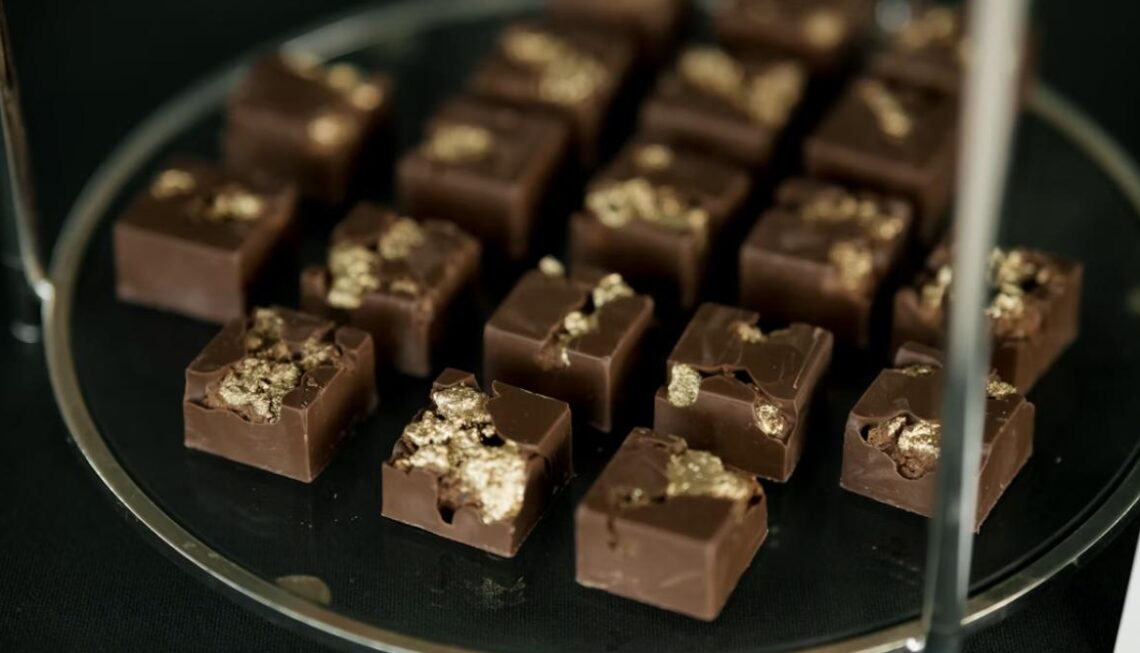
Edible gold on food is one of the more successful culinary marketing moves of the last decade: it signals luxury without delivering any flavor, and the people buying it are paying for the signal rather than the substance. I find this interesting rather than outrageous, and I want to explain what gold is, what it costs to produce, and why it has become the dominant luxury food cue.
As a nurse, I see exactly what goes into (and eventually comes out of) the human body, which has left me with a very complicated relationship with edible gold. This blog often explores the discovery side of dining—the high-end experiences that make life flavorful. But the burning question remains: Does gold actually do anything for the flavor, or are we just paying a premium to make our digestive tracts look like a sunken Spanish galleon?
Grab a glass of (non-glittery) wine and get comfortable. We are diving deep into the macro-world of mineral-infused dining to see if all that glitters is gourmet, or if we’re all just being taken for a very expensive, very shiny ride.
The Science of “Eating the Periodic Table”
First, let’s get the medical nerdery out of the way. In my years of nursing, I’ve learned that the body is a finely tuned machine that generally knows what to do with nutrients. Gold, however, is not a nutrient. Gold is chemically inert. In the world of chemistry, it’s the “extreme introvert” of elements—it doesn’t want to react with your stomach acid, your digestive enzymes, or your sense of dignity.
Edible gold is officially designated as food additive E175 and is considered a coloring agent. Because gold is metallic and non-reactive, it passes through the human digestive system completely unchanged. It isn’t absorbed into the bloodstream; it doesn’t provide “cellular healing,” and it certainly doesn’t give you “vibrational energy.”
Essentially, you aren’t “digesting” gold. You are simply renting it for 24 to 48 hours. From a biological standpoint, eating a gold-leafed burger is roughly the same as swallowing a very expensive, very shiny Lego brick. It provides zero calories, zero vitamins, and zero nutritional “glow-up.” Despite what some questionable wellness influencers might claim, the only thing gold “cleanses” is your bank account.
The Macro-View: The Bizarre Texture of Wealth
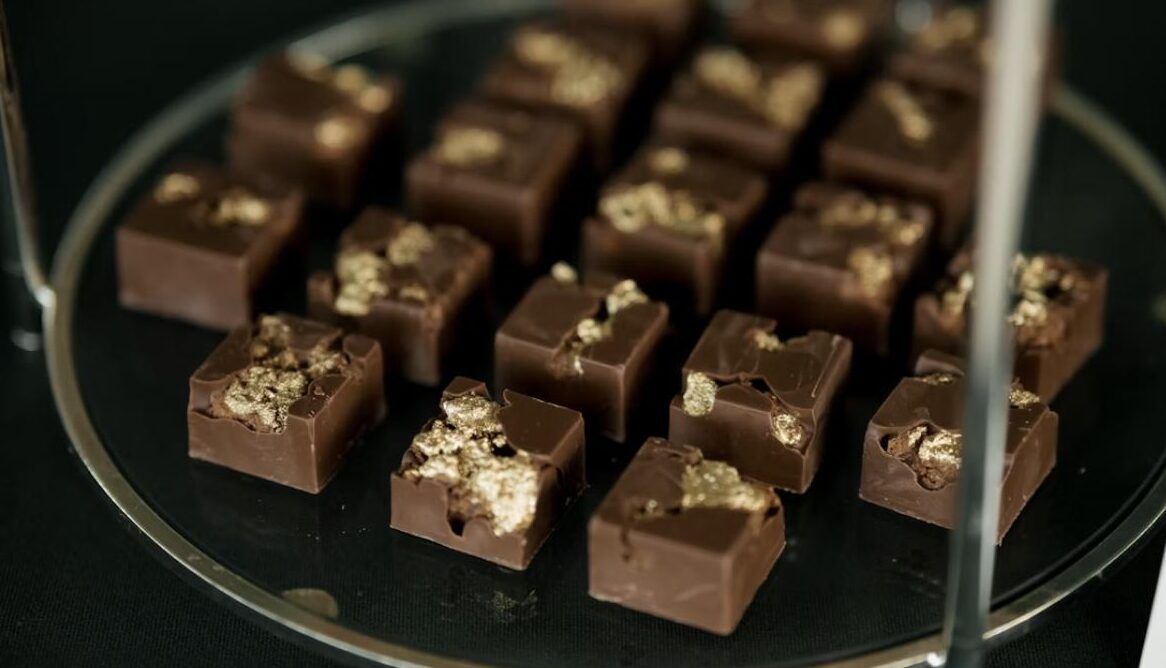
When you zoom in with a macro lens, the gold leaf looks like a crumpled silk sheet draped over a landscape of seared protein or velvety chocolate. It’s breathtakingly beautiful in a photograph. But have you ever tried to eat a silk sheet?
Gold leaf is incredibly thin—usually around 0.0001 millimeters. To put that in perspective, a single human hair is roughly 0.05 millimeters thick. You would think something that thin would just disappear, right?
Wrong. When that leaf hits your tongue, it doesn’t melt like butter. It… clings. It’s a strange, metallic parchment sensation that briefly interferes with the actual mouthfeel of the Wagyu or the ganache beneath it. It feels like you accidentally left the foil on a piece of candy. If you are a “texture person” like me, gold is actually a net negative. It’s the culinary equivalent of wearing a sequined dress: it looks stunning in the photos, but it’s itchy as heck the entire night and you can’t wait to get out of it.
The Gold Flavor Myth: Does It Taste Like Victory?
Here is the “wow” moment that the high-end steakhouses don’t want you to know: Gold has no taste. None. Zilch. Nada. It is biologically impossible for your taste buds to register a flavor from an inert metal.
If you closed your eyes and did a blind taste test between a gold-wrapped chicken wing and a standard one from the same fryer, the only way you’d know which was which is if the gold got stuck in your teeth—which it inevitably will. This gives you a temporary “Flava Flav” grill that is decidedly not luxury when you’re trying to have a sophisticated conversation.
The “wealth” of the taste is purely psychological. It’s a well-known trick of perception: the perceived value of an item changes how our brain responds to it. When we see gold, our brains prime us to expect a “superior” experience. We want it to taste like a sunset over the Mediterranean, so we subconsciously convince ourselves it does.
This means that the chef isn’t seasoning the meat with the gold; they are seasoning your expectations. In short: the gold is gaslighting your taste buds into thinking a $100 steak is worth $1,000.
Why We Do It: The “Discovery” High and the Visual Gold Feast
So, if it doesn’t taste good, has a weird texture, and provides no nutrition, why are we collectively obsessed with it? The answer lies in the era of the Visual Feast.
On Culinary Passages, I talk a lot about the “Discovery” aspect of travel and dining. We aren’t just eating for fuel anymore; we are eating for the story. We are eating for the “content.” Ordering the “Gold-Dusted Truffle Fries” or the “Gilded Golden Opulence Sundae” is an act of theater. It’s a signal to the world (and whoever is watching) that we have reached a level of indulgence where we can afford to consume things that aren’t even food.
It’s the ultimate flex. It tells your peers, “I am currently so successful that I am literally eating money.” But as someone who has seen the “backstage” of the human body in a clinical setting, I can tell you that the most “shocking” part of this theater isn’t the gold going in—it’s the clinical realization that we are flushing our hard-earned cash down the toilet, quite literally.
The Psychology of the “Golden” Scam
Why does this scam work so well? It’s because gold is the universal symbol of the “Best.” From Olympic medals to wedding rings, we are conditioned to associate gold with the pinnacle of achievement. Restaurants tap into this primal lizard-brain response. When they wrap a burger in gold, they aren’t improving the burger; they are elevating their brand.
If you enjoyed this, check out a few other posts along the same lines:
Is It Safe? The Nurse’s Perspective on Heavy Metals
Since you’re reading this on a blog run by an RN, I have to put on my nursing cap for a moment and talk safety. Is it actually safe to eat metal?
Generally, yes, provided it is 22 to 24-karat gold. This is the “food grade” standard.The danger comes when unscrupulous establishments use “composition leaf” or “imitation gold,” which often contains copper, brass, or other impurities. These metals can be reactive and, in high enough doses, potentially toxic.
Pure gold is non-toxic because it is non-absorbable. It doesn’t break down, so it doesn’t build up in your liver or kidneys like lead or mercury might. However, there is a catch. If you have a metal allergy (specifically to gold or nickel), you might want to skip the gilded dessert. There is absolutely nothing “luxurious” about breaking out in hives or experiencing anaphylaxis at a five-star restaurant. Trust me, I’ve seen the paperwork involved in ER visits, and it’s a total buzzkill for your date night.
The Verdict: Save Your Gold for Your Ears (and Your Heart)
My conclusion, as someone who spends time in both kitchens and hospitals, is this: Edible gold is the ultimate “filler” content of the culinary world. It is the clickbait of the menu. It exists solely to grab attention, justify a 400% markup, and provide a shiny, reflective backdrop for a selfie.
If you truly want to spend your money on something that improves the “wealth” of the taste and the quality of your experience, skip the E175 additive and double down on things that impact your palate:
- High-Quality Finishing Salts: A pinch of Maldon or smoked sea salt provides a crunch and a flavor profile that gold could never dream of.
- Aged Balsamic Vinegar: Real, traditional balsamic from Modena has a depth of flavor that is genuinely “liquid gold.”
- A Truly Great Bottle of Wine: Unlike gold leaf, a world-class Cabernet will change your mood and enhance the meal.
- Fresh, Seasonal Ingredients: A tomato grown in the sun will always be more “Discovery” worthy than a steak wrapped in metal.
In the end, the most “shocking” discovery about edible gold is that the most valuable thing about it is the conversation it starts—not the mineral itself. It’s a fun story to tell, but it’s a terrible way to eat.
Read More on Culinary Passages
If you enjoyed this deep dive into the absurdities of luxury dining and the “Midas Mistake,” you’ll love these other popular posts from the Culinary Passages Discovery archives:
- The Fine Dining Decoder: How to Order Like a Pro (And Not Accidentally Buy a $200 Egg)
- 7 Expensive Luxury Cruise Packing Mistakes
- The Jet-Setter’s Edit: Luxury Carry-On Essentials for Las Vegas
- The Great Quality Collapse We Are All Experiencing Today
- The Tasting Menu Travel Capsule: How to Dress Like a 5-Star Entrée on a Street Food Budget