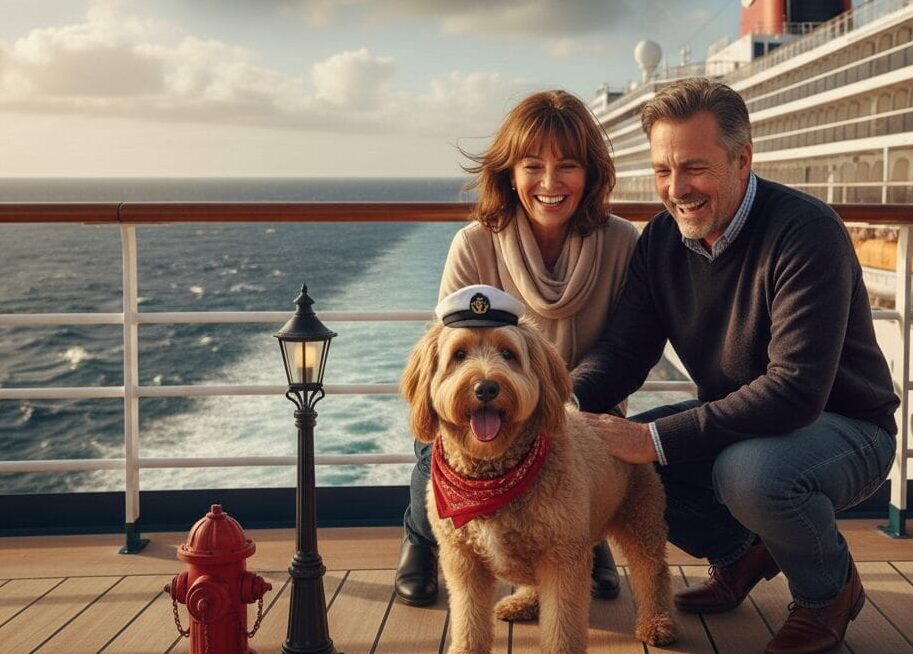
The answer to “can I take my dog on a cruise” is almost always no, and I want to be direct about this at the start, because there is a lot of wishful-thinking content on this topic. Most major cruise lines — Carnival, Royal Caribbean, Norwegian, Celebrity, Princess — do not allow dogs onboard except certified service animals. This is a firm policy driven by health codes and practical constraints, and it does not have workarounds. So this post does two things: it tells you the one real exception that exists, and it lays out the dog-friendly travel that actually works instead.
We leave Barnaby with his sitter when we cruise. He is well cared for and blissfully unaware of what he is missing. This post is about the options that genuinely exist for traveling with a dog, since cruising is largely not one of them.
The One Real Exception: Cunard’s Queen Mary 2
Cunard’s Queen Mary 2 has a genuine dog program on transatlantic crossings — actual kennels staffed by trained attendants, with daily exercise and a dedicated owner’s lounge where you can visit your pet. The ship has 24 kennels for cats and dogs, and it is the only major cruise ship that lets regular (non-service) pets sail with you. If you want to bring your dog on a ship, a QM2 transatlantic crossing between Southampton, New York, or Hamburg is essentially the only way to do it.
The catches are real: space is extremely limited, there’s a charge, and the kennels book up fast — you can reserve anywhere from about two years out to (rarely) shortly before sailing, so treat it as something you plan far ahead. Your dog stays in the kennel area for the crossing rather than in your cabin, with scheduled visiting times. It’s a wonderful option if a transatlantic relocation or a bucket-list crossing is what you’re after; it is not a substitute for a Caribbean vacation with the dog in tow.
Other Niche Options
Small-ship and river-cruise operators sometimes allow pets on select itineraries. European river cruises in particular — several French and German river-cruise companies allow well-behaved dogs in cabins. These are niche experiences and require direct inquiry with the operator rather than booking through a general travel agent. If you’re set on a cruise-like trip with your dog, this is the corner of the market to investigate, but go in expecting to email operators directly and read the fine print carefully.
Dog-Friendly Travel That Actually Works
Honestly? Road trips with dogs are better than any cruise would be anyway. Destinations like Palm Springs, Big Bear, and the many cabin rentals in the mountains near Los Angeles are well suited to dogs, and trips built around them tend to be different in the best way — more structured around outdoor activity, more stops, a different pace than airline travel imposes. A dog reorganizes a trip around walks, fresh air, and time outside, which usually makes for a better vacation for the humans too.
For dog-friendly accommodations, Kimpton Hotels are the standout: the chain welcomes pets of any size or breed, doesn’t charge pet fees, and doesn’t cap the number of pets per room at most properties — a genuinely rare and generous policy. Many vacation-rental platforms also have dog-friendly filters that work accurately. The combination of a pet-friendly rental or Kimpton and a car trip is the functional equivalent of what people imagine when they picture “traveling with a dog” — the cruise version simply does not exist in any widespread form.
Packing and Prep for Dog Travel
- Vaccination and ID: Bring proof of current vaccinations and make sure tags and microchip info are up to date before any trip.
- The familiar stuff: Their own bed or blanket, regular food, and a favorite toy make a strange room feel safe faster.
- Water and bowls for the car: Offer water at every stop; a collapsible bowl lives in our glovebox.
- A crash-tested harness or crate: Loose dogs in cars are a real safety risk for everyone.
- A recent photo: If your dog ever slips a leash in an unfamiliar place, a current photo makes finding them far easier.
Frequently Asked Questions
Can I bring my dog on a Caribbean or Alaska cruise?
No. The major lines that sail those routes only permit certified service animals. Pet dogs are not allowed, and there is no workaround.
Which cruise actually allows dogs?
Only Cunard’s Queen Mary 2, and only on transatlantic crossings, using its onboard kennels. Space is very limited and books far in advance.
What’s the best alternative to cruising with a dog?
A road trip to a pet-friendly destination, paired with a Kimpton hotel or a dog-friendly rental. It delivers the “traveling with your dog” experience that a cruise simply can’t.
How to Set Up the Sitter So You Can Actually Relax
Since a sitter is the realistic answer for most cruises, it’s worth doing it well. We’ve learned that the difference between an anxious week and a genuinely relaxed one comes down to preparation. Do a trial run first — a single overnight before the big trip tells you a lot about how your dog handles the arrangement and how communicative the sitter is. Write everything down: feeding amounts and times, medications, the vet’s contact information, walk routines, quirks and fears, and what to do in an emergency. Leave the dog’s own food and bed rather than switching things up, since consistency is what keeps a dog calm when the humans disappear for a while.
On a cruise specifically, remember that your connectivity may be limited and expensive at sea, so agree in advance on how and when the sitter will check in — a daily photo or a short message at a set time is plenty, and it spares you from refreshing your phone in the middle of the ocean. Barnaby’s sitter sends one photo a day, and that single image is enough to let us fully switch off and enjoy the trip. That, more than anything, is the secret: a good plan on land is what lets you actually be present on the water.
What We Do Instead
When we cruise, Barnaby stays with a sitter who sends us daily photos. He appears to spend his time on furniture he is not allowed on at home and eating at irregular hours. He is fine. We are fine. The guilt of leaving a dog for a cruise is real and also manageable. A well-socialized dog with a good sitter has an adequate week. You are not abandoning them; you are providing alternate care. Come home with a treat, and the guilt resolves immediately.