Christmas at our house involves both families. That means between December 23rd and December 27th, we are hosting somewhere between eight and fourteen people. The exact number depends on who is driving in from where and what the holiday travel situation is doing. I have been managing this for twelve years. What follows is what I have actually learned about not burning down the house, metaphorically. It comes from cooking for a large group during the most food-intensive stretch of the calendar.
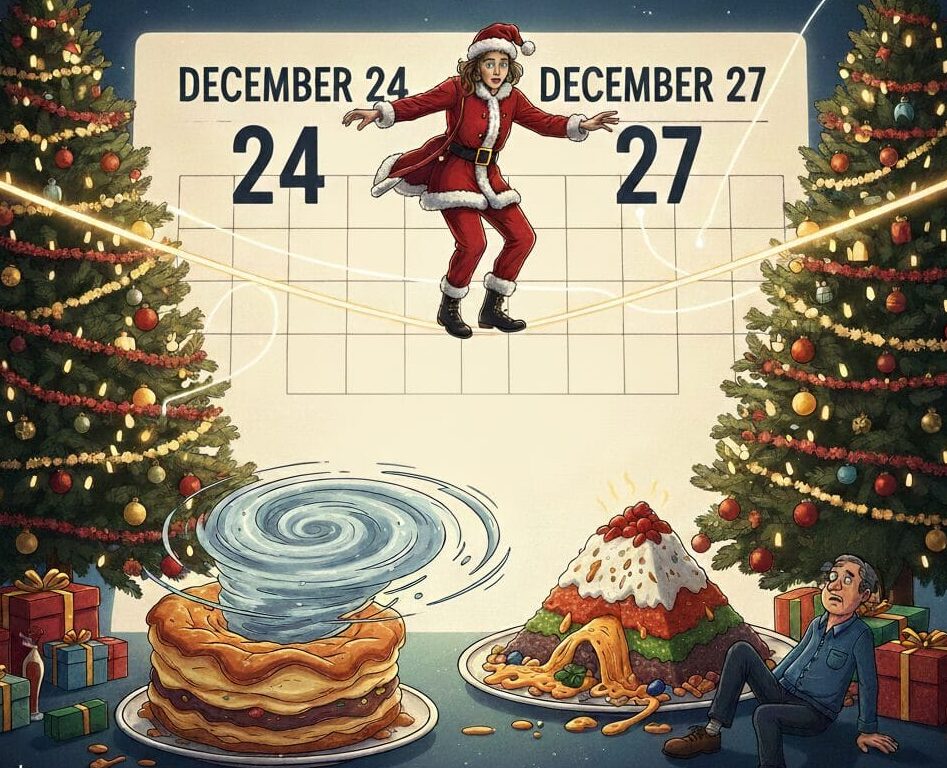
The Grocery Problem
Do not shop the week of Christmas. This should be obvious by now, and apparently it is not. I did it for the first three years of hosting and then stopped. The stores are crowded, the inventory is unreliable, and you will make purchasing decisions under conditions of stress that you will regret. Shop December 20th at the absolute latest. Make a precise list organized by store section and do not deviate from it.
Split the shopping into two trips if you can. Everything shelf-stable and frozen — the stock, the butter, the flour, the canned goods, the wine — gets bought early in the month. That’s when the stores are still calm. Only the genuinely perishable things, the fresh herbs and the roast, get picked up on that final pre-holiday run. And order the centerpiece protein from your butcher ahead of time. The good roasts sell out, and a reservation means you are not standing at an empty meat case on the 23rd rethinking your entire menu.
The Christmas Eve Make-Ahead Mandate
Anything that can be made before Christmas Eve should be made before Christmas Eve. Cranberry sauce: make it two weeks out and refrigerate. Pie dough: freeze it. Bread for stuffing: cube and dry it the week before. Stock: make it in November, freeze it in two-cup containers. The Christmas Day cooking should be primarily assembly and reheating of things that exist already, not creation from scratch under time pressure.
The one exception is the main event. Think the prime rib, the leg of lamb, the standing rib roast, whatever your family’s central protein is. This needs to be fresh and it needs your attention on the day. Clear the kitchen of every other active cooking task before this goes in the oven.
Winning the Christmas Oven War
The real reason big Christmas meals go sideways is not skill. It is that everyone forgets they own exactly one oven that holds one temperature at a time. The roast wants a hot oven, the gratin wants a moderate one, and the rolls want to go in at the last second. They all want it simultaneously. If you have not mapped that out on paper, you will discover the conflict at 4 p.m. with a house full of guests, which is precisely the wrong moment.
So I build the day backward from when I want to sit down. The roast is the anchor: it goes in on schedule and, crucially, it has to come out and rest for a good stretch before carving. That resting window is a gift, because it is exactly when the oven is free to blast the potatoes crisp and warm the rolls. Anything that reheats well goes on the stovetop or in the microwave to keep the oven clear. Write the whole sequence down and tape it inside a cabinet door. You will move through the afternoon like you have done it before, because you have — on paper.
The Nurse’s Note on Food Safety
I cannot write about feeding fourteen people without the professional part of my brain weighing in. The holidays are a classic setup for a foodborne mishap: lots of people, food sitting out for hours, and a distracted cook. A good instant-read thermometer is the single most useful tool on my counter. I trust it over color or “it looks done” every single time.
For reference, the safe minimum internal temperature is 145°F for beef, veal, and lamb roasts, followed by at least a three-minute rest. Ground meats should reach 160°F, and any poultry should hit 165°F. Just as important is the food that is not in the oven. Do not let cooked dishes sit out at room temperature for hours on end, and get leftovers into the fridge promptly rather than after the last guest finally leaves. None of this is medical advice. It is just the same caution I bring to a twelve-hour shift, applied to a very large ham.
Managing the People on Christmas Day
On Christmas Day itself, give everyone a job. Not a suggestion, not a gentle offer — an assignment. When people arrive and ask what they can do, have an answer ready. Peel these vegetables. Arrange these things on a board. Set these tables. The people who ask and receive no answer stand in the kitchen being in the way. The people with an assignment are useful and feel useful. Both outcomes are better.
Accept help with the cleaning but not with the cooking unless the person offering is genuinely skilled and you trust their judgment. Unsolicited cooking contributions in someone else’s kitchen during a high-stakes meal are a risk I stopped taking. There was an incident with the gravy that I will not describe in detail.
There’s a quiet trick for the relatives who genuinely want to contribute but cannot be trusted near the stove. Hand them the drinks, the music, or the kids. Someone keeping glasses full and the little ones entertained is doing real, load-bearing work at a holiday gathering. It also keeps them happily out of your one precious oven’s flight path.
The Make-Ahead Checklist
- November: Make and freeze stock in two-cup containers; order the roast from the butcher.
- Two weeks out: Cranberry sauce made and refrigerated; pie dough made and frozen.
- The week before: Cube and dry the stuffing bread; confirm serveware, and iron linens.
- By December 20th: All shelf-stable and frozen shopping done.
- December 23rd: Final fresh-only run — herbs, dairy, the roast pickup.
- Christmas Eve: Prep and refrigerate anything that assembles the next day.
- Christmas Day: Roast, rest, reheat, and enjoy the meal you already mostly made.
Frequently Asked Questions
How far ahead can I really make things?
Stock and pie dough freeze for weeks. Cranberry sauce keeps in the fridge for a couple of weeks, and dried stuffing bread holds for days in a sealed bag. When in doubt, freeze rather than refrigerate, and label everything with a date.
What if I only have one oven?
Most of us do. Lean hard on the stovetop, the slow cooker, and the microwave for reheating side dishes. Reserve the oven for the roast and anything that genuinely needs to crisp. The roast’s resting time is your window to finish everything else.
How do I keep the meal warm while the roast rests?
A roast benefits from resting, and sides hold fine covered with foil for that window. Do not skip the rest to serve everything piping hot. Carving a roast too early just spills all the juices onto the board.
Twelve years in, the thing I would tell my earlier self is that a calm host is the whole meal. The food matters, but nobody remembers a slightly dry potato. They remember whether the person cooking seemed to be enjoying the day. Shop early, cook ahead, map the oven, hand out the jobs, and you get to actually be at your own Christmas.