
Our family does a gift exchange every Thanksgiving. Not Christmas — we have found that the pre-Christmas period is already heavy enough with obligations that adding another gift exchange makes everyone slightly resentful of a thing that should be enjoyable. Thanksgiving has more room. Everyone is already gathered, the meal structure gives the evening shape, and the gift exchange after dessert gives the kids something to look forward to through the long dinner table portion of the evening. If the kids need their own gift ideas beyond the family swap, these picks actually get used.
We have tried several formats over the years. Some work better than others. Here is what we have learned. Before you pick one, a piece of advice that applies to all of them: agree on the rules and the budget in advance, in writing if your family is large, so nobody shows up with a lavish gift while someone else brought a paperback. The constraint is not a limitation — it is what makes the whole thing fair and fun.
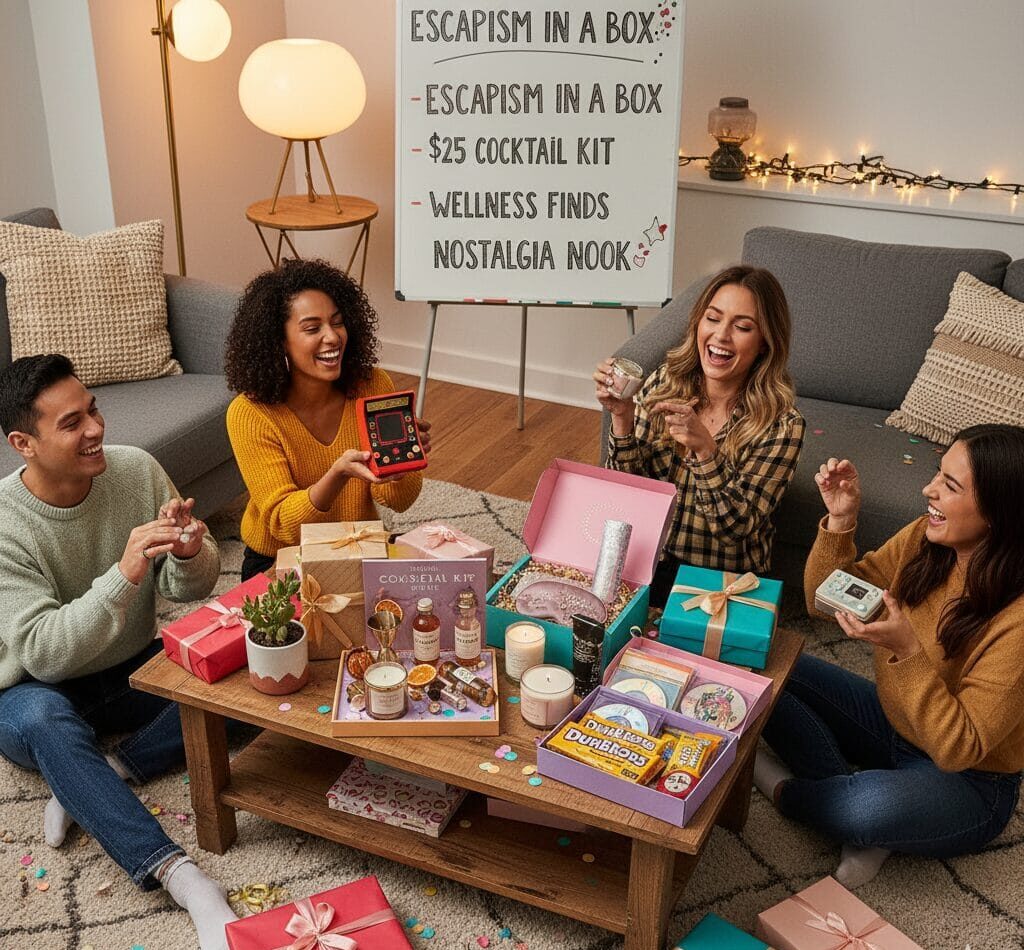
1. The Theme Exchange
Assign a category and let everyone bring something within it. We have done “something you already love” (each person brings a product, book, or thing they use regularly and would recommend), “under $25 from a local store” (which excludes Amazon and creates some interesting gifts), and “something edible you made.” The constraint is the interesting part. Open-ended gift giving produces forgettable gifts. A good theme produces stories.
The trick to running it well is to pick the theme early and put it in the same message where you set the date, so people have weeks to hunt rather than grabbing something on the drive over. We draw numbers and open in order, and each person says a sentence about why their gift fits the theme. If you want a little friendly chaos, add a steal rule — but with a theme, the gifts are personal enough that most people are happy to keep what they drew.
2. Gift Book Exchange
Everyone brings a wrapped book as their gift, one that meant something to them. You can either do a white elephant structure (pick and steal) or simply draw numbers and open in order. The better version: each person has sixty seconds to explain why they brought their book before it goes into the pool. This produces better conversation than most dinner table topics and the kids pay more attention to this than almost any other part of the evening.
A couple of small refinements make it sing. Split into an adult pool and a kids’ pool if the age range is wide, so a ten-year-old is not unwrapping a dense literary novel. And gently discourage brand-new bestsellers in favor of a book the giver has actually read and loved — the whole magic is the personal recommendation, and a well-loved paperback carries more warmth than a shiny new hardcover nobody has opened.
3. Experience Gift Exchange
Instead of objects, everyone brings an experience they are offering. One family member offers a cooking lesson. Another offers a hiking trip. Another offers a one-night hotel stay from points they have accumulated. The experiences stay within the family and get redeemed over the following year. This format requires more planning from participants but produces gifts that actually get used, which is not something that can be said of most physical gift exchanges.
The one thing that makes or breaks the experience exchange is follow-through, so we write each offer on a nice card with a rough timeframe -—”a Saturday hike this spring,” “a movie night in the summer” — and the recipient is responsible for scheduling it. Without that, the experiences drift into next Thanksgiving unredeemed. Encourage offers that cost time and thought rather than money; the babysitting-swap and the home-cooked-dinner offers tend to be the most treasured ones, and they keep the whole exchange from becoming an arms race.
4. The Gift Ingredient Box
This is my current favorite and we have done it twice. Everyone brings a box of specialty food ingredients — things from a farmers market, a specialty grocery, or a cooking trip. Good olive oil, interesting hot sauce, unusual salt, a bag of heirloom beans, dried pasta from a specific producer. The recipients cook with what they receive. The gift has a built-in second chapter: the meal someone makes from it.
To make the second chapter actually happen, we ask each giver to tuck in a handwritten card suggesting one simple way to use the standout ingredient — “this chili oil is incredible on eggs,” “toss these beans with the good olive oil and lemon.” It turns a box of nice things into a small invitation to cook. A loose budget keeps it accessible, and shelf-stable choices mean nobody is juggling something perishable through a long evening and a car ride home.
5. Nothing (and Why That Is Also Fine)
We skipped the exchange entirely one year because several family members were managing difficult circumstances and the planning overhead felt like the wrong thing to add. We replaced it with dessert and a game. Nobody missed the exchange enough to advocate for reinstating it the following year. It was reinstated anyway because the kids wanted it back. But the year without it taught me that the format is in service of the gathering, not the other way around. If the exchange is creating stress rather than fun, simplify it or remove it.
That year of nothing is worth holding onto as a reminder. The point was never the pile of gifts; it was the people around the table. Some years a family has the bandwidth for an elaborate experience exchange, and some years the kindest thing you can do is take one obligation off everyone’s plate. Reading the room and choosing accordingly is its own form of hosting.
How to Choose the Right Gift Exchange Format for Your Family
- Lots of little kids? The theme exchange or a split book exchange keeps everyone engaged and the gifts age-appropriate.
- Spread across different cities? The experience exchange gives you built-in reasons to see each other through the year.
- A family of cooks and food lovers? The ingredient box is hard to beat, and the shared meals afterward extend the fun.
- A hard year, or exchange fatigue? Give yourselves permission to skip it and just play a game over dessert.
Frequently Asked Questions
How do we set a fair budget?
Decide it together before anyone shops and keep the number modest, since the theme is doing the real work. A stated cap — and a reminder that thought counts more than cost — prevents the awkward mismatch of a generous gift next to a small one.
Should we let people steal gifts?
The steal rule adds energy but can get heated with kids or personal gifts. For the book and theme exchanges we often skip it and just open in order; save the stealing for a lighthearted, low-stakes pool if your family enjoys the competition.
Why do the exchange at Thanksgiving instead of Christmas?
Because December is already overloaded. Thanksgiving has room to breathe, everyone is gathered, and the exchange becomes its own tradition rather than one more Christmas obligation competing for attention.
Every one of these beats white elephant for the same reason: a good constraint turns gift-giving into storytelling. Pick the format that fits the people at your table this year, set the rules early, and let the exchange do what it is actually for — giving everyone a warm, shared moment after the plates are cleared.