My opinion on the specialty dining question has evolved with every cruise we’ve taken.
As a family (Brad, Myself, Charlotte, and Madeline), we have been on 4 cruises together. On the first cruise — Carnival, out of Long Beach — we ate in the main dining room every night and the specialty restaurants felt like an unnecessary add-on cost. By the fourth cruise — Celebrity on the Alaska route — we ate in specialty restaurants for most dinners and understood why the category exists and when it is worth it. This guide is the honest version of what I’ve learned: when the upcharge is worth it, which restaurants deliver, and how to book them so you don’t miss out.
When Cruise Specialty Dining Is Worth It
The gap between main dining room quality and specialty restaurant quality varies significantly by cruise line. On Carnival and Royal Caribbean standard sailings, the gap is real but manageable — main dining is fine. On Celebrity and Norwegian, the main dining is already good, and the specialty restaurants add a different experience rather than a dramatically better one.
Specialty dining is most worth it on cruises where the main dining room is a logistical operation rather than a genuine restaurant experience — fixed seating times, large tables with strangers, and a pace determined by the kitchen rather than your preference. On those ships, the specialty restaurants offer something closer to a real dinner: smaller rooms, a better server-to-guest ratio, and food that requires more skill to produce. If your main goal is a relaxed, unhurried meal, that alone can justify the cover charge on a special night.
The Cruise Restaurants Worth Booking
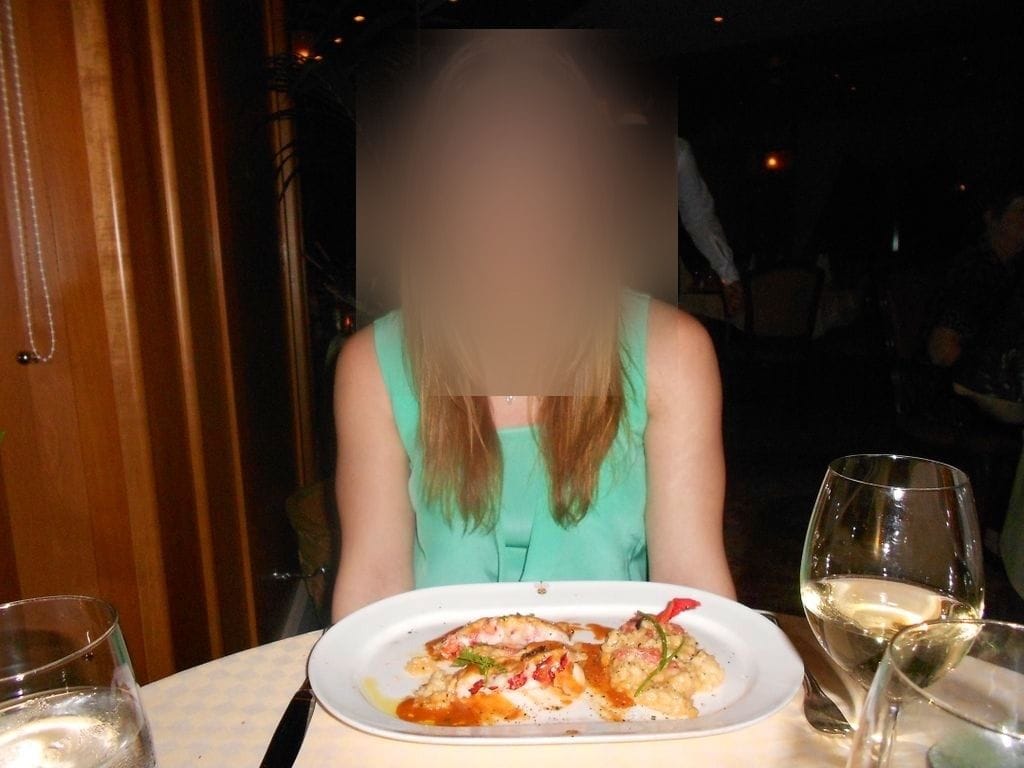
Murano (Celebrity). Murano is the one I have gone back to. Despite the name, it is Celebrity’s French fine-dining restaurant — crafted by a Michelin-starred chef — and it is fine dining: tableside preparations, a wine program curated by someone who knows what they are doing, and service that stays attentive across a long meal. We have done Murano three times over two Celebrity sailings, and the food has consistently been at a level that would be competitive with a mid-tier fine-dining restaurant on land.
Fahrenheit 555 (Carnival). On Carnival, Fahrenheit 555 is the correct specialty choice. This steakhouse is significantly better than the main dining room for protein quality and preparation, and the price premium is modest. If you only do one paid meal on a Carnival ship, make it this one.
Le Bistro (Norwegian). On Norwegian Cruise Line, Le Bistro is the right booking — a classic French restaurant that has been a fleet staple for years and delivers the kind of sit-down, multi-course dinner that the buffet and main dining simply can’t. (Note that “The Haven” on Norwegian refers to the premium suite complex, which comes with its own restaurant for suite guests; Le Bistro is open to all.)
Chops Grille (Royal Caribbean). On Royal Caribbean, Chops Grille is the reliable answer — the line’s American steakhouse, with premium cuts like Wagyu beef and bone-in tomahawks. It’s the safe, satisfying upgrade over the main dining room.

The Cruise Booking Logistics
Book specialty dining before you board. The good time slots fill in the first days of a sailing, and you are competing with every other guest for the same tables. On most cruise lines you can pre-book online or through the app, and the smart move is to reserve when you book the cruise, not when you board. This is the single most useful piece of cruise specialty dining advice I can offer from experience.
A few tactical notes: prime dinner times (around 7 to 8 pm) go first, so if you’re flexible, an earlier or later slot is easier to snag. Many lines sell multi-restaurant dining packages that bring the per-meal cost down if you plan to eat in specialty venues more than once — worth doing the math before you sail. And if a restaurant is fully booked online, it’s still worth asking at the venue on embarkation day, since cancellations open up.
Is It Worth It for Families?
With kids, I’d be selective. A long tableside-preparation dinner at Murano is wasted on a restless seven-year-old, but a steakhouse like Chops or Fahrenheit 555 works fine for a family that wants one nicer night. My approach is to do the main dining room most evenings — it’s included, and kids do well with the routine — and reserve one specialty dinner as the trip’s “grown-up” highlight, either with the whole family at a steakhouse or as a parents’ night if the ship has a kids’ program.
Frequently Asked Questions
Should I pay for specialty dining at all?
Not necessarily every night. It’s most worth it when the main dining room feels like an assembly line, or when you want one special meal. On lines where main dining is already strong, treat specialty restaurants as a change of pace rather than a required upgrade.
Which is the best specialty restaurant?
Of the ones we’ve tried repeatedly, Murano on Celebrity is the standout for a true fine-dining experience. For steak, Fahrenheit 555 (Carnival) and Chops Grille (Royal Caribbean) are both reliable.
When should I make reservations?
As early as possible — ideally when you book the cruise. Prime slots disappear in the first days of a sailing, so pre-booking online or via the app is the way to guarantee the table and time you want.
What to Know Before You Dine
- Dress codes are real. Fine-dining venues like Murano and the steakhouses lean smart-casual to dressy; pack at least one nicer outfit per person so you’re not scrambling on the night.
- Cover charges vary. Steakhouses tend to carry a flat per-person cover, while some venues price a la carte. Check the current charge in the app before you book so there are no surprises on your onboard account.
- Packages can save money. If you plan more than one specialty meal, a dining package usually beats paying per restaurant.
- Tell them about occasions. Birthdays and anniversaries are worth mentioning when you reserve; the kitchens are used to celebrations and often do something small.
- Go early on port days. The dining rooms are quietest on evenings after a full day ashore, when many guests are tired or eating late.
None of this is complicated, but a little planning turns the specialty restaurants from an impulse upcharge into the meals you remember from the trip. The difference between a rushed, random specialty dinner and a great one is almost entirely in the booking and the timing — both of which are within your control before you ever step on the ship.
The Bottom Line
Specialty dining isn’t automatically worth it, and it isn’t automatically a waste — it depends on the line, the ship, and what you want from the evening. Save it for the nights that matter, book the standouts (Murano, Fahrenheit 555, Le Bistro, Chops Grille) well in advance, and you’ll get a meal that feels like an occasion rather than an add-on charge.