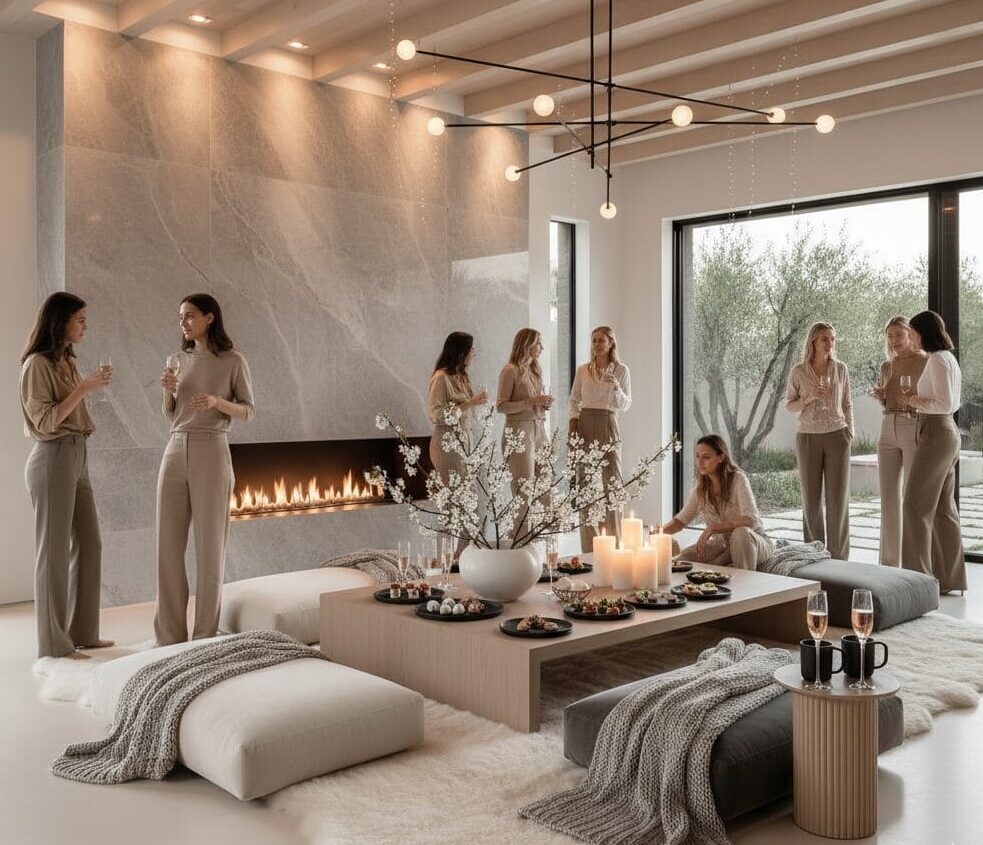
There is a specific category of party I now aim for — call it luxe minimalist — that I did not have language for until recently. It is not minimal in the sense of uneffortful — there is genuine effort in the setup. But it is restrained: a few well-chosen elements instead of every possible element, a clear palette instead of a variety of competing aesthetics, and enough empty space in the visual environment that each thing you have put out can be noticed.
I arrived at this approach after throwing a birthday party that had seventeen distinct decorative elements and required three hours of setup and looked, in retrospect, exactly like nobody had made a single decision. Abundance without curation is just clutter. This is the corrective.
What follows is the whole framework I use now, broken into the handful of decisions that actually move the needle. The good news for anyone who dreads hosting is that this style is genuinely less work, not more. You are buying fewer things, setting out fewer things, and cooking fewer things — you are just choosing each of them with more intention.
The Luxe Palette
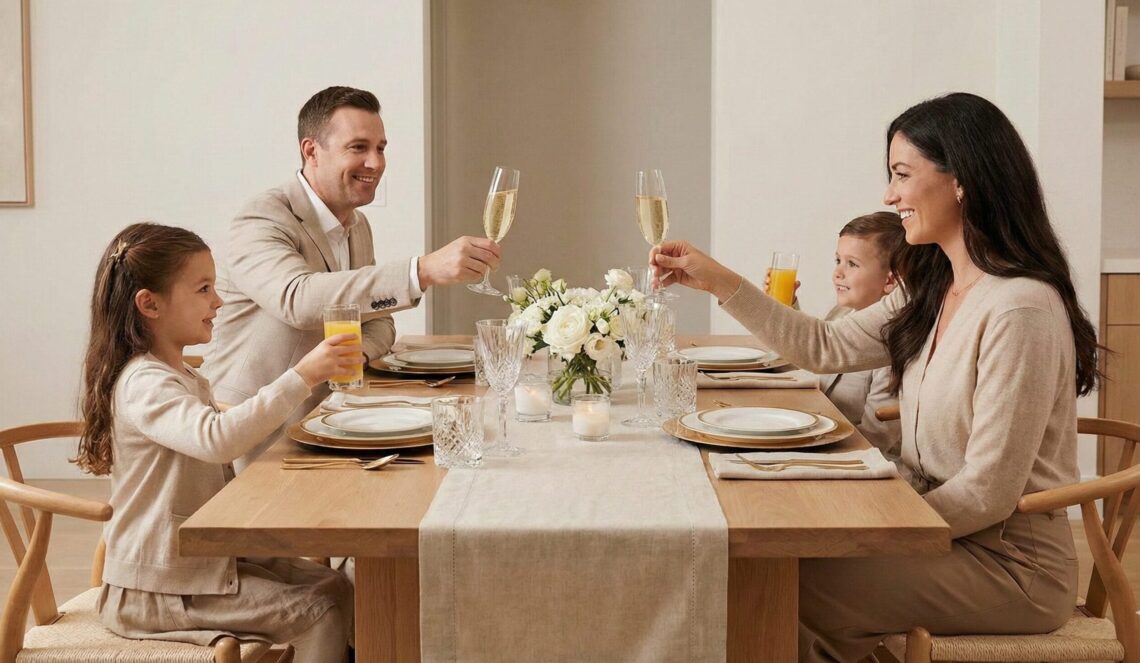
Pick two colors and a neutral and commit to them. Everything you bring into the party space should be one of those three. If it is not, it does not come in. This sounds constraining and produces, in practice, a table that looks like it was styled by someone who had a point of view rather than someone who bought everything in the party aisle.
If you have never chosen a palette before, the easiest starting point is to build off a neutral you already own — your everyday white plates, a wood table, a linen tablecloth — and then add just two accent colors on top. For a winter gathering I lean into deep green and a warm brass with cream underneath; for spring, a soft blush and sage with white. The specific colors matter far less than the discipline of stopping at three. When in doubt, take one color out, not add one in.
The Luxe Table
One statement element on the table and everything else in service to it. If you have a beautiful floral arrangement, the table setting should be simple enough that the arrangement is the thing you see first. If you have an elaborate cheese board, the table should not compete with it. The mistake most people make at home entertaining is treating every element as equally important, which means nothing is important.
Decide on your one hero before you set anything else out, and then let every other choice shrink to support it. If the flowers are the hero, keep them low enough that guests can see across the table, use plain napkins, and skip the place cards. If the food is the hero, keep the centerpiece minimal — a single bud vase or a run of tea lights — so nothing distracts from the platter. Empty space on a table is not a failure to decorate; it is the frame that makes your hero look deliberate. This is the luxe instinct at its simplest: one hero, endless restraint.
The Luxe Food
Fewer dishes done well is always better than more dishes done adequately. For a party of ten, three passed appetizers and one hot main and a dessert is enough. The restraint creates anticipation rather than overwhelm. Guests who have been offered twelve different things remember none of them. Guests who have been offered one exceptional thing at the right moment remember it.
Restraint also happens to be the most forgiving strategy for the host. Three dishes you have made before and can execute in your sleep will always beat six ambitious ones you are attempting for the first time with guests in the house. Choose things that can mostly be finished ahead so you are not chained to the stove, and let one of the three be something you simply bought and plated beautifully. Nobody is keeping score of what came out of your own oven. That is the luxe approach to feeding a crowd: fewer dishes, made with more care.
Texture and Light Are Where the “Cozy” Lives
The cozy aspect — the thing that makes this approach feel warm rather than cold — is texture and light. Candles, linen napkins that have been ironed, a thin layer of something on the table (a runner, a cloth) that softens the surface. These details communicate effort in a way that a lot of objects do not, and they can be done affordably. This kind of luxe warmth is inexpensive; it just takes attention.
The single biggest lever here is the lighting. Turn off the overhead lights entirely and light the room with lamps and candles at eye level and below. A cluster of unscented candles at varying heights does more for the mood of a room than any amount of decoration, and it costs almost nothing. Warm the space with texture your hands can feel — a nubby throw over the back of a chair, a wooden board, a stone platter, a bit of greenery — so that “minimal” reads as intentional and inviting rather than sparse or clinical.
What to Cut First
Minimalism is mostly a series of subtractions, and some things are almost always safe to cut. When I am editing a setup down, these are the first to go:
- Themed disposable tableware in loud prints — it fights every palette you choose.
- Balloons and banners, unless a single well-made one is your deliberate hero.
- Multiple competing centerpieces down the length of a table.
- Scented candles at the food table, which clash with what you are serving.
- Any decoration that exists only to fill space rather than to be looked at.
The same luxe restraint applies to party favors: skip the grab-bag of trinkets and choose one thoughtful item instead. If you want ideas that feel intentional rather than cluttered, these party favor ideas guests will actually love are proof that simple can still delight.
A Simple Timeline
Because the whole point is less stress, here is roughly how I stage the day so the restraint actually saves me effort instead of creating a last-minute scramble:
- A few days out: lock the palette and the one hero element, and buy only what fits.
- Day before: iron the linens, prep whatever food can be made ahead, and set the table.
- Afternoon of: arrange the flowers or board, place the candles, and finish the one hot dish.
- An hour before: dim the lights, light the candles, and put on music — then stop touching things.
Frequently Asked Questions
Does “minimalist” mean it looks cheap?
Just the opposite — restraint is what reads as expensive. A few good pieces with space around them look considered, while a crowded table of party-aisle items looks busy no matter how much you spent. You are spending on fewer, better things. That trade-off is the whole point of going luxe minimalist.
Can I do this on a small budget?
Absolutely, and it is arguably cheaper than the alternative. Candles, ironed linens you already own, and a single grocery-store bunch of flowers cost very little, and cutting the palette to three colors keeps you from impulse-buying decorations you do not need.
What if I love a maximalist, colorful look?
Then keep it — this is a style, not a rule. But even a bold look benefits from one organizing idea and a bit of breathing room, so you might borrow the “one hero, then edit” principle without going fully minimal.
That is the whole philosophy: decide what matters, give it room, and let everything else quietly support it. The luxe minimalist party is not about having less because you could not manage more — it is about the confidence to choose, and the warmth of candlelight and good texture to make that choice feel like a hug rather than a showroom.