The holiday party that runs itself is a myth, but there are configurations that require substantially less work from the host than others. The build-your-own bar format is the most reliable one I have found. I have used it for a hot cocoa bar at the girls’ school holiday party, a bloody mary bar at a New Year’s Day brunch, and a champagne cocktail station at a dinner party where I wanted drinks to be interesting but did not want to spend the party at a blender.
Build-Your-Own Hot Cocoa Bar for Your Party
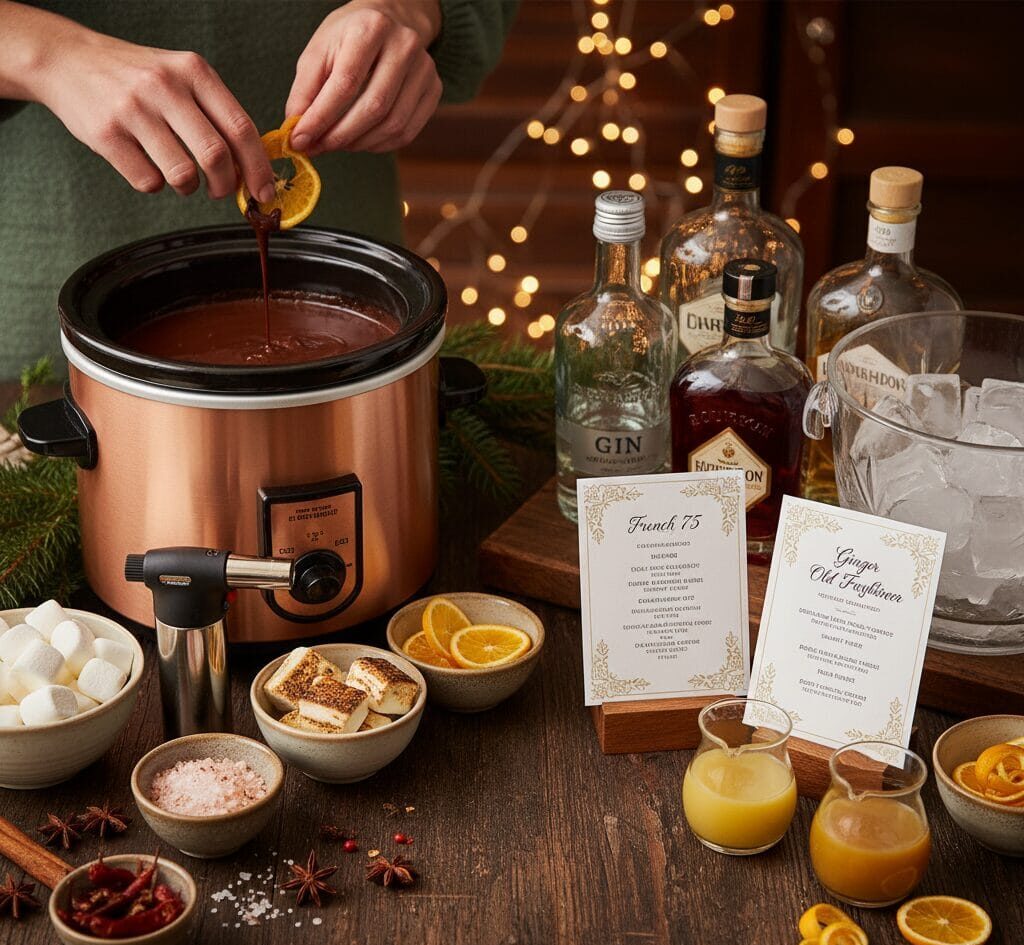
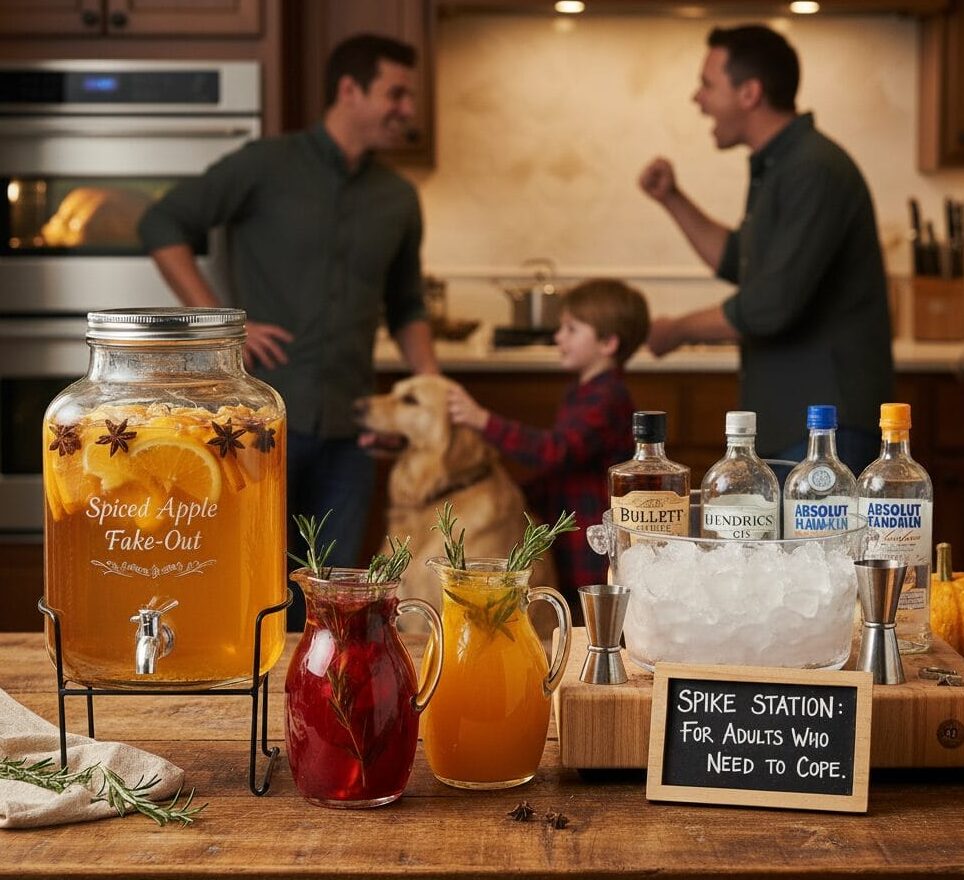
The best version of this is a large pot of base hot chocolate kept warm in a slow cooker, and a table of additions. The additions are the experience: mini marshmallows, large marshmallows, whipped cream, crushed candy cane, caramel sauce, a small bowl of chili flakes for the adventurous adult, shot glasses of bourbon or Irish cream set to the side for adult customization.
Children will customize elaborate, implausible combinations and then drink them with complete satisfaction. Adults will add the bourbon and pretend to themselves that they are being restrained. The setup takes twenty minutes. It requires no hosting during the party — people manage it themselves.
One thing I have learned to do at a mixed party: keep the alcohol additions physically separate from the main cocoa station, on their own little tray off to the side, rather than folded in among the marshmallows and candy canes. It keeps the spiking a deliberate, adults-only step, so there is no chance a kid ladles a splash of bourbon into their mug by accident. It is a small arrangement decision that lets me relax completely about the crowd of children swarming the table.
Build-Your-Own Champagne Cocktail Bar
I have done this for New Year’s parties and for a birthday dinner that required a festive opening. Set out chilled sparkling wine (prosecco works as well as champagne for this format and is more economical), and provide three or four additions: elderflower liqueur, Aperol or Campari, a good fruit juice (blood orange is seasonal and beautiful), sugar cubes, and a few fresh herb garnishes. Each person makes their own version at the start of the evening.
The addition of the champagne cocktail bar means you are not making individual cocktails for fifteen people, which is the alternative, and it means guests have something to do when they arrive besides look for the host. It is the social structure of the first fifteen minutes of a party, solved with a table and a few bottles.
A Few Reliable Ratios to Put on the Card
Guests build with more confidence when the suggestion card gives them real proportions rather than “add a splash.” These are the classic, well-established measurements I lean on, and none of them require any bartending skill:
- Classic champagne cocktail: one sugar cube in the bottom of a flute, three to five dashes of Angostura bitters, then top with about four to five ounces of chilled sparkling wine and a lemon twist.
- Elderflower spritz: the easy 3-2-1 ratio — three parts prosecco, two parts elderflower liqueur, one part soda water, over ice with a mint sprig.
- Aperol spritz: the same 3-2-1 idea — three parts Aperol, two parts soda, with an orange slice.
- Blood orange sparkler: a splash of blood orange juice topped with sparkling wine — festive, low-effort, and pretty.
Write these on a single card at the front of the station and guests will happily self-serve all night. The card does the explaining so you do not have to.
Always Build a Non-Alcoholic Side
Every bar I set up has a full non-alcoholic version running right alongside it, and not as an afterthought. For the champagne station, I put out a chilled sparkling non-alcoholic wine or a good bottle of sparkling cider so someone who is not drinking can build the exact same pretty spritz with the elderflower, juice, and garnishes. The mocktail should look and feel as celebratory as the cocktail, because plenty of guests — designated drivers, expectant parents, anyone taking a night off — appreciate not being handed a plain glass of soda while everyone else gets a garnish.
And a word from the nurse in me: a self-serve bar makes it very easy for people to lose track of how much they have had, so I keep plenty of water visible, put out real food alongside the drinks, and never pressure anyone to have another. If guests have been drinking, I make sure there is a plan — a rideshare, a designated driver, or a spot to stay over. A good party is one everyone gets home safely from. Please drink responsibly, and this is entertaining advice, not medical or legal advice.
The Party Setup That Makes Both Work
A labeled table with everything in small, individual bowls. Labels are not precious — they are functional. When eight people arrive simultaneously, the labels mean no one needs to ask what anything is and I do not need to explain the station. A small card explaining the suggested combinations is worth five minutes of writing. Put it at the front of the display and step away.
The other structural rule: set up the bar before the first guest arrives and then do not stand near it. The moment you position yourself next to the bar, you become the bartender. Walk away and the station manages itself.
How Much to Buy for the Party
The most common question I get is quantities, and it is easy to overthink. A standard bottle of sparkling wine pours roughly six glasses, so for a champagne station I plan on a little more than one bottle per two guests over an evening and always buy an extra bottle or two beyond that — unopened bottles keep for the next occasion, an empty bar does not. For the cocoa bar, a big batch base plus a generous spread of toppings goes further than you expect, because the fun is in the customizing, not the volume. When in doubt, buy more mixers, juice, and garnishes than you think, since those are cheap and disappointing to run out of.
Frequently Asked Questions
Which bar is better for a mixed-age party?
The hot cocoa bar, easily — kids love building their own, and the alcohol lives on a separate adults-only tray. The champagne station is better for an all-adult evening, though pairing it with a genuine non-alcoholic option makes it welcoming to everyone.
Prosecco or champagne?
For a build-your-own station, prosecco is the smart choice — it is more economical and works beautifully once you are adding liqueurs and juice. Save the good champagne for sipping on its own; nobody needs vintage bubbles hidden under Aperol.
How do I keep it from being messy?
Small individual bowls, a tray under the drips, plenty of cocktail napkins, and a small trash spot nearby. Set it on a wipeable surface or a tablecloth you are not precious about, and the self-serve mess stays contained.
Both of these formats do the same quiet work: they turn the drinks into an activity, give arriving guests something to do, and free you from playing bartender all night. Set the table, write the card, pour yourself the first spritz, and walk away — the party will genuinely run itself.