As a Registered Nurse, my career has been defined by clinical science: vital signs, medication titration, and the high-stakes environment of patient care. In that world, “sensory input” often means the beep of a monitor or the sterile scent of an ICU. However, true health—what we in the profession call holistic wellness—requires a “sensory reset.” For me, that reset began unexpectedly in a boutique tasting room in Santa Monica California, at AJA Vineyards.
Before I stepped into the world of AJA, I knew nothing about wine. I couldn’t tell a tannin from a terpene. But as a nurse, I understood the science of the palate and the neurological benefits of slow, intentional experiences. What started as a casual afternoon with a friend turned into a three-hour masterclass in presence, led by the incomparable Jenny, and eventually, a membership in a wine club that has redefined my perspective on local viticulture.
The Science of the Sip: A Nursing Perspective on Wine
From a physiological standpoint, wine is more than a beverage; it is a complex chemical composition. When we taste wine, we engage the olfactory system and the trigeminal nerve. As nurses, we know that the olfactory bulb is part of the brain’s limbic system, an area so closely associated with memory and feeling that it’s often called the “emotional brain.”
Research published in Frontiers in Human Neuroscience suggests that sommeliers actually have higher structural connectivity in regions of the brain that handle sensory integration. By learning to taste wine, we aren’t just being “fancy”; we are performing a form of cognitive training that enhances sensory processing. This is why a wine tasting shouldn’t be rushed. It took me three hours at AJA to realize I wasn’t just drinking; I was meditating.
How to Learn Wine from Scratch (Even if You Know Nothing about the Science)
If you feel intimidated by wine culture, you aren’t alone. I was the person who reached for whatever bottle had the prettiest label. Here is my “Nurse’s Protocol” for learning wine:
1. The “See, Swirl, Smell, Sip” Method
- See: Hold the glass against a white background. Is it clear or cloudy? (In nursing, clarity tells us a lot about a solution; in wine, it tells us about filtration and age).
- Swirl: This aerates the wine, releasing “volatile aromatics.”
- Smell: Don’t just look for “grapes.” Look for categories: Fruit, Earth, or Wood.
- Sip: Let it coat your tongue. Notice where you feel the sensation. High acidity usually makes the sides of your mouth water.
2. Join a “Learning-First” Wine Club
The reason I joined AJA’s club wasn’t just for the bottles; it was for the education. I initially visited the AJA tasting room with a friend, expecting to stay an hour. We stayed for three. Why? Because Jenny, our guide, treated our lack of knowledge not as a deficit, but as a blank canvas.
3. Vertical and Horizontal Tastings
To learn quickly, try a Vertical Tasting (tasting the same wine from different years) or a Horizontal Tasting (tasting different wines from the same year/region). This calibrates your palate to recognize the impact of weather and soil (the terroir).
The AJA Story: Family, Heritage, and the Malibu Coast
Understanding the “who” behind the wine is essential. AJA Vineyards was founded by Todd and Heather Greenbaum. While they built the foundation, their daughter Amanda Greenbaum—a certified sommelier and author—transformed her passion into a thriving business. It is a family-run operation in the truest sense, involving their three children and a deep commitment to the Malibu Coast AVA (American Viticultural Area).
The 4th Annual Pick Up Party: An Estate Experience
As a wine club member, the perks extend far beyond the bottle. Recently, I attended the 4th Annual Pick Up Party, held at the private AJA Estate Vineyards in Agoura. This wasn’t just a party; it was an immersion into the lifecycle of the vine.

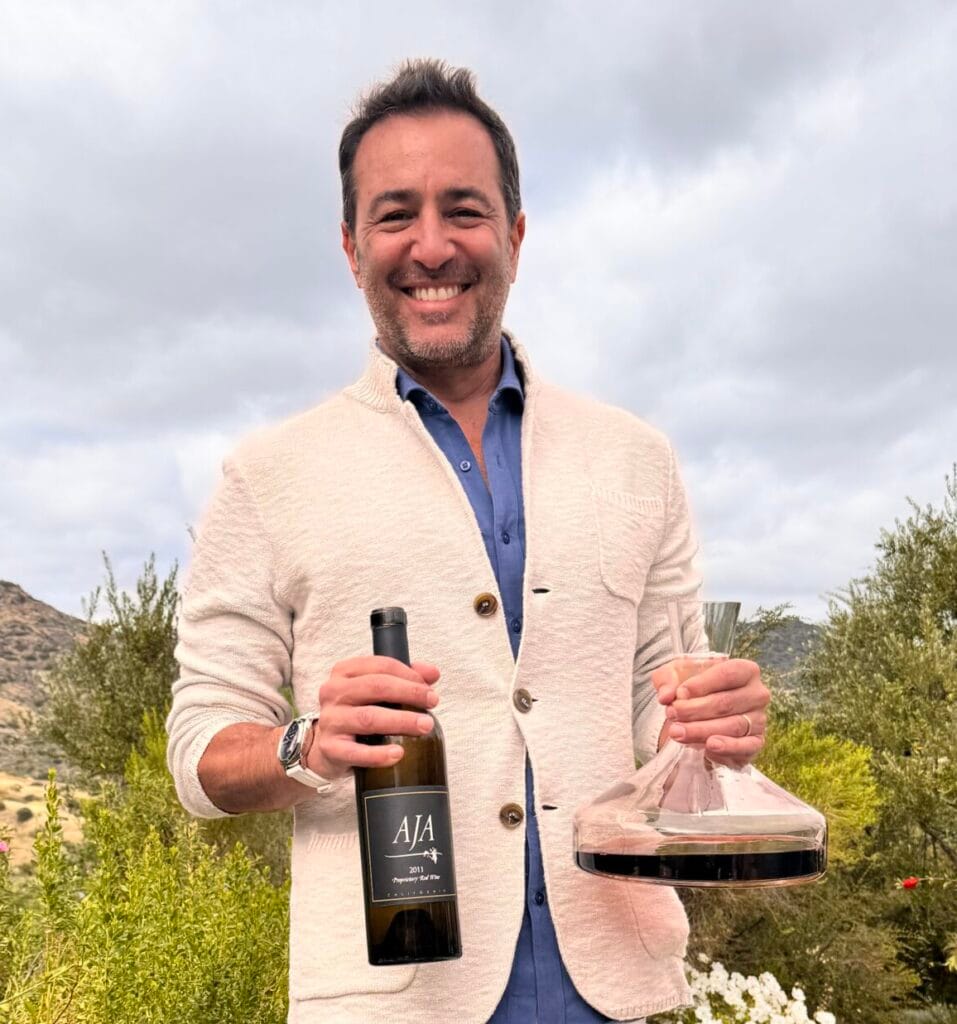
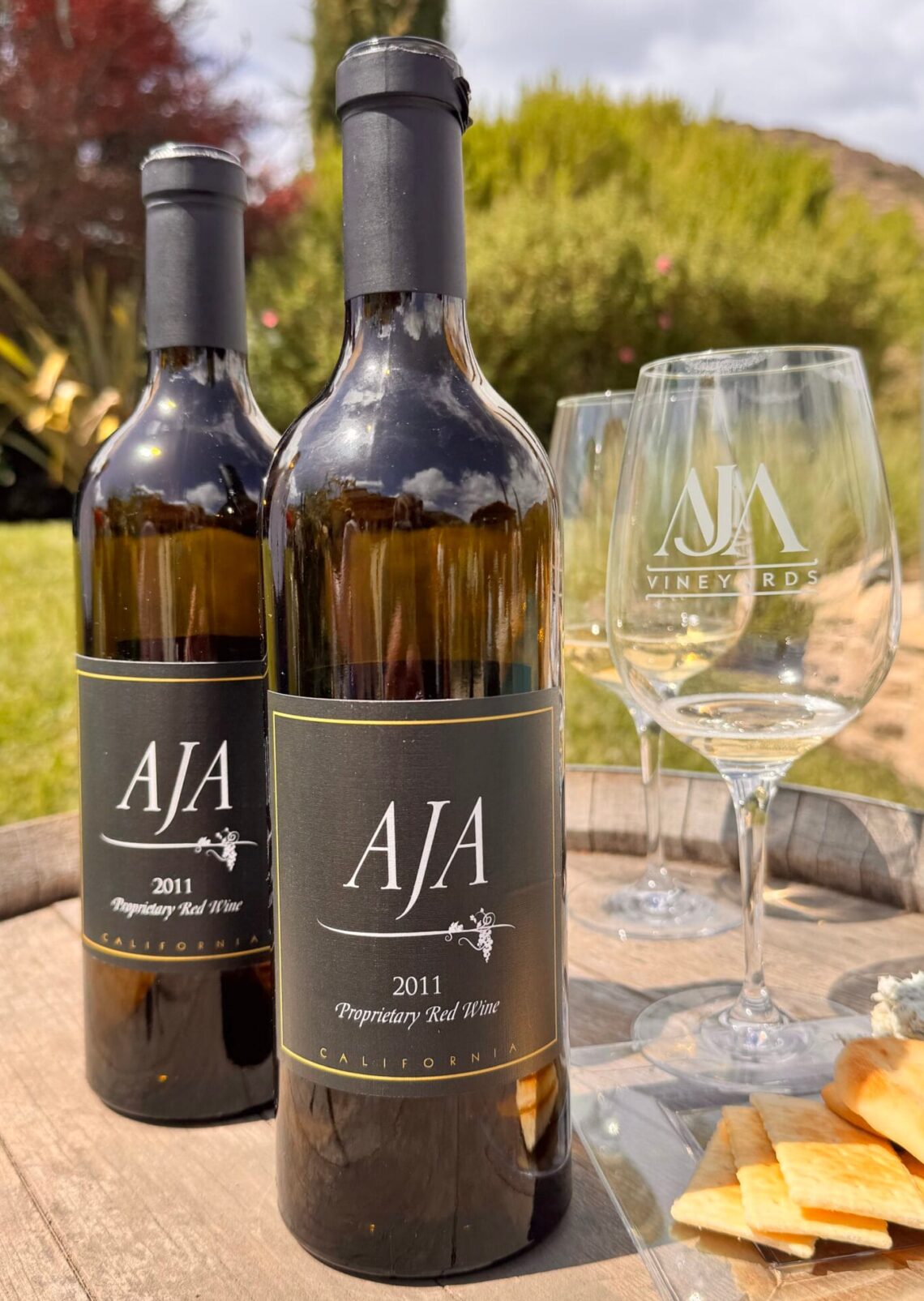
Todd Greenbaum himself moved through the crowd, sharing the very first wine he ever produced at the estate: the 2011 AJA Proprietary Red Wine. Tasting a founder’s first creation while standing on the soil where the grapes were grown is a rare privilege. Later, his son Jack took us on a private golf cart tour of the winery, explaining the intricacies of the Agoura microclimate.
The 2025 New Releases: A Clinical Science Breakdown
During the event, we sampled the latest vintage releases. From a sensory perspective, here is what to expect:
- 2025 Wildflower Rosé: Exceptionally crisp with high acidity. From a health perspective, Rosés often have lower histamine levels than heavy reds, making them a “lighter” sensory experience.
- 2025 Eds’ Vineyard Sauvignon Blanc: Bright and citrus-forward.
- 2025 Central Coast Chardonnay: A beautiful balance of oak and fruit without being “buttery.”
- 2018 Chilled Syrah: A unique take on a classic varietal. Chilling a red wine can actually suppress harsh tannins, making it more approachable for the “beginner” palate.
Cost Comparison: Wine Club vs. Retail Buying
Is a wine club “worth it”? Let’s look at the numbers.
| Feature | Retail/Grocery Buying | AJA Wine Club Membership |
| Price per Bottle | $25 – $60 (Standard) | 15% – 25% Discounted |
| Exclusivity | Mass-produced blends | Small-lot, Estate-grown |
| Education | Self-taught | Guided tastings & Sommelier access |
| Events | None | Private Estate Parties & Tours |
| Shipping | Full Price | Flat rate or Included |
The Verdict: If you drink 1-2 bottles of quality wine a month, the membership pays for itself through the discount alone. The “Hidden Value” is the access—you cannot buy a golf cart tour with Jack Greenbaum at a local liquor store.
Why a “Nurse’s Guide” to Wine Science Matters
My perspective is colored by my understanding of the human body and the necessity of stress reduction.
When I recommend AJA Vineyards, I am recommending a tool for Parasympathetic Nervous System activation. Engaging in a 3-hour tasting helps transition the body from “Fight or Flight” to “Rest and Digest.”
The Microbiome Science of the Vineyard: A Clinical View of Soil Health
As a nurse, I am fascinated by the human microbiome—the trillions of bacteria that keep our systems in balance. Interestingly, the world of high-end viticulture at places like AJA Vineyards mirrors this internal biology through the concept of Soil Health.
During our golf cart tour with Jack, we looked closely at the estate’s vines. Just as a patient requires the right balance of electrolytes and nutrients to thrive, a vine requires a complex symbiotic relationship with mycorrhizal fungi and soil bacteria. When Todd and his family maintain the Agoura estate, they aren’t just growing grapes; they are stewarding an ecosystem. For the wine enthusiast, this translates to “minerality.” For the medical professional, it translates to bioavailability.
Recent studies in the Journal of Agricultural and Food Chemistry suggest that organic and regenerative farming practices can increase the concentration of secondary metabolites in grapes—the very polyphenols like Quercetin and Resveratrol that we study for their anti-inflammatory properties. When you taste the 2018 Chilled Syrah, you aren’t just tasting fruit; you are tasting the result of a healthy “environmental gut” that the Greenbaum family has cultivated over years of careful land management.
Cultivating the “Flow State”: Why 3 Hours Isn’t Enough
I mentioned earlier that my first visit with my friend lasted three hours instead of one. In psychology and nursing, we refer to this as the Flow State—a period of energized focus where time seems to disappear. In our modern, notification-heavy world, reaching a flow state is a clinical necessity for mental health.
Jenny, our guide at AJA, facilitated this through “Scaffolded Learning.” She didn’t dump a textbook of facts on us; she met us where we were. As a nurse educator, I recognized her technique immediately. She began with “anchoring”—comparing the flavors of the Eds’ Vineyard Sauvignon Blanc to familiar notes like pineapple or hints of green pepper. By the time we moved to our next wine, our brains had built the neural pathways to recognize more complex notes of stone fruit and subtle oak.
This is the secret to why I joined the club despite knowing “nothing.” The environment didn’t just sell me a bottle; it provided a therapeutic intervention. It was a reminder that we are allowed to be students of pleasure, not just students of science or work.
The Science Logistics of Luxury: Navigating the Wine Club Tier
For those considering the leap from “casual taster” to “club member,” understanding the structure of the AJA experience is vital. Most “big-box” wine clubs feel like a subscription service—anonymous and transactional. The AJA model is Relational. When you join, you aren’t just a number in a database; you become part of the “AJA Family” lineage. This was evident at the 4th Annual Pick Up Party. There is a distinct difference between a corporate event and a family gathering. Seeing Todd move from person to person with his first-ever 2011 Proprietary Red felt like a proud parent showing off a graduation photo.
Comparison of Experience: The “Member Perk” Value
To put a “nurse’s price” on the experience, let’s look at the Intangible Value (IV) of membership versus a standard weekend outing:
- Private Tours: A private tour with a family member (like Jack) usually costs upwards of $100 per person at larger Napa wineries. At AJA, it’s a perk of being “in the family.”
- Access to New Releases: Sampling the 2025 Wildflower Rose before it hits any retail shelf gives you “first-mover advantage” for your own home entertaining.
- The Jenny Factor: Having a dedicated person who remembers your palate and your previous favorites is a level of personalized care that mirrors the Primary Nursing Model—where one nurse coordinates the total care of a patient to ensure consistency and trust.
Final Nursing Science Assessment: Is a Wine Club Right for You?
From a wellness perspective, I recommend a wine club like AJA for the person who needs to reclaim their time. If you find yourself rushing through your weekends or feeling “burned out” by the clinical demands of life, a wine club forces a slower pace. It mandates a quarterly “reset” where you stop, sample, and socialize.
Joining AJA Vineyards was the first step in my journey of “Culinary Passages.” It taught me that expertise isn’t something you’re born with—it’s something you sip, one glass at a time, until you realize you’ve learned a whole new language.
Read More from Culinary Passages
- How to Experience Santa Monica’s Most Magical Garden Dining for Less
- 6 Brutally Honest Rules for Los Angeles Dining: How to Eat Like a Local (And Score the Best Tables)
- A Great Michael Mina Heartbreak: The downfall of ORLA
- 7 Glorious, Kid-Free LA Experiences You Need to Book Right Now
- The “Bring a Board” Night Is The Ultimate LA Party Hack
- You Will Absolutely Love Santa Monica More Without a Car. Here’s the Proven 3-Day Plan.
- Your Ultimate Grown-Up’s Guide to Santa Monica: Sip, Savor & See the Ocean Like Never Before
- Discovering My Happy Place: Why The AJA Harvest Party is The Ultimate Wine Club Experience
- Waymo Rides, AJA Wine Flights, and a Dessert Surprise
- Santa Monica’s Best Hidden Gem: AJA Vineyards Wine Tasting Room
About the Author: Ginger, RN
Ginger is a Registered Nurse with a passion for uncovering the intersections of health, travel, and culinary arts. With years of experience in high-pressure clinical settings, she uses her blog, Culinary Passages, to help others find “healing through the senses.” When she isn’t at the bedside, you can find her exploring the vineyards of California or researching the latest in nutritional science.
References
- Frontiers in Human Neuroscience: The Neurobiology of Wine Tasting – Understanding how experts process sensory data.
- UC Davis Department of Viticulture and Enology: The Science of Terroir – Resource for the impact of soil on grape chemistry.
- American Journal of Enology and Viticulture: Tannin Evolution in Syrah Varieties – Technical data on the aging of Syrah.
- The Mayo Clinic: Resveratrol and Heart Health – Clinical perspectives on the polyphenols in red wine.
- GuildSomm: The Malibu Coast AVA Profile – Authoritative breakdown of the Agoura and Malibu wine regions.
Medical Disclaimer: This article is for informational and entertainment purposes only. Please consult with a healthcare provider regarding alcohol consumption and your specific health needs. Always drink responsibly.