After three decades on the water and more than 30 sailings, the horizon begins to look different. To the casual traveler, a cruise is a floating escape. To a Registered Nurse with 15 years of experience in high-stakes clinical environments, a cruise ship is a complex ecosystem of sensory inputs, physical variables, and psychological triggers.
When I sign off my shifts and transition to my role as a luxury traveler, I don’t leave my clinical brain at the hospital. Instead, I apply a “Sensory Reset” lens to everything—especially my suitcase. In 2026, the travel industry is seeing a shift toward “Quiet Luxury,” yet many travelers are still falling into the trap of packing for a photo shoot rather than an experience. According to the 2026 Pinterest Predicts report, the modern explorer is prioritizing “physically resilient” luxury over fast-fashion trends.
If you want to arrive home feeling truly restored, you must stop packing items that create “micro-stressors.” Here is the brutally honest, nurse-approved vibe check on what I officially stopped packing after 30 cruises.
1. The “Safety Hazard” Stiletto: A Clinical Cruise Gait Analysis
We have all seen the iconic image: a woman in a floor-length gown and four-inch stilettos gracefully descending a crystal-encrusted spiral staircase. It is the pinnacle of cruise marketing. However, as someone who has spent years assessing gait and balance in a clinical setting, that image represents a high-risk fall assessment.
The Problem with Verticality at Sea
A ship, regardless of how advanced its stabilizer technology is, is a moving platform. Even the most modern vessels experience pitch and roll. When you elevate your center of gravity on a needle-thin heel, you are significantly decreasing your stability. Furthermore, luxury decks—especially those on outdoor promenades—are often treated with high-gloss finishes or can become slick with evening salt-mist.
The Cruise Vibe Check
Stilettos in 2026 feel dated. They represent a “forced” glamour that contradicts the effortless ease of modern luxury lines like Silversea, which recently updated their dress codes to prioritize comfort without sacrificing elegance.
The Practical Pivot
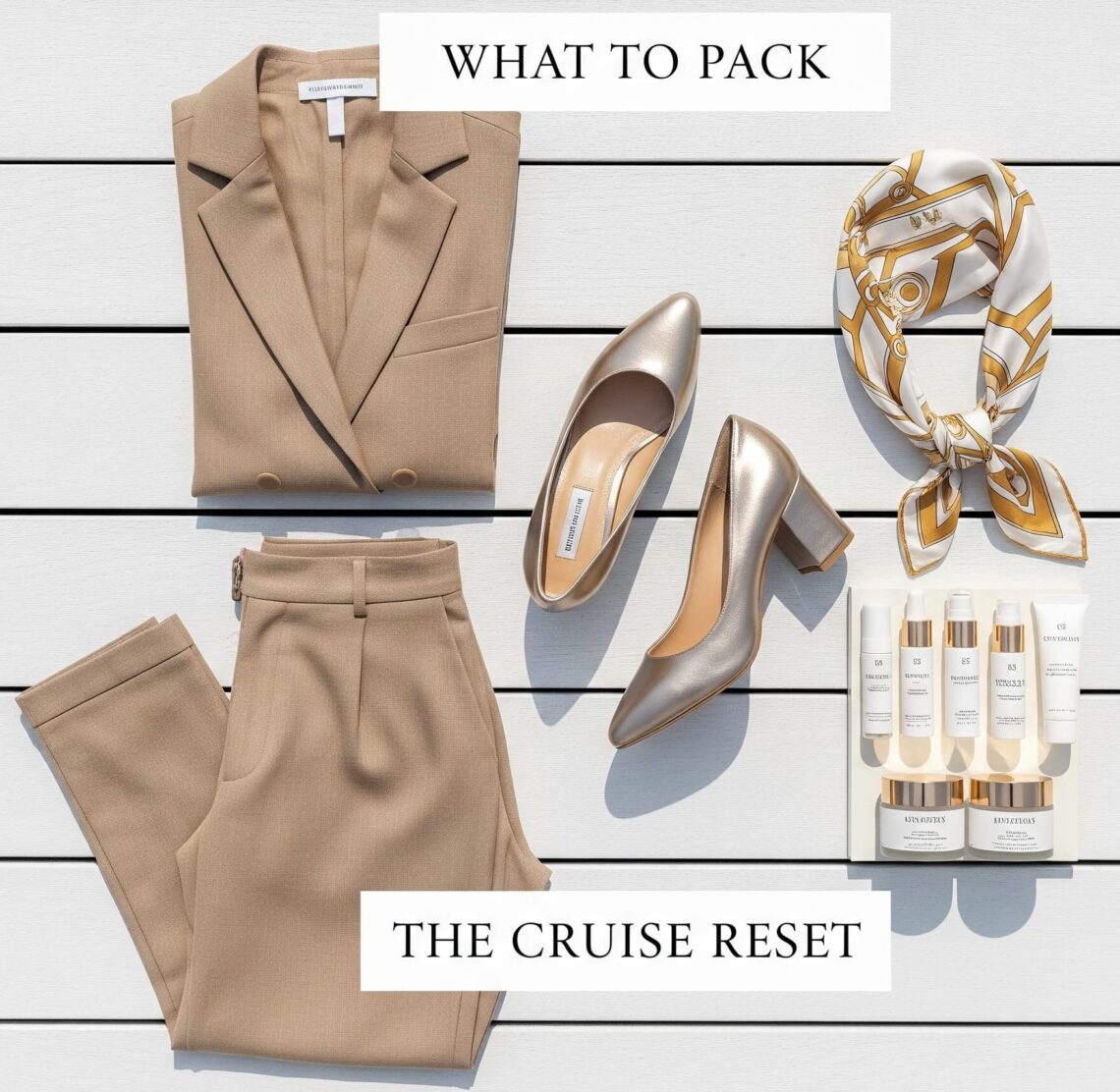
Invest in sculptural block heels or metallic leather flats. A block heel provides a wider base of support (the “Nurse’s Secret” to standing for 12 hours), ensuring you can navigate the dining room during a slight swell without clinging to the backs of chairs.
2. Heavy Denim: The “Humidity Sponge” Cruise Trap
Denim is a staple of the American wardrobe, but on a luxury cruise—especially in the Caribbean, Mediterranean, or South Pacific—it is your worst enemy.
The Physiology of Cruise Comfort
As a nurse, I think about thermoregulation. Heavy denim is non-breathable and highly absorbent. In 80% humidity, denim absorbs moisture from the air and from your skin, becoming heavy, chafing, and slow to dry. From a sensory perspective, the “feeling” of damp denim against the skin is a low-level irritant that prevents the nervous system from fully relaxing.
The Vibe Check
Many ultra-luxury dining rooms, such as those on Seabourn, still restrict “distressed” denim during formal evenings. Carrying three pounds of blue cotton that you can only wear in the air-conditioned cabin is a waste of precious luggage weight.
The Practical Pivot
Switch to high-twist linen or silk-blend trousers. Linen is the ultimate “sensory reset” fabric; it allows for maximum airflow and actually improves with a bit of “vacation wrinkle.”
3. The “Statement” Sun Hat: A Battle with Cruise Aerodynamics
The “Influencer Hat”—massive, straw-brimmed, and often embroidered with a witty phrase—is a staple of cruise photography. But have you ever tried to wear one on a balcony while the ship is traveling at 20 knots?
The Stress of Management
Luxury is the absence of “fiddling.” If you are constantly holding your hat onto your head with one hand while trying to enjoy a clarified cocktail with the other, you aren’t relaxing. This constant physical vigilance keeps the amygdala—the brain’s fear center—on a low-level alert for “loss of property.”
The Practical Pivot
Look for packable fedoras with hidden internal drawstrings or designer silk headscarves. A scarf tied “Grace Kelly style” is wind-proof, protects your hair from salt-damage (a major nurse-wellness tip!), and takes up zero room in your carry-on.
4. “Dry Clean Only” Silk: The Cruise Fragility Factor
I love the feel of sand-washed silk, but it is notoriously fragile. Between the movement of the ship causing spills and the chemical nature of sunscreen and salt air, your $500 silk slip dress is in constant danger.
The Nurse’s Perspective on Maintenance
In the hospital, we prioritize “wash and wear” for a reason. On a ship, you want to be able to live your life. If you’re afraid to eat an oyster or lean against a railing because of your outfit’s dry-clean-only tag, you’ve lost the “Discovery” aspect of the trip. While world cruises like Seabourn’s 2026 itinerary offer laundry services, the turnaround time can be a hassle.
The Practical Cruise Pivot
Technical Silks and Crepes. Brands are now creating high-performance fabrics that look and feel like silk but can be spot-cleaned in a cabin sink and hung to dry in thirty minutes. This is true luxury: being able to spill a drop of champagne and not have it ruin your night.
5. Excessive “Hardware” Jewelry: The Sensory Overload
We often pack jewelry to “elevate” simple outfits, but heavy, clanking metal can be a sensory nightmare in the quiet, refined environment of a luxury ship.
The Sound of Stress
A “Sensory Reset” requires minimizing unnecessary auditory input. The constant clack-clack of bangles against a table or your own skin can be surprisingly draining over a long dinner. Furthermore, metal jewelry retains heat and can become uncomfortable in tropical ports.
The Practical Pivot
Single-focus jewelry. A high-quality strand of pearls or a pair of architectural gold studs. These items add visual weight without the physical or auditory noise.
6. The “Just-In-Case” Cruise Wardrobe (The Over-packer’s Curse)
After 30 cruises, I realized that I was packing for a version of myself that didn’t exist. I was packing for the woman who might suddenly decide to go jogging on the deck (I won’t) or the woman who might need a third ballgown (I don’t).
The Psychological Cost of “Stuff”
Overpacking creates “decision fatigue.” Every morning, you have to sift through 40 items to find the five you actually want to wear. Research in the Journal of Health and Well-Being shows that cluttered environments (like a cramped cruise cabin filled with “just-in-case” clothes) lead to higher cortisol levels.
The Practical Pivot
The “3-to-1” Rule. For every bottom (trousers/skirt), pack three tops. This maximizes outfits while minimizing bulk, giving you more space for the luxury skincare you actually need to combat sea air.
7. Rigid Designer Luggage
It looks beautiful on the luggage cart, but hard-shell, non-expandable designer trunks are often the most impractical items you can bring on a ship.
Cabin Ergonomics
Cruise cabins—even the Grand King Suites—have finite storage space. Hard-shell luggage that doesn’t fit under the bed becomes a permanent “tripping hazard” in your living area. As a nurse, I am always scanning for “floor clutter” that interrupts the flow of a room.
The Practical Pivot
High-end soft-sided spinners. They are durable, they flex to fit into storage nooks, and they are much easier for porters to handle, ensuring your belongings arrive at your cabin without a cracked shell.
The Science of the Sensory Reset: Why Your Suitcase Matters
Why am I so obsessed with what you pack? Because travel is a biological intervention. When we leave our high-stress jobs, our brains are looking for “Cognitive Flexibility.” If your physical environment—including the clothes on your back—is causing discomfort, your brain cannot fully transition from “Survival Mode” to “Discovery Mode.”
By avoiding these 7 impractical trends, you are removing the friction between you and your environment. You are allowing your nervous system to regulate, your blood pressure to drop, and your mind to truly reset.
Read More on Culinary Passages
If you found this guide helpful, dive deeper into my “Nurse-Approved” discovery series:
- The Tasting Menu Travel Capsule: How to Dress Like a 5-Star Entrée on a Street Food Budget
- 5 Moody PNW Lodges for the Ultimate “Wilderkind” Sensory Reset
- A Nurse’s No-Nonsense Guide to Luxury Cruise Wellness
- The Jet-Setter’s Edit: Luxury Carry-On Essentials for Las Vegas
About the Author
Ginger Graham is a Registered Nurse with nearly 15 years of experience spanning bedside care, procedural nursing, and clinical management. She is the founder of Culinary Passages, where she explores the intersection of high-end lifestyle and professional wellness. Having completed more than 30 cruises across the world’s most prestigious lines, Ginger provides a unique, clinical perspective on luxury travel. She lives in Southern California with her husband, Brad, and their goldendoodle, Barnaby, and is a firm believer that a well-ordered suitcase is the first step toward a well-ordered mind.