The tapas format is the most forgiving hosting format for a dinner party: everything is made ahead, the pacing is self-managed by guests, and the abundance of small dishes creates the sense of a generous meal without requiring any single dish to be the centerpiece. I have hosted tapas nights eight or nine times at this point and have learned what works.
As we move further into a year defined by “Sensory Minimalism,” the goal for the modern host is to create an environment where the table itself facilitates the flow of conversation. Whether you are hosting a small group of friends or an intimate family gathering, the “Grown-Up Tapas Night” is the ultimate expression of modern hospitality. To achieve this, one must look beyond the menu and into the architecture of the evening itself.
1. The Philosophy of the 2026 Luxury Tablescape
In 2026, luxury is no longer defined by “more,” but by the “intentionality of less.” For a tapas-style evening, the table should not be crowded; it should be curated.
The “Negative Space” Strategy
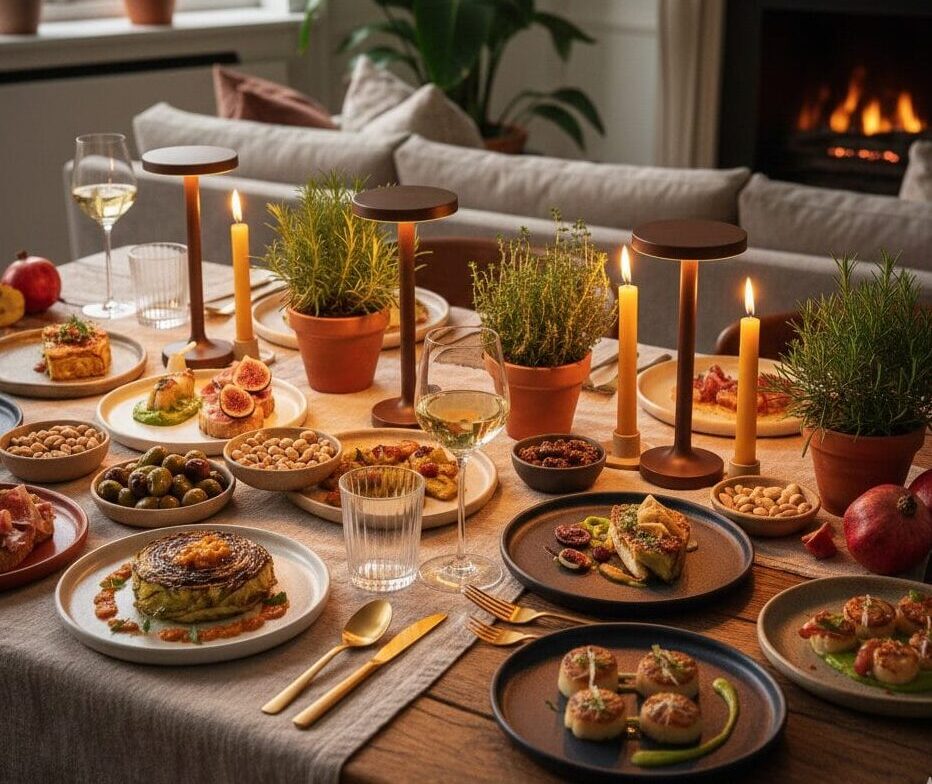
When serving small plates, the common mistake is to clutter the table with too many dishes at once. To achieve a high-end look, embrace negative space. Negative space allows the eye to rest and ensures that the artisanal details of your plates aren’t lost in a sea of porcelain.
Use a neutral linen runner—think raw silk or heavyweight stone-washed flax—to provide a tactile base. For 2026, we are seeing a heavy lean toward “Mineral Earth” tones—clays, muted terracottas, and deep slate—which provide a perfect high-contrast backdrop for vibrant Mediterranean or modern fusion dishes. These tones aren’t just trendy; they are grounding, creating a psychological sense of “calm luxury” that encourages guests to linger longer.
2. Choosing Your “Hero” Luxury Materials
A tablescape for small plates requires a variety of surfaces to keep the eye moving. Since the food arrives in waves, your “hardware” needs to be versatile. In 2026, we are seeing a move toward “honest materials”—items that look like they were pulled from the earth.
- Matte Ceramics: Move away from high-gloss plates. Matte finishes in organic, slightly “wonky” shapes are the 2026 standard. They don’t reflect camera flashes or harsh light, making them perfect for those blog-worthy overhead shots.
- Mixed Metals: Don’t be afraid to mix brushed gold flatware with pewter serving trays. This “collected over time” look is a hallmark of the Culinary Passages aesthetic. It suggests a host who travels, collects, and appreciates the patina of age.
- Architectural Glassware: Small plates pair beautifully with curated wine flights. Opt for ultra-thin, hand-blown stems or ribbed tumblers for a more casual, “cool” vibe. The sound of high-quality glass clinking is part of the evening’s “acoustic luxury.”
3. The Science of Luxury Small Plate Plating
Creating a tapas-style dish is an exercise in restraint. Because the portion sizes are smaller, every millimetre of the plate is under a microscope. To elevate your home cooking to restaurant-grade status, you must apply professional plating techniques.
Successful plating relies on five pillars: equilibrium, focal point, flow, texture, and color. When styling your “Grown-Up Tapas,” consider the “Rule of Three.” A central protein or vegetable should be flanked by a sauce and a textural element (like a crumble or tuile).
For example, if you are serving seared scallops, place them on a vibrant pea purée (color), top with a pancetta crisp (texture), and finish with a drizzle of lemon oil (equilibrium). This level of detail turns a simple snack into a “Renaissance” dish.
4. The Culinary Layout: A Tapas Flow
The “Small Plate Renaissance” is defined by the quality of the ingredients. When planning your menu, think about the visual “hero” of each dish. Staggering the arrival of food is essential for both the host’s sanity and the guests’ enjoyment.
Luxury Cold Starters (The Opening Act)
Begin with visual textures that require zero “last-minute” cooking. A high-end tinned fish board (conservas) is a 2026 staple. Arrange premium sardines or octopus on a wooden board with piquillo peppers and Marcona almonds. This “luxury pantry” approach is both chic and incredibly efficient.
The Warm “Renaissance” Plates
As the night progresses, introduce plates that require more “artistry.” Consider a charred cabbage “steak” with a zesty romesco sauce—a dish that highlights 2026’s obsession with the “Glow-Up” of humble vegetables. The charring provides a smoky aroma that acts as a natural “room fragrance” for the dining area.
5. Incorporating 2026 Trends: The “Botanical” Table
One of the biggest shifts this year is the integration of edible botanicals into the table decor itself. Instead of a traditional floral centerpiece, which can often block sightlines, use “culinary arrangements.”
- Potted Herbs: Place small, chic terracotta pots of rosemary, thyme, and blooming chives along the center of the table. Not only do they smell divine, but guests can pluck fresh leaves to garnish their own plates. This bridges the gap between the host and the guest, making the dining experience interactive.
- Fruit as Decor: Whole pomegranates, sliced citrus, and clusters of grapes trailing off the edge of a marble platter add a “Dutch Still Life” quality to your tablescape.
The “Edible Table” trend is about sustainability and utility. It rejects the “single-use” nature of cut flowers in favor of items that can be consumed or replanted, aligning with the 2026 push for eco-conscious luxury.
6. Drinks: The Zero-Proof & Botanical Flight
The “Grown-Up” part of this tapas night includes a sophisticated beverage program. In 2026, the demand for high-end non-alcoholic options has skyrocketed, with “Zero-Proof Mixology” becoming as respected as traditional wine sommelier work.
- The Yuzu Spritz: Use fresh yuzu juice, sparkling mineral water, and a splash of botanical syrup. Yuzu is the citrus of the year for 2026, offering a more complex, floral acidity than lemon or lime.
- The Wine Pairing: For those imbibing, stick to “Old World” wines with high acidity to cut through the richness of the tapas. A chilled Sherry or a crisp Albariño is non-negotiable for an authentic feel.
For those looking to deepen their knowledge of pairing, the Wine & Spirit Education Trust (WSET) offers fantastic insights into how the acidity and tannins in Mediterranean wines specifically complement the salt-and-fat profiles common in tapas. For instance, the saltiness of Jamón Ibérico is perfectly balanced by the nutty, oxidized notes of a dry Amontillado Sherry.
7. The “Host’s Workflow” for a Stress-Free Night
Below is a great timeline you can use to make your night a little less stressful:
- T-Minus 48 Hours: Shop for specialty items. Visit your local luxury grocer for the high-end tinned fish and artisanal cheeses.
- T-Minus 24 Hours: Prep all cold sauces (Aioli, Romesco, Chimichurri). These often taste better after the flavors have melded overnight.
- T-Minus 4 Hours: Set the table. This is when you “style” the botanicals and check the lighting. Taking your photos now—before the guests arrive—ensures you have perfect, crumb-free shots.
- During the Party: Small plates are meant to be staggered. Only have 2–3 hot items that require quick assembly so you can spend time with your guests.
The key to a successful tapas-style evening is “The Assembly Method”—choosing dishes that require assembly rather than active cooking once guests arrive. This allows the host to remain part of the “Renaissance” rather than being stuck in the kitchen.
8. Layered Lighting & Acoustic Luxury
We cannot discuss tablescapes without discussing the “invisible” elements of design: light and sound. In 2026, the “smart home” has become more subtle.
The “Golden Hour” Glow
Lighting is the “secret sauce” of any upscale event. For a tapas night, you want to mimic the “golden hour” of a seaside Spanish bistro. Avoid overhead lights at all costs. Instead, utilize a mix of tapered beeswax candles in varying heights and rechargeable, cordless LED table lamps with warm-dim technology. These lamps allow you to place light exactly where you need it—perhaps highlighting the charcuterie board—without the clutter of cords.
The Soundscape
To truly capture the “Culinary Passages” spirit, you must engage all five senses. A curated playlist of “Nu-Jazz” or Spanish guitar at a low volume provides the perfect acoustic backdrop. The volume should be “conversational”—loud enough to fill pauses but low enough that no one has to raise their voice.
9. Sustainability in Modern Hosting
As we conclude this guide, it’s important to touch on the 2026 trend of “Mindful Consumption.” Luxury hosting is shifting away from plastic and disposables.
- Linen Napkins: Invest in high-quality, oversized linen napkins. They add a weight and “hand-feel” that paper simply cannot match.
- Glass Bottles: Serve your filtered water in beautiful glass carafes. Small touches like this signal to your guests that every detail has been considered.
- The “Leftover” Kit: Have stylish, compostable containers ready for your guests. In 2026, sending guests home with a “midnight snack” of leftover tapas is the ultimate sign of a generous host.
Read More on Culinary Passages
If you enjoyed this guide to 2026’s Small Plate Renaissance, you’ll love these other deep dives into luxury lifestyle and dining:
- Why Disneyland is Actually Better Without Kids: A Luxury Guide to the Bayou
- The Jet-Setter’s Edit: Luxury Carry-On Essentials for Las Vegas
- 8 Genius Party Favor Ideas: The Secret to Giving Gifts Guests Actually Love
- Why the “Supper Bowl” Dining Style Is the Only Way to Host Now (And How It Saved My Sanity)
- The Great Dinner Debacle: How AI’s Interesting Culinary Algorithm Can Help