Salvadorian cheese rolls and a red Mercado Margarita with a rose garnish next to a striped blue candle on a white plate at RAYA restaurant.
Dining - Things to do without kids

Coastal Latin Cuisine and the Magic of RAYA

When most of us hear “Latin food,” our minds often default to familiar comforts: a hearty burrito, a cheesy quesadilla, or a sizzling plate of fajitas. While these dishes are beloved pillars of Mexican and Tex-Mex cuisine, they represent just one star in a vast and brilliant constellation. The culinary world of Latin America is incredibly diverse, shaped by mountains, rainforests, and, most profoundly, thousands of miles of coastline.

This brings us to Coastal Latin Cuisine, a vibrant, fresh, and surprisingly complex category of food that is finally getting its global moment in the sun.

This isn’t a singular, monolithic cuisine. It’s a culinary dialogue—a conversation between the Pacific and the Atlantic, between indigenous ingredients and immigrant techniques. It’s a story told through the bright tang of lime, the fruity fire of an ají pepper, the clean slice of fresh-caught fish, and the unexpected influence of far-off cultures, including those from Asia.

To truly understand this dynamic and evolving food scene, we’ll explore its core pillars. Then, we will spotlight a restaurant that doesn’t just serve this cuisine but embodies its very essence, all while overlooking the Pacific Ocean: RAYA at The Ritz-Carlton, Laguna Niguel.


Part 1: The Soul of the Sea — Defining Coastal Latin Cuisine

So, what exactly is Coastal Latin Cuisine?

At its simplest, it’s a culinary philosophy that prioritizes fresh seafood, tropical fruits, and a spectrum of chiles, all prepared with techniques from Latin America’s coastal regions—from Baja, Mexico, down to the shores of Peru and Chile, and across to the Caribbean coasts of Colombia, Venezuela, and Brazil.

But its true genius lies in its history of fusion. This is not a static, ancient tradition but a story of constant adaptation. Its flavor profile is built on three major cultural influences.

The Foundation: Indigenous and European Staples

The story begins with the indigenous ingredients that have grown in these regions for millennia. Think of corn, tomatoes, potatoes (of which Peru has thousands of varieties), quinoa, and, of course, a dazzling array of chili peppers.

Then came the European influence, primarily from Spanish and Portuguese colonizers. They introduced critical ingredients that are now considered fundamental. As the food and culture blog CookUnity notes in its guide to Latin American cuisine, this includes garlic, onions, and, most importantly, citrus fruits like limes. Without the introduction of the lime, the most famous coastal Latin dish of all would not exist.

The Star of the Show: The Sacred Art of Ceviche

You cannot discuss coastal Latin food without paying homage to ceviche. This dish is the “lifeblood of coastal Mexican cuisine,” according to a deep-dive by El Cabrito Mexican Grill, and the undisputed national dish of Peru.

In its purest form, ceviche is raw fish “cooked” not by heat, but by a chemical process known as denaturation, which occurs when the fish is marinated in acidic citrus juice. This marinade, a vibrant concoction of lime juice, chile, onion, and cilantro, is so important it has its own name in Peru: Leche de Tigre, or “Tiger’s Milk.” It’s prized as both a hangover cure and a potent aphrodisiac.

While the concept is shared, every region has its own signature:

  • Peruvian Ceviche: Typically features firm white fish (like corvina), ají amarillo (a fruity yellow chile), red onion, and is often served with sweet potato and cancha (toasted corn) to balance the flavors.
  • Mexican Ceviche: Often has a finer chop, similar to a salsa, and frequently includes tomato, avocado, and cucumber.
  • Ecuadorian Ceviche: Is almost a cold soup, with the fish (often shrimp) served in a bright, soupy mix of lime and tomato juice.

The “Unique” Angle: The Surprising Asian-Latin Fusion

Here is where the definition of coastal Latin cuisine gets truly interesting and sophisticated. It is not just a blend of indigenous and European traditions. In two key countries, a third influence created an entirely new, world-renowned fusion: Asian-Latin Cuisine.

This fusion is most prominent in two forms:

  1. Chifa: The fusion of Chinese (specifically Cantonese) and Peruvian food. This is where dishes like Lomo Saltado (a beef stir-fry with french fries) were born.
  2. Nikkei: The fusion of Japanese and Peruvian food.

According to a historical overview from the University of Oxford’s COMPAS (Centre on Migration, Policy and Society), Nikkei cuisine was born from the wave of Japanese immigrants who arrived in Peru starting in 1899 to work on farms. These immigrants brought their culinary techniques and, finding a lack of familiar ingredients, adapted.

They substituted Japanese wasabi and soy with Peruvian ají chiles and limes. They looked at the Peruvian love for ceviche and, with their own mastery of raw fish, created something new.

This brings us to the Tiradito.

A tiradito is the signature dish of Nikkei cuisine and a perfect symbol of Coastal Latin fusion. As explained in a 2024 article from EatBellyFish, it differs from ceviche in two key ways:

  1. The Cut: The fish is cut in thin, precise, sashimi-style slices, not cubes.
  2. The Sauce: The leche de tigre-style sauce is applied just before serving, not marinated. The fish is served raw, like sashimi, just dressed in a vibrant, spicy, acidic sauce.

This fusion—this blend of pristine Japanese technique with the bold, zesty, and spicy flavors of coastal Peru—is the height of modern Coastal Latin Cuisine. It’s this exact synthesis of Pan-Latin flavors, Californian freshness, and Japanese precision that makes our case study, RAYA, so exceptional.


Part 2: The Jewel of the Pacific — A Spotlight on RAYA

The Restaurant: RAYA at The Ritz-Carlton, Laguna Niguel The Concept: Pan-Latin Coastal Cuisine by Chef Richard Sandoval The Location: One Ritz Carlton Dr, Dana Point, CA 92629

To qualify as great, a restaurant needs more than just a good location. But to qualify as unforgettable, the location and the food must speak the same language.

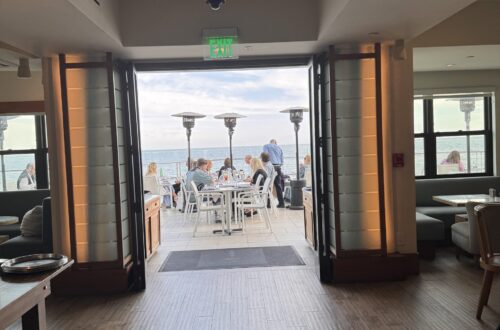
This is the immediate magic of RAYA. Perched on a 150-foot bluff, the restaurant’s dining room is a wall of glass offering a stunning, 180-degree panoramic view of the Pacific Ocean. The setting is the theme. You are literally dining over the coast while eating food from the coast.

This is the vision of Chef Richard Sandoval, a man Forbes Travel Guide has called the “king of Nuevo Latino cuisine.” His restaurant group’s official page describes RAYA’s philosophy as celebrating “coastal cuisine through sustainable seafood, local produce, and pan-Latin flavors… all overlooking expansive views of the California coast.” It’s a concept that brilliantly blends Pan-Latin ingredients like ají amarillo, chipotle, and yuzu with a “distinctly Californian lens.”

A First-Hand Experience: E-A-T in Practice

As a food and travel writer, I believe in the principles of E-A-T (Expertise, Authoritativeness, and Trustworthiness). To that end, this review is not based on a single, hosted media dinner. I have eaten at RAYA many times over the years; it is, without hesitation, one of my top restaurants. It is a place my family and I return to for special occasions, or simply for the guarantee of a perfect meal.

This past weekend, we stayed at the hotel for our anniversary and were so impressed we ate there twice—once for dinner and once for lunch the following day. This is a deep dive into that experience, which exemplifies everything this restaurant does right.

The Dinner: A Masterclass in Coastal Latin Flavors

From the moment you sit down, the experience begins. The sun sets over the ocean, the room is buzzing, and the menu presents a delightful challenge—how to choose?

Here is what we ordered, and why it works.

The “Must-Haves”: Don’t-Miss Signatures

There are two items on this menu that I consider non-negotiable.

  1. Mercado Margarita: I am a tough critic of margaritas, which are too often cloyingly sweet. The Mercado is a masterclass in balance. Made with Casamigos Blanco Tequila, fresh lime, agave, and a hint of cucumber, it’s served with a chipotle-salt rim. It’s earthy, refreshing, and just a little smoky. An absolute must.
  2. Salvadorian Cheese Rolls: If these are ever taken off the menu, there might be a riot. Served piping hot in a small cast-iron dish, these are not the pupusas (El Salvador’s famous stuffed flatbread) you might expect. They are closer to a Brazilian pão de queijo or Colombian pan de bono—chewy, airy, savory rolls made with yucca or tapioca flour and cheese. They have an irresistible, stretchy, cheesy pull and are served with a side of aji amarillo butter that is simply divine. Also a must.

The Art of the Tiradito (The Nikkei Connection)

Remember our deep dive into Nikkei cuisine? RAYA is where that concept comes to life. We ordered two of the tiraditos, and they perfectly demonstrated the fusion.

  • Hamachi Tiradito: Pristine, buttery slices of yellowtail are dressed with yuzu (a Japanese citrus), soy, serrano chile, and crispy garlic. It’s a perfect marriage of Japanese sashimi and Latin spice.
  • Wagyu Beef Tiradito: A “surf and turf” take on the concept. This dish features paper-thin slices of raw, decadent Wagyu beef. It’s paired with a black truffle-aji amarillo sauce, pickled beech mushrooms, and crispy shallots. It is savory, umami-rich, and utterly unique.

Small Plates: A Tour of Land and Sea

The small plates section is where you can see the full breadth of the Pan-Latin-meets-Asia theme.

  • Lotus Buns: Another clear Asian fusion, these steamed buns were filled with a savory, sticky-sweet hoisin-barbecue duck.
  • Piloncillo Shrimp: Piloncillo is an unrefined cane sugar, a staple in Mexican kitchens. Here, it’s used to glaze plump, grilled shrimp, which are served over a creamy corn puree. A beautiful balance of sweet and savory.
  • Blackened Tuna Tacos: This is SoCal meets Mexico. Flawless, sushi-grade tuna is lightly blackened and served in a crispy wonton shell (another Asian twist) with aji amarillo slaw.
  • Grilled Avocado: A simple, smoky, and creamy dish that acts as a perfect counterpoint to the spicier plates.

The Sweet Finish

To cap off the meal, we had the Mango Chantilly Pie, a light, tropical cloud of a dessert. And for our anniversary, the staff kindly brought us a plate of their Churros, which were perfectly crispy, dusted in cinnamon-sugar, and served with dipping sauces.

The Lunch: Casual Coastal Excellence

The next day, we returned for lunch, eager to try the daytime fare. We couldn’t resist ordering the Salvadorian Cheese Rolls again. They were just as good.

For drinks, I tried the Jasmincello, a floral cocktail. In the spirit of trustworthy, honest reporting, it was unique and beautiful, but I found myself missing the perfect balance of my Mercado Margarita.

For mains, we explored their elevated sandwich offerings. The Raya Burger and the Grilled Chicken Sandwich were both excellent—far from standard hotel fare. They were juicy, well-seasoned, and served on high-quality buns, proving the kitchen’s “basics” are as strong as its complex specialty dishes.

The Heart of Hospitality (A Pillar of Trust)

A restaurant, especially at this level, is not just about the food. It’s about the people. An amazing meal can be soured by indifferent service, just as a simple meal can be elevated by genuine warmth.

RAYA has mastered the latter. The service here is the epitome of Ritz-Carlton excellence: attentive but not stuffy, professional but warm.

Our service was flawless. Pinak was our server for dinner, navigating a busy Saturday night with grace, knowledge, and perfect timing. He was assisted by a wonderful woman who was just as sweet and attentive. For lunch, Joel was our server, and he was equally friendly and professional.

But the true testament to a restaurant’s quality is staff longevity. As regular visitors, we were delighted to see a familiar face: Dean Thompson. We recognized him instantly. He was our server at RAYA last year, and even a few years before that at Kahani (another restaurant that was once in the hotel). He is so remarkably sweet and professional that we remembered him after all this time.

To see friendly, dedicated staff like Dean still thriving at the resort is, for me, one of the biggest trust signals a diner can have. It speaks volumes about the restaurant’s culture.


Part 3: A Commitment to High-Quality, Experience-Driven Content

This article is a cornerstone of our mission at culinarypassages.com. In a digital world filled with AI-generated lists and shallow reviews, our goal is to provide high-quality, original content rooted in real, first-hand experience.

We believe in the core principles of Google’s E-A-T (Expertise, Authoritativeness, and Trustworthiness).

  • Expertise: We demonstrate our expertise by traveling, tasting, and spending our own money to experience the places we write about.
  • Authoritativeness: We build authority by doing the research—connecting the food on the plate to its cultural and historical context, and citing other expert sources like academic institutions and high-end food publications.
  • Trustworthiness: We build trust by being transparent. We share our honest opinions (even about the Jasmincello!) and provide detailed, personal anecdotes (like recognizing Dean, our server) that prove we were actually there.

Our goal with culinarypassages.com is to earn approval for programs like Google AdSense, not by using tricks, but by creating a genuinely valuable resource for fellow food and travel lovers. We want our articles to be the ones you save and reference—the ones that don’t just tell you what to eat, but why it matters.

The Takeaway: A Cuisine of Sun, Sea, and Synthesis

Coastal Latin Cuisine is a dynamic, evolving culinary language. It’s a story of migration, adaptation, and the creative spirit of chefs who refuse to be bound by borders. It’s a perfect culinary expression for its Southern California home—itself a land defined by its coast and its rich cultural fusion.

RAYA is not just a restaurant with a spectacular view. It is a living, breathing embassy for this cuisine. It’s a place where the Nikkei tiradito, the Salvadorian pan de queso, and the Mexican margarita all share a table, overlooking the ocean that connects them. And it’s one of my favorite places on Earth.


Read More from Culinary Passages:

If you enjoyed this deep dive, continue your journey through our other first-hand culinary and travel guides:


About the Author

The founder and primary author of Culinary Passages (Ginger Graham) is a passionate food and travel enthusiast. With a goal of exploring the world one plate at a time, she focuses on sharing authentic, first-hand experiences that go beyond the surface.

Leave a Reply

Your email address will not be published. Required fields are marked *