What comes to mind when you hear the word “curry”?
For decades, particularly in the West, the word has painted a singular picture: a thick, often yellow-orange gravy, a handful of rotating proteins, and a side of basmati rice and pillowy naan. It’s the reliable star of the neighborhood takeaway, the comforting centerpiece of a thousand steam-table buffets.
But what if I told you that “curry,” as most of us know it, is largely a fiction?
It’s a colonial catch-all, a British simplification of a culinary universe so vast, so diverse, and so nuanced that no single word could ever hope to contain it. In India, a nation of over a billion people, 28 states, and hundreds of distinct languages, there is no one “curry.” There are, instead, thousands of unique dishes: the korma, the rogan josh, the vindaloo, the makhani, the saag, the jalfrezi. Each is a world unto itself, built on a specific masala (spice blend), a regional history, and a family’s heritage.
For years, this incredible diversity was flattened for international consumption. But no longer.
We are in the midst of a global renaissance of Indian food. A new generation of chefs, trained in the world’s best kitchens, is returning to their roots. They are bypassing the generic and diving deep into the specific, championing the regional specialties of their homeland. This new movement is not about “fusion” in the confused, 1990s sense of the word. It is an evolution, a philosophy built on three powerful pillars: creative artistry, unimpeachable quality of ingredients, and a profound respect for authentic flavors.
This is not about changing Indian food; it is about presenting it with the reverence, technique, and artistry it has always deserved.
And I’ve just experienced a stunning example of this philosophy in, of all places, a classic Southern California coastal resort. Tucked away in The Ritz-Carlton, Laguna Niguel, is Kahani, a restaurant that is not just serving Indian food—it’s telling its story.
Part 1: Deconstructing “Curry” — The Great Culinary Misnomer
To understand where Indian cuisine is going, we have to understand where it has been—and how the world came to misunderstand it.
The word “curry” itself is an anglicization, a linguistic echo of the British colonial presence in India. Most food historians trace it back to the Tamil word ‘kari’ (கறி), which could refer to a specific spiced sauce, a side dish, or even black pepper. British traders and officials, encountering the myriad sauced dishes of the subcontinent, adopted this single, convenient term to describe all of them.
This idea was codified for the English-speaking world in the 18th century. The first known English recipe for “currey,” as evidenced in Hannah Glasse’s 1747 landmark cookbook, The Art of Cookery Made Plain and Easy, involved rabbits, spices, and cream. This was the genesis of a new, distinctly Anglo-Indian cuisine. The British then commercialized this idea, creating generic “curry powder” to export the “taste of the Orient” back home and across the empire.
This was, in effect, the first globalization of Indian food, but it came at a cost. It stripped away the identity of countless regional dishes.
In India, a cook never uses “curry powder.” They build flavor from the ground up. They might dry-roast and grind spices for a Punjabi garam masala, create a wet paste of coconut and chilis for a Goan xacuti, or temper mustard seeds and curry leaves in hot oil for a Keralan thoran. The technique, the spice blend, the souring agent (be it tamarind, vinegar, or yogurt), and the cooking fat (ghee, mustard oil, or coconut oil) all change dramatically from one region to the next.
A rich, tomato-and-cream-based Murgh Makhani (Butter Chicken) from Delhi shares no culinary DNA with a fiery, vinegar-laced Pork Vindaloo from Goa, which in turn is a world away from a delicate, coconut-milk-based Meen Moilee (fish stew) from Kerala.
To call them all “curry” is like calling a Texas brisket, a New York strip steak, and a delicate veal piccata all “meat.” It’s technically true, but it misses the entire point.
The new wave of modern Indian cooking is, at its heart, a reclamation of this identity. It is a movement of chefs proudly stating, “We don’t cook ‘curry.’ We cook the food of Goa, of Rajasthan, of Bengal, of Delhi.”
Part 2: The Three Pillars of Modern Indian Gastronomy
This culinary renaissance is not a trend; it’s a deep-seated shift in philosophy. It’s defined by a new and sophisticated approach that rests on three core pillars.
Pillar 1: Regional Respect and Hyper-Specificity
The new guard of Indian chefs is acting as much as culinary anthropologists as they are cooks. They are digging into their own family histories, unearthing “grandmother’s recipes” (daadi-ma ke nuskhe), and shining a spotlight on forgotten dishes from specific regions.
This means moving beyond the “Big 5” of the takeaway menu (Tikka Masala, Korma, Saag, Vindaloo, Madras) and embracing the true breadth of the subcontinent. This includes:
- Coastal Cuisines: Celebrating the seafood-rich traditions of Kerala, Goa, and Malabar, with their reliance on fresh coconut, tamarind, and mustard seeds.
- Northern Frontiers: Perfecting the smoky, robust flavors of the tandoor and the rich, complex gravies of Punjab, Lucknow, and Old Delhi.
- Eastern Traditions: Exploring the subtle and pungent flavors of Bengal, which uniquely utilizes mustard oil and freshwater fish.
- Southern Staples: Championing the rice-based dishes, tangy rasams, and lentil sambar of Tamil Nadu and Andhra Pradesh.
Instead of a menu that tries to be “pan-Indian,” these chefs are curating a journey, offering specific “postcards” from distinct regions, each with its own story and flavor profile.
Pillar 2: Unimpeachable Ingredient Quality
This pillar seems obvious, but it is a radical departure from the norm. For decades, the power of Indian spices was often used to mask the quality of lesser ingredients. No more.
The modern Indian chef applies a farm-to-table ethos with surgical precision. This is about:
- Produce: Sourcing seasonal, local vegetables—the same ones you’d find at a high-end California or French restaurant—and applying Indian techniques to them.
- Protein: Using prime cuts of meat, sustainable seafood, and heritage-breed poultry. You’ll see Snake River Farms Wagyu, Mary’s organic chicken, or locally caught sea bass on the menu.
- Spices: Going beyond the pre-ground. This is about sourcing single-origin spices, like bright red Kashmiri chilis for color, fiery Guntur chilis for heat, or pungent Tellicherry peppercorns. Spices are toasted and ground in-house, not for brute force, but for an aromatic complexity that is bright, clean, and nuanced.
Pillar 3: Creative Artistry and Modern Technique
This is where the “contemporary” label truly comes into play. These chefs often have resumes that include stints at Michelin-starred temples of French, Spanish, or Japanese gastronomy. They are not afraid to use modern techniques, but—and this is the critical part—they do so only in service of the traditional flavor.
You might see:
- Sous-vide: Used to cook a lamb shank to melting tenderness before it’s finished in a traditional rogan josh sauce.
- Spherification: Famously used by Chef Gaggan Anand to create his “Yogurt Explosion,” a bite that perfectly encapsulates the flavors of a traditional dahi chaat.
- Plating: This is the most visible change. The sludgy, homogenous bowl is gone. In its place is art. Dishes are deconstructed, with components plated individually to highlight texture and color. A “curry” may be re-imagined as a delicate, velvety sauce painted on the plate, next to a perfectly cooked protein and vibrant vegetable purees.
The goal is not to shock, but to delight. It’s to take a flavor you’ve always loved and present it in a way that makes you taste it as if for the first time.
Part 3: The Authority Voices — Chefs Forging the New Path
This movement is not happening in a vacuum. It is being led by visionary chefs who have become global ambassadors for this new philosophy. To understand the passion behind this evolution, listen to one of its brightest stars, Chef Vikas Khanna, describe his journey:
As you can see, this is about more than just food; it’s about identity, respect, and storytelling.
The Avant-Garde: Gaggan Anand No one has pushed the boundaries of Indian food further than Gaggan Anand. His eponymous Bangkok restaurant (now closed and reborn as Gaggan Anand) famously held two Michelin stars and was repeatedly named the best restaurant in Asia. Trained at Spain’s legendary elBulli, Anand applied molecular gastronomy to Indian street food, creating what he calls “progressive Indian cuisine.”
His philosophy is one of culinary disruption. He famously created a 25-course, emoji-based menu designed to be eaten with your hands, featuring dishes like the aforementioned “Yogurt Explosion” and “Lick It Up,” a dish where diners are encouraged to lick a trio of sauces directly from the plate, set to the Kiss song of the same name. Anand’s genius lies in his ability to be wildly inventive while remaining, as numerous culinary journals have noted, deeply and unmistakably Indian in his flavors.
The Modern Traditionalist: Vikas Khanna On the other side of the spectrum is Chef Khanna himself, the Michelin-starred author and filmmaker. Based in New York, Khanna has built a career on what he calls the “balance between tradition and innovation.”
Khanna’s philosophy is less about deconstruction and more about elevation. He champions the stories and the “soul” of Indian food. In a 2025 interview with the Deccan Chronicle, he elaborated on this, stating, “it’s all about respecting the essence of Indian flavors while remaining open to evolution… The idea is not to dilute the soul of Indian food, but rather to enhance it.” This philosophy, which he also described to Gulf News as food being a “shared language, a memory, a celebration,” is a testament to honoring heritage in a refined, modern context.
Between the revolutionary zeal of Anand and the soulful elevation of Khanna lies a new generation of chefs—including Chef Sanjay Rawat at Kahani—who are writing the next chapter of Indian cuisine.
Part 4: The Spotlight — “Kahani” at The Ritz-Carlton, Laguna Niguel
Which brings me back to that bluff in Dana Point.
The restaurant Kahani, which means “story” in Hindi, is the perfect embodiment of this new philosophy. It is the story of Chef Sanjay Rawat, who built a legendary reputation crafting spectacular, high-end wedding feasts for the Indian community. The restaurant, which began as a wildly successful Diwali pop-up, is now a permanent jewel at The Ritz-Carlton, Laguna Niguel.
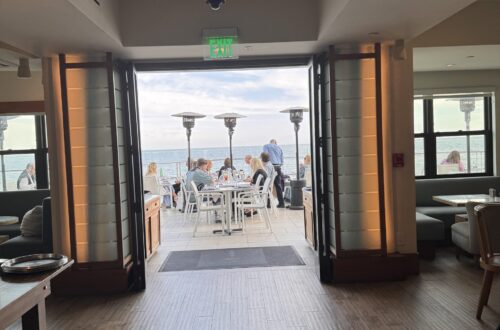
The setting is, as you’d expect from the brand, breathtaking. The dining room is a symphony of elegant design and warm, glowing light, with panoramic windows overlooking the Pacific. But the true view is on the plate.
The restaurant’s own mission statement perfectly mirrors this philosophy: it aims for “a contemporary approach to Indian regional specialties that places creative artistry, quality of ingredients, and respect for authentic flavors… at the forefront.”
The critical acclaim has been swift and unanimous. Forbes praised the “elegantly plated modern dishes that are rooted in tradition,” and Eater Los Angeles went further, declaring it “the most incredible Indian fine dining that Southern California has seen.” The Los Angeles Times has also chronicled its journey, noting that “it’s some of the most creative Indian fare in California, and worth making a trek for.”
They are not wrong.
The Menu: A Journey Through Modern India
Chef Rawat’s menu is a masterclass in the three pillars.
For Creative Artistry, look no further than the small plates. The Tuna Bhel Puri is a revelation. Traditional bhel puri is a humble street snack of puffed rice, vegetables, and chutneys. Here, it’s elevated with cubes of pristine Ahi tuna and an avocado chutney, transforming it into a light, sophisticated crudo that is simultaneously familiar and brand new. The Ajwain Scallop is another showstopper: a perfectly seared scallop set against a velvety butternut squash puree and a bright green pea masala, a stunning blend of global technique and Indian spice.
For Ingredient Quality, the main courses are a testament. The Snake River Wagyu Short Rib is cooked to impossible tenderness, served with Sabudana Khichdi (tapioca pearls), a dish that shows deep knowledge of traditional, regional comfort foods, but is executed with the world’s finest beef.
The “Phenomenal Curry” (That Isn’t a “Curry”)
But what about the main event? Kahani delivers by showing what those dishes are supposed to taste like.
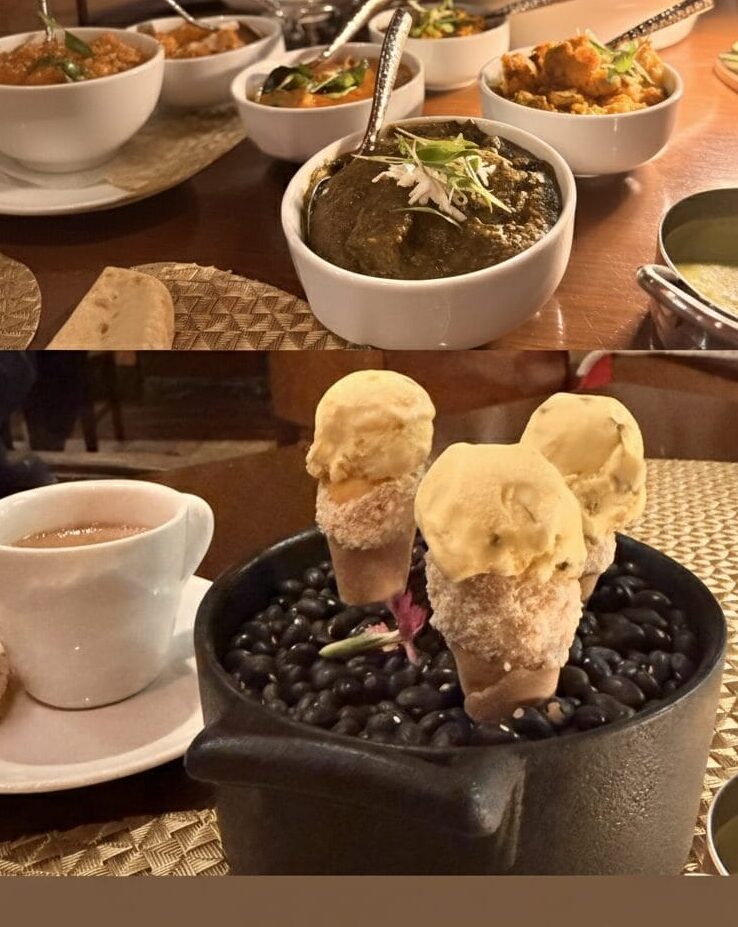
We tried the Chicken Tikka Masala. Forget the sweet, neon-orange sauce of buffets. This was a rich, smoky, deeply complex makhani. The Mary’s chicken was clearly marinated for hours, tender and imbued with smoke from the tandoor. The sauce—the “cury”—was a vibrant, velvety emulsion of sun-ripened tomatoes, fenugreek, and high-quality butter, balanced by a whisper of spice. It was a dish I’d had a hundred times before, but this was the first time I truly tasted it.
The same was true for the Masala Paneer En Croute. Instead of simple cubes of cheese, Chef Rawat serves it en croute (in a pastry crust), a classic French technique. But the soul of the dish is the transcendent makhani sauce it’s served with. It’s a brilliant, creative-yet-respectful presentation.
From the Chennai Sea Bass, which transported me to the South Indian coast with its delicate bean ragu, to the Old Delhi Chicken Biryani, a fragrant, perfectly layered masterpiece, every dish told a story.
The Conclusion: The Story is Just Beginning
Dining at Kahani is more than a great meal. It’s an education. It’s a living, breathing example of a global culinary movement that is finally giving Indian cuisine its proper due.
Chefs like Sanjay Rawat are challenging us to forget the simplistic “curry” label and embrace the true, kaleidoscopic diversity of Indian food. They are proving that you can apply creative artistry and modern techniques without losing the ancient, authentic soul of a dish.
The new wave of Indian cuisine is here. It is complex, it is beautiful, it is sophisticated, and it is, above all, delicious. And with storytellers like Kahani leading the way, this is one culinary passage we will all be lucky to take.
Further Reading from Culinary Passages
If you enjoyed this article, you might also love exploring some of our other guides to luxury travel and fine dining:
- For the Hotel Explorer: Since Kahani is located at a premier Ritz-Carlton, check out our Marriott Bonvoy Playbook: How to Easily Turn Your Points into a Dream Vacation in 2025.
- For the Local Luxury Seeker: Kahani is a jewel of Orange County. Discover more of the area’s top properties in The Best 5-Star Resorts in Orange County: Coastal Luxury Redefined.
- For the Discerning Diner: Love an elevated dining experience? Learn about another ultimate culinary journey in How to Do Omakase: A Journey into the Heart of Japanese Cuisine.
- For the Ritz-Carlton Fan: See how another one of their top-tier properties stacks up in our review of the Ritz-Carlton Turtle Bay.
- For an Adult Getaway: A fine-dining experience like Kahani is the perfect centerpiece for a kid-free trip. Find more ideas in our guides to Restaurants Without Kids.
From the Author (Ginger Graham):
I’m the founder and editor of Culinary Passages, a blog dedicated to sharing the world’s most authentic and memorable food, travel, and lifestyle experiences.
This post was a particular passion project for me, as this was my second time dining at Kahani. I fell in love with this restaurant because it is so wonderfully unique; it completely shatters the mold of the standard Indian restaurant and presents something truly elevated.
I always love finding an excuse to visit The Ritz-Carlton, Laguna Niguel, and having the opportunity to enjoy such a “True” Indian culinary experience is a massive part of what makes this hotel so special. Kahani isn’t just a convenient hotel restaurant; it has become a destination in its own right. I absolutely love this place and can say with certainty that I will be coming