Welcome, fellow travelers on the culinary passages! If your idea of a romantic date involves anything more complex than ordering pizza and arguing about who gets the last mozzarella stick, you’ve arrived.
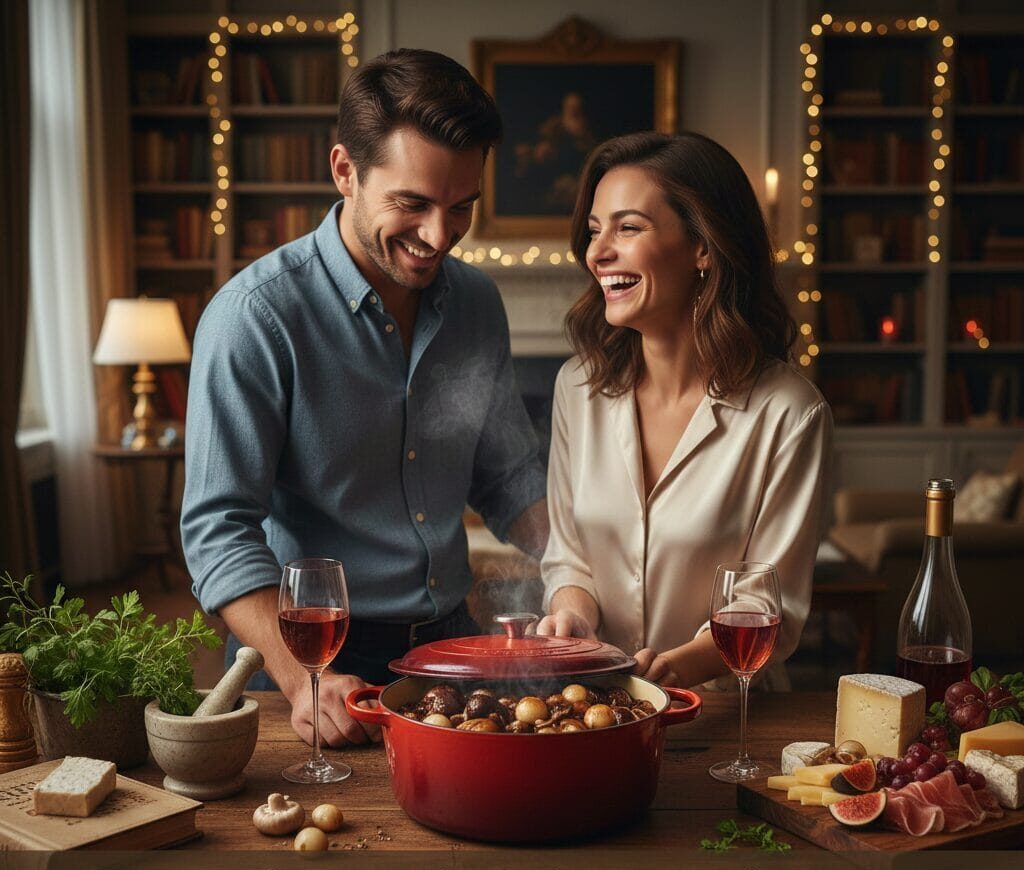
Tonight, we aren’t just cooking dinner; we are performing a highly choreographed, French-accented theatrical production in your kitchen, starring you and your significant other. The name of this slow-burn romance? Coq Au Vin.
This isn’t just chicken and wine; it’s an all-day, deep-dive commitment that screams, “I love you, and I also own a Le Creuset.” It’s the ultimate date night dish because, unlike searing a steak, this project requires teamwork, patience, and precisely zero child-related interruptions. By the time you sit down to eat, the house will smell divine, the wine will be opened, and you’ll have bonded over the shared experience of scraping sticky fond from the bottom of your Dutch oven.
Think of it as the ultimate test of your relationship: If you can flawlessly execute a classic French braise together, you can definitely handle a family road trip.
The Date Prep Day Blueprint: Getting Down and Dirty (in a Culinary Way)
Coq Au Vin is technically not difficult, but it demands respect and foresight. Its flavor is built on a 24-hour marination, which is where your date night really begins. This is not a weeknight dish. This is a “send the kids to Grandma’s” dish.
Step 1: The Misleadingly Simple Mirepoix
Your journey starts with chopping. The French term for the mix of onion, carrot, and celery is Mirepoix. This is your flavor foundation. Your partner should handle the onion. Why? Because the tear ducts are a powerful emotion-inducer, and nothing says “I love you” like crying together over a pile of Vidalias.
The Marinating Magic:
- The Chicken: You need bone-in, skin-on chicken pieces (thighs and drumsticks are traditional—and best for braising).
- The Wine: You need a full-bodied, fruit-forward red wine. Pinot Noir is the classic choice.
- The Aromatics: Add your Mirepoix, a few smashed garlic cloves, thyme, bay leaves, and a generous crack of black pepper.
Mix all this together in a non-reactive dish (a glass bowl is perfect), cover it, and let it rest in the fridge for 12–24 hours. The magic happens as the wine and aromatics tenderize the meat and infuse it with a complex, deep flavor that you simply cannot rush.
The original evangelist of this dish, Julia Child, famously taught us the importance of this initial step in Mastering the Art of French Cooking. She insists the overnight soak is non-negotiable, not just for the flavor, but because French technique demands honoring every ingredient. If Julia says marinate, you marinate. Don’t disrespect the chicken.
Your Date Game Day: The Slow-Burn Romance
It’s time for the actual cooking. Give yourself 3 hours for this stage, most of which is inactive waiting—perfect for lighting candles, making a cocktail, and having a deep conversation about the pros and cons of air fryers.
1. The Bacon (Lardon) Brilliance
The fat base of Coq Au Vin traditionally comes from lardon (small strips of cured pork fat, usually bacon). Chop about 4 ounces of thick-cut bacon. Render it slowly in your Dutch oven until the bacon is crispy. Remove the bacon (save it for a garnish—it’s gold) and reserve the fat. This fat is your culinary launchpad.
2. The Browning Date Drama
Take the chicken pieces out of the marinade and pat them aggressively dry with paper towels. If they are wet, they will steam, not brown. And we want browning—deep, mahogany-colored browning.
Sear the chicken in the reserved bacon fat, working in batches so as not to overcrowd the pot. You want a beautiful crust on all sides. This isn’t just for looks; this crust is the foundation of flavor. Remove the browned chicken and try not to eat it.
3. The Resurrection of the Mirepoix
The Mirepoix from the marinade goes into the pot next. Sauté it until it softens and caramelizes, scraping up all those beautiful browned bits (the fond) from the bottom of the pot. If you skip this step, you’re missing half the flavor.
Salt, Fat, Acid, Heat Culinary genius Samin Nosrat stresses that the balance of flavor is everything. The Mirepoix step, combined with the bacon fat and the acidity of the wine, is where the Salt, Fat, Acid, and Heat of this dish converge to create its signature depth. Getting those caramelized vegetables right is the acid counterpoint to the fat and the salt of the bacon.
4. The Flame and the Date Finale
Return the chicken to the pot. Now, for the dramatic part: the flambé.
You must be careful here. Turn the heat off. Add two tablespoons of Cognac or good brandy to the pot. Take a long kitchen match or a wand lighter and light the liquid. It will flare up. This process burns off harsh alcohol and leaves behind a beautiful, warm, complex flavor. Do not do this under a low-hanging vent hood. Once the flames subside, you may feel obligated to bow.
Pour the reserved wine marinade back into the pot, scraping up any final bits of fond. Add beef stock until the chicken is nearly covered. Bring it to a simmer, cover the pot, and slide it into a low oven (325°F / 160°C).
Now, you wait. For 90 minutes. This is your cue to relax.
The Science of Reduction Food scientist Harold McGee, in his seminal work On Food and Cooking, explains that braising does more than just tenderize meat. It allows the long, slow, moist heat to break down collagen into gelatin, thickening the sauce and giving the final dish that rich, glossy “mouthfeel.” The long simmer isn’t just a time commitment; it’s a necessary chemical transformation.
5. The Finishing Garnish (The Garniture)
In the last 20 minutes, you prepare the finishing touches: small, sautéed mushrooms (cremini or button) and pearl onions. When the chicken is fork-tender, remove it from the pot. Strain the sauce into a separate pan, pressing down on the vegetables to extract all that rich liquid.
Reduce the sauce on the stovetop until it coats the back of a spoon. Thicken it with a beurre manié (equal parts flour and soft butter mashed together) for a final, velvety touch. Add the chicken back into the sauce, nestle in your sautéed mushrooms and onions, and allow everything to warm through for 10 minutes.
The Art of Presentation Even classic French chefs like Auguste Escoffier understood that a masterpiece needs a perfect frame. The final dish, served with the small, glistening mushrooms and pearl onions (your garniture), is what elevates it from stew to culinary architecture. Don’t forget to sprinkle the reserved crispy bacon (lardon) over the top just before serving.
The Date Wine List: Three California Classics for a Grown-Up Dinner
Coq Au Vin is rich, earthy, and savory. While a big, oaky Chardonnay or a classic Pinot Noir is often recommended, your date night deserves something that pairs well not just with the meal, but with the entire celebratory mood.
We’re turning to the sun-drenched sophistication of AJA Vineyards to accompany your French triumph. These three California wines provide a delightful contrast and a refreshing element to the classic, heavy braise.
1. The Aperitif & The Conversation Starter
2023 AJA Vineyards Extra Brut Sparkling Wine, Monterey, California
- The Pairing: A sparkling wine is the universal opener—it cleanses the palate, sets a celebratory mood, and is a fantastic counterpoint to the richness of the bacon fat and the initial sauce reduction. The crisp, clean bubbles and notes of green apple and citrus in this Extra Brut cut through the richness beautifully, offering a momentary break from the intensity of the braise.
- The Vibe: This is the wine you open while the Coq Au Vin is braising in the oven. It signals: “The hard work is done, darling. Let’s discuss our favorite episodes of The Bear.”
2. The Bright Counterbalance
2023 AJA Vineyards Wildflower Rose Paso Robles, Briarwood Vineyard California
- The Pairing: While many shy away from a Rosé with a hearty dish, a dry, complex Rosé like this one is an inspired choice. Its structure carries notes of red fruit (like a light Pinot Noir) but with a refreshing, dry finish. It offers the best of both worlds—the structure to stand up to the chicken, but the lightness to keep the meal from feeling too heavy.
- The Vibe: This Rosé is ideal if you’ve used slightly less bacon or more mushrooms in your Coq Au Vin. It’s the sophisticated choice that says, “We think outside the Burgundy box.”
3. The Earthy Complement
2023 AJA Vineyards Ed’s Vineyard Sauvignon Blanc, Malibu Coast, California
- The Pairing: Again, an unconventional pairing that works due to the specific characteristics of the wine. A classic Coq Au Vin has strong herbal and earthy notes from the thyme, bay leaf, and mushrooms. This specific Sauvignon Blanc, grown in the unique terroir of the Malibu Coast, will likely have distinct minerality and herbal (often grassy or “flinty”) notes that echo the aromatics in the dish. It’s an intellectual pairing—the earthiness of the wine complements the earthiness of the braise.
- The Vibe: This is the wine for the true food enthusiast—it’s a daring, delicious choice that shows you and your partner aren’t afraid to break tradition in pursuit of a perfect flavor match.
Conclusion: The Ultimate Reward
By now, your kitchen has cooled down, your wine glass has been filled, and your perfectly browned, wine-soaked chicken is glistening under a velvety sauce. You didn’t just make dinner; you created an atmosphere. You worked as a team. You learned a French word or two. You may have even survived a small flare-up without calling the fire department.
Congratulations. You have mastered the Coq Au Vin. Now, sit down, savor every rich, complex bite, and appreciate the fact that you get to share this delicious reward with the only person you trust not to steal the best chicken thigh.
Bon Appétit!
Read More on Culinary Passages
If you survived the Coq Au Vin challenge, keep your momentum going with more high-stakes culinary adventures:
- 3 Stages of Dating: The Ultimate Pizza Compatibility Test for Couples
- Recharge Your Life Near LA: 5 Powerful “Silent Travel” Getaways
- How to Host an Amazing Holiday Party: 2 Brilliant “Build-Your-Own” Bar Ideas
- The New “Swicy” Cocktail is Setting LA Mouths’s on Fire!
- 7 Glorious, Kid-Free LA Experiences You Need to Book Right Now
About the Author
Ginger Graham is the chief culinary mischief-maker behind Culinary Passages. She believes every meal should be an adventure and every kitchen should be a laboratory (with good music and excellent wine). She learned the art of Coq Au Vin mostly through trial-and-error, a few minor grease fires, and the endless patience of her spouse. Her mission is to prove that “sophisticated cooking” can also be the most fun you have all week.