A high-end lifestyle graphic titled "The LA inKind App" featuring a top-down view of a gourmet Roman pasta dish, a Neapolitan pizza from Pizzana, premium sushi from Katsuya, and whipped eggplant from Elephante. The text reads "Save 30% at LA's Best Restaurants."
Dining

inKind App LA: Eat at the Best Restaurants for 30% Less

InKind is a dining rewards app that works at a specific set of restaurants in Los Angeles and offers pre-purchased credit at a discount — you buy $75 of credit for $50, which functions as a 33% return on restaurants you were planning to visit anyway. I have used it for two years. Here is the practical guide.

As a Registered Nurse with fifteen years on the floor, my perspective on “luxury” is utilitarian. When I finish a 12-hour shift, I don’t just want dinner; I want a sensory reset. I want an environment where the acoustics are damp, the service is invisible yet omnipresent, and the flavor profiles are complex enough to make me forget the clinical hum of the hospital.

However, I also have a mortgage and two daughters. I refuse to “sell a kidney” for a seat at the table. That is why I have spent the last few months mapping out the ultimate inKind Los Angeles Strategy. If you aren’t using this to shave 30% off your bill at spots like Mother Wolf or Pizzana, you’re essentially leaving a vintage bottle of wine on the table.

The Science of the “Sensory Reset”

Why do we crave these high-end experiences so deeply? It isn’t just about status; it’s about biology. Our relationship with food is a multi-sensory interaction that directly shapes our satisfaction and well-being. For healthcare workers and high-stress professionals, a curated dining environment acts as a counter-balance to the “high-beta” brain waves of a workday.

Furthermore, communal eating increases social bonding and feelings of well-being, enhancing one’s sense of contentedness within the community. When you’re a nurse, “contentedness” is a rare commodity. Dining out isn’t just a luxury; it’s a mental health intervention.


The 2026 LA inKind App Hit List: The Recommendations

I’ve categorized the best current partners in the city. These aren’t just “good for the price” spots; these are the kitchens defining the 2026 Southern California scene.

1. The “Big Guns” (The App Power Players)

  • Mother Wolf (Hollywood): Evan Funke’s temple to Roman pasta is the place to be if you want high energy and even higher-quality Tonnarelli a la Gricia. It is loud, glamorous, and expensive—which is exactly why using inKind here is a stroke of genius. You get the A-list experience while your “Nurse Math” handles the bill.
  • Girl & the Goat (Arts District): Stephanie Izard’s powerhouse remains a non-negotiable. The goat empanadas are a requirement for entry. Using inKind here feels like a cheat code for world-class culinary innovation.
  • Damian (Arts District): Elevated Mexican cuisine from Enrique Olvera’s team. The duck al pastor is legendary. By paying through the app, you’re bypassing the “tourist tax” and dining like a local who knows the system.

2. The West LA & Santa Monica “Gold Standard”

If you find yourself on the Westside, these are the only names you need to know for a guaranteed win:

  • Pizzana (Brentwood/Santa Monica): Daniele Uditi’s “Neo-Neapolitan” crust is the best in the city. It’s light, crisp, and doesn’t leave you feeling weighed down.
  • Katsuya (Brentwood): A classic for a reason. For a consistent, high-end sushi experience where the service is actually efficient, this is my Brentwood home base.
  • Elephante (Santa Monica): The views are the draw, but the whipped eggplant is the reason to stay. It’s the ultimate “Sunset in SM” vibe.

3. The Neighborhood Essentials (The “Everyday” Luxury)

You don’t always need a three-hour tasting menu. Sometimes you just need a Tuesday night where you don’t have to wash dishes.

  • Bacari (PDR, Silver Lake, W. 3rd): Bacari is the gold standard for inKind value. Their small plates are perfect for sharing with the kids (Barnaby, my goldendoodle, usually waits in the car or on the patio for a stray crust). The “Bacari Fries” with the fried egg on top are the ultimate comfort food after a grueling shift.
  • L’Antica Pizzeria da Michele (Hollywood): There is something about sitting on this patio, under the heat lamps, that feels like being in Naples—minus the jet lag. The margherita is thin, charred, and perfect.
  • Marmalade Café: This is my headquarters. It’s where I meet my colleagues for brunch to decompress. The lemon poppyseed pancakes are the only therapy I need some weeks.

4. For a “Sensory Reset”

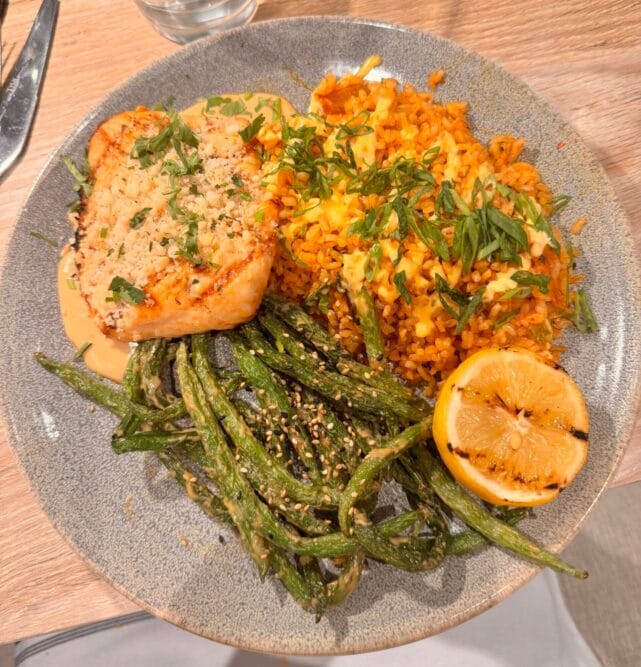
A top-down view of a macadamia crusted salmon entree, sesame green beans, and kimchi fried rice on a grey plate at Pacific Catch Santa Monica.
The centerpiece of our sensory reset: Pacific Catch’s signature Macadamia Crusted Salmon, a flawless balance of nutritional density and fine-dining flavor.

As a blogger for Culinary Passages, I focus on how dining affects our nervous system. We spend our lives in high-stress environments—be it a hospital, a corporate office, or just the 405 freeway.

When you use the “inKind App,” don’t just look for the cheapest meal. Look for the environment that balances your cortisol.

  • For Silence: Choose Kazan in Beverly Hills. The soba is artisanal, and the atmosphere is zen-like.
  • For Joy: Choose Telefèric Barcelona. The energy is infectious, the sangria is potent, and it’s impossible to be stressed while eating paella.
  • For Connection: Choose Fia Restaurant in Santa Monica. It’s fresh, it’s seasonal, and it reminds you that the earth still produces beautiful things.

The “Nurse Graham” Skip List: Where to Save Your Money

Part of being a professional advocate—for my patients and my readers—is knowing when to say “no.” Not every “Instagram-famous” spot is worth your hard-earned credit. In the current Experience Economy, many venues prioritize “the look” over the plate. Diners are increasingly moving away from “flashy indulgence” toward dining that feels “personal and meaningful.”

With that in mind, here are the places I recommend you skip this year:

  • Edgemar: I’ve given it multiple chances, but I can no longer recommend it. The architectural chaos of the space doesn’t translate to a cohesive dining experience, and the value-to-cost ratio has tipped in the wrong direction.
  • Zaytinya: While the concept is interesting, the execution often feels like a “luxury factory” rather than a curated experience.
  • The Penthouse: You’re paying for the view, but the food and service often feel like an afterthought.
  • Red O: It feels dated and lacks the culinary soul you’ll find at modern icons like Damian.

The App Technical Hack: How to Hit the 30% Discount

Screenshot of the inKind app showing a list of Beverly Hills and Santa Monica restaurants with cash-back percentages, ratings, cuisine types, and distances
Browsing restaurants in the inKind app — each listing shows the cash-back percentage, cuisine, rating, price, and distance.

How does this actually work? inKind operates as an alternative financing model for restaurants. As noted by The Fork CPAs, inKind provides interest-free capital to restaurants in exchange for food and beverage credits. They buy the credit at a deep discount and pass a portion of those savings on to us.

To maximize this, follow my “Double-Dip” Protocol:

  1. The Costco Play: Costco frequently sells $100 inKind gift cards for **$70–$75**. Buy these in bulk. You’ve saved 25% before you even sit down.
  2. Stack Your Rewards: Link a credit card to the app that offers high rewards for dining (e.g., 4x points).
  3. The Referral Loop: If you’re dining with a partner, refer them before the meal. The “New User” bonus is usually $25 off a $50 spend.

By stacking these, your actual out-of-pocket cost for a $200 meal at Mother Wolf can drop to approximately $110. That is how you live a luxury lifestyle on a sustainable budget.


Frequently Asked Questions (The App Fine Print)

“Is there a catch?” The only catch is that you are “pre-paying” for your meals. If a restaurant leaves the platform, your “House Credit” (the bonus money) might expire, but your “Paid Credit” is always protected.

“Do the servers get tipped less?” Absolutely not. You tip on the full amount of the bill before the discount. As a nurse, I know what it’s like to work on your feet all day—always tip your servers 20% of the original total. The app handles this seamlessly.

“Can I use this in Las Vegas?” Yes! On our last family trip to the Venetian (35th floor—don’t let the front desk tell you otherwise!), we used inKind at several spots on the Strip. It’s the only way to survive Vegas prices without feeling like you’ve been robbed.


Final Thoughts: Dining as Self-Care

We live in a world that tries to commodify our time and our taste buds. By being a “Smart Diner,” you aren’t just saving money; you are reclaiming your right to experience the best of Los Angeles without the financial hangover.

Luxury isn’t about how much you spend; it’s about how much you value the experience. Using the inKind App allows me to treat my family, support my favorite chefs, and maintain my sanity—one discounted omakase at a time.

What’s your “must-have” LA restaurant? Is it on the app? Let me know in the comments below, and let’s keep this guide updated for the community.


The Fine Print: Expiration, Tips, and How the Credit Actually Works

One important detail I want to be precise about, because it is the thing most people get wrong: the money you personally load never expires, exactly like a gift card. The bonus credit the app hands you on top is a separate bucket, and per inKind’s own terms that promotional value is valid for three years from the date you bought it. So the credit is not going to evaporate on you next month — but it is worth knowing that the bonus is not literally forever, and the paid portion gets spent down first.

A word on tipping, since I get asked this constantly: you can absolutely pay your tip out of your inKind balance, so your server is fully taken care of. What you do not do is earn the load bonus on the tip portion — the bonus is calculated on the amount you loaded, not on gratuity. As a nurse who has spent fifteen years on my feet, I will always advocate for tipping your server 20% of the original total. It is a small distinction, but I would rather you know it going in than feel surprised.

House Account vs. the inKind Pass

If you go to the same restaurant regularly — say you are a Tuesday regular at a specific steakhouse and the bartender already knows your order — buy the House Account for that restaurant. The bonuses are typically higher because the restaurant wants your loyalty specifically. If you are like me and always chasing whatever just opened in the Arts District or Silver Lake, the inKind Pass is more useful. It works across the network, which means you can be spontaneous without losing your pre-loaded value.

Why It Works So Well for Families

Unlike many discount apps that restrict your choices, inKind lets you spend credits across the entire menu, which is a huge plus for families. The kids can stick to familiar favorites like burgers or chicken fingers, the adults can explore the chef specials, and sharing plates becomes easy since you are not bound by rules on what counts toward the discount. When we use it at a family dinner, everyone feels satisfied and there is no stress about the fine print. The credits also make a genuinely thoughtful gift for the food lovers in your life — far more flexible and upscale than a generic restaurant gift card.

If you want the broader picture beyond this one app, I put together a companion guide on how we keep our whole dining life affordable: How to Hack Your Los Angeles Dining Budget.

Truffle Honey Burrata appetizer at The Penthouse at the Huntley in Santa Monica — creamy burrata topped with a dark crisp tuile, served in a savory-sweet sauce by candlelight
Truffle Honey Burrata at The Penthouse at the Huntley in Santa Monica — another standout meal we paid for through the inKind app.

Read More on Culinary Passages

Leave a Reply

Your email address will not be published. Required fields are marked *