Few dining rituals carry as much romance and comfort as starting your day with a French pastry. Whether it’s the buttery pull of a croissant, the chocolate surprise of a pain au chocolat, or the glossy finish of a fruit tart, pastries have the power to turn an ordinary morning into a celebration.
In Los Angeles, a café beloved by locals has perfected this art, delivering pastries so authentic and inviting that the shop has become a daily ritual for some, and a weekend pilgrimage for others.
This long-form feature explores why French pastries are special, how cafés like this thrive, and why locals keep coming back — from cultural history to health balance, from sensory delight to community connection.
The Timeless Allure of French Pastries
A History Baked in Tradition
French pastries are more than treats; they’re cultural artifacts. The croissant, for example, dates back to the 17th century and evolved through centuries of refinement. Éclairs and mille-feuille became staples in Parisian pâtisseries during the 19th century, coinciding with the rise of café culture.
The Smithsonian National Museum of American History emphasizes that French baking has long blended art and science, requiring precision techniques like dough lamination and custard emulsification. Every pastry carries that lineage.
Why They Endure
A study in the Journal of Sensory Studies found that pastries evoke joy by activating multiple senses: crisp textures, buttery aromas, and indulgent flavors. This is why even in wellness-obsessed Los Angeles, pastry cafés thrive — people crave balance and delight.
The Neighborhood Role of a French Pastry Café
A good café becomes a community anchor. Regulars gather not just for the food, but for the familiarity.
- Parents with kids stop in for hot cocoa and pain au chocolat after school.
- Couples turn a croissant and cappuccino into a date ritual.
- Remote workers bring laptops, turning the café into their weekday office.
The National Coffee Association confirms that cafés today serve as third spaces — not home, not work, but social hubs. In this French pastry café, the hum of conversation blends with the crackle of croissants being torn apart, creating an atmosphere of everyday celebration.
👉 Related: A Morning at La Provence Patisserie and Café
The Pastry Display: Classics and Favorites
Walking into a French pastry café, the first thing that draws the eye is the pastry case — a glass-fronted display that feels more like an art gallery than a bakery. Every shelf is filled with golden layers, glossy glazes, and delicate confections that speak to both tradition and innovation. For locals, this pastry case isn’t just food — it’s the highlight of their visit.
Croissants: The Benchmark of Skill
If one pastry defines French baking, it’s the croissant. Light, airy, and composed of more than 80 buttery layers, a croissant is a test of a baker’s mastery of laminated dough. Food historians note that the croissant’s origins trace back to Austrian kipferl, but it was in 19th-century Paris that it became the buttery icon we know today.
- Taste and Texture: A proper croissant should be crisp on the outside and tender within, with a nutty butter flavor.
- Authority Note: The Culinary Institute of America teaches croissant-making as a core exercise in precision, patience, and skill — proof of how foundational it is.
- Local Appeal: Regulars often judge a café by its croissant, returning again and again if the flaky layers meet expectations.
Pain au Chocolat: A Child’s Delight, An Adult’s Indulgence
Known as “chocolate croissants” in the U.S., pain au chocolat are a universal favorite. The buttery dough wraps around rich bars of dark chocolate, melting slightly as they bake.
- For Families: Children love the surprise center, making it a top choice for family outings.
- Cultural Note: According to Bon Appétit, chocolate-filled pastries are among the fastest-growing items in U.S. bakeries, particularly in urban centers with younger consumers.
- Local Ritual: Many locals pick up a box of pains au chocolat on weekends as a family treat.
Éclairs: Glossy Perfection
The éclair is a showpiece of French pastry technique. Made with choux dough piped into long shapes, filled with cream, and topped with glossy fondant, it requires balance and finesse.
- Filling Variations: Vanilla pastry cream is classic, but coffee and chocolate éclairs are equally popular.
- Authority Note: The Oxford Companion to Sugar and Sweets describes éclairs as “a perfect union of structure and softness,” explaining why they remain timeless.
- Visual Impact: In the pastry case, their shiny tops gleam like polished jewels, making them irresistible.
Fruit Tarts: Seasonal and Sustainable
One of the café’s most admired offerings is its fruit tart collection. Featuring buttery pâte sucrée crusts filled with pastry cream and topped with seasonal fruit, these desserts reflect California’s agricultural bounty.
- Seasonal Appeal: Strawberries in spring, peaches in summer, figs in fall, and pears in winter.
- Authority Note: The USDA Agricultural Marketing Service notes that consumer demand for seasonal, locally sourced produce continues to rise, and fruit-forward pastries benefit directly from this trend.
- Local Flavor: By blending French technique with California produce, the café makes each tart unique to its neighborhood.
Macarons: Jewel-Tone Treats
Small but mighty, French macarons are almond meringue cookies sandwiched with flavored ganache or buttercream.
- Visual Appeal: Their pastel shades — pistachio green, raspberry pink, lavender purple — make them a centerpiece in any pastry display.
- Cultural Note: Ladurée, the Parisian house credited with popularizing modern macarons, has influenced bakeries worldwide, inspiring this café’s take on the treat.
- Local Popularity: Macarons have become popular for gifting — locals often buy them by the dozen for parties, holidays, or hostess gifts.
Specialty Pastries: Tradition Meets Innovation
Beyond the classics, the café rotates a menu of specialties that reflect both French tradition and creative flair.
- Galette des Rois: A puff pastry cake filled with almond cream, tied to Epiphany celebrations.
- Mille-Feuille (Napoleon): Layers of puff pastry and pastry cream, dusted with powdered sugar or glazed with chocolate.
- Opera Cake: An elegant, layered cake with almond sponge, coffee buttercream, and chocolate ganache.
- Seasonal Creations: Pumpkin spice croissants in autumn, berry galettes in summer.
- Authority Note: The Smithsonian Folklife Center emphasizes that seasonal adaptation is key to culinary heritage, showing how pastry chefs innovate while preserving authenticity.
Why the Pastry Display Matters
For locals, the pastry display is more than a menu — it’s an invitation to choose an experience. Standing in front of the glass, customers weigh cravings against tradition, sometimes discovering new favorites, other times returning to their tried-and-true picks.
👉 For more dessert inspiration, see Sweet Spots for Easy Family Dessert Outings.
Coffee and Pastries: A Perfect Pairing
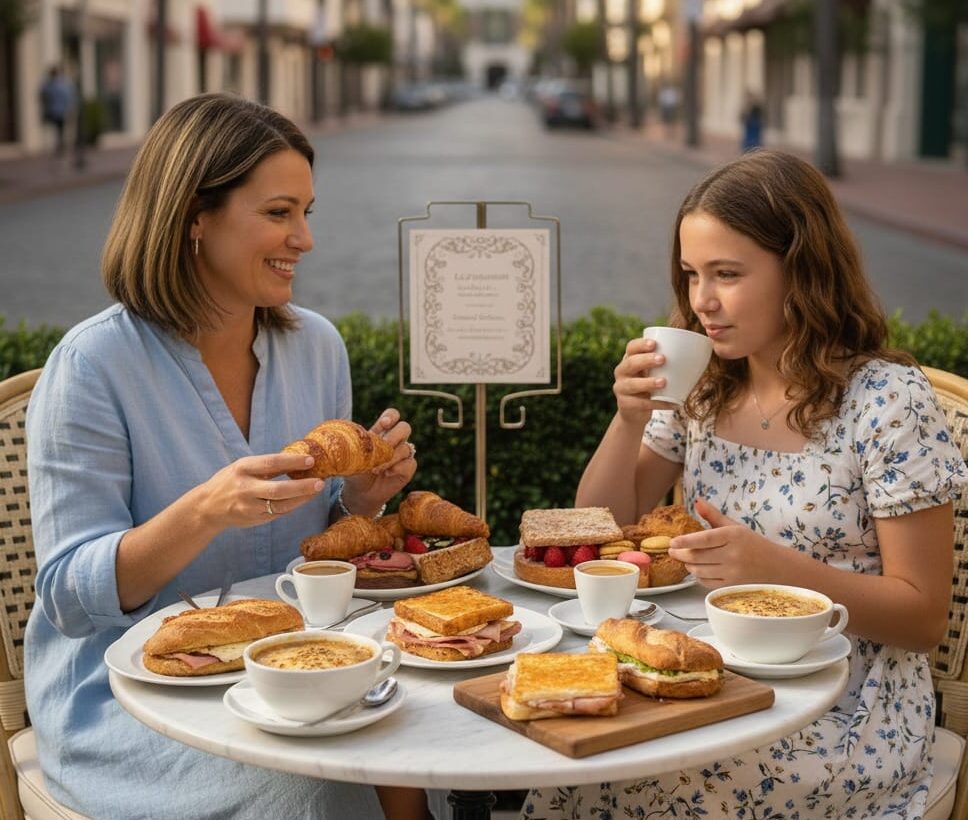
Pastries rarely stand alone. They’re best enjoyed with rich, aromatic coffee. This café offers espresso drinks, cappuccinos, and café au lait, all designed to complement buttery textures and sweet fillings.
The Specialty Coffee Association reports that coffee consumption in the U.S. has reached a 20-year high, often paired with bakery items. This café seamlessly merges two rituals — coffee and pastries — into one daily delight.
A Feast for the Senses
French pastry cafés excel at creating a multi-sensory dining experience:
- Visual: Pastries are displayed like jewels, each one an edible sculpture.
- Aroma: The smell of baking butter and caramelized sugar wraps around you on entry.
- Taste: Flavors are complex but balanced — sweet, creamy, tangy, and savory.
- Sound: The bustle of baristas, laughter of children, and music playing softly in the background.
The Journal of Environmental Psychology notes that multi-sensory cues create stronger, longer-lasting memories, explaining why locals recall their favorite pastry experiences so vividly.
Beyond Indulgence: The Health Balance
The idea of pastries as an indulgence is shifting. Nutrition experts argue that mindful indulgence improves overall well-being.
- The Mayo Clinic notes that occasional treats, when balanced with nutritious meals, are part of a healthy diet.
- The Journal of Positive Psychology found that small pleasures improve mood and reduce stress.
This café supports balance by offering smaller portion pastries, fruit-driven desserts, and lighter options, so locals can indulge without guilt.
The Café vs. Home Baking
The pandemic spurred a wave of home bakers attempting croissants and macarons. Yet as the New York Times reported, many discovered the challenge of laminating dough or mastering macaron shells.
Locals came to appreciate the expertise behind café pastries — realizing that professional ovens, years of training, and artistry can’t be replicated easily at home.
French Pastries as Cultural Bridges
Pastries are not just food — they’re cultural connectors. By experiencing a French pastry café in Los Angeles, locals engage with centuries-old culinary traditions.
The Smithsonian Folklife Center explains that food serves as an entry point for cultural exchange, helping communities experience other heritages in an approachable way. Each bite is both French in origin and Californian in adaptation.
Practical Tips for Visiting
- Arrive early for the freshest pastries.
- Share a mix of classics and seasonal specials.
- Ask the staff for pairing suggestions.
- Bring family — the café is casual and kid-friendly.
- Take home extras — pastries reheat well and make great gifts.
Why Locals Can’t Get Enough
Ultimately, locals keep coming back because the café delivers more than food:
- Consistency: The quality never wavers.
- Community: It feels welcoming, familiar, and warm.
- Culture: It’s both authentically French and distinctly Californian.
This balance makes the café a staple, woven into daily routines and family traditions.
👉 Also read: 10 Los Angeles Restaurants Parents Love for Upscale Family Dining
FAQ: French Pastry Cafés
Q1: What is the most popular French pastry in Los Angeles?
Croissants remain the most popular, with pain au chocolat and fruit tarts close behind. According to Food & Wine, croissants are consistently ranked among the top bakery items nationwide.
Q2: Are French pastries unhealthy?
Not inherently. As the Mayo Clinic suggests, occasional indulgences like pastries are perfectly fine in a balanced diet. Many cafés now offer smaller portions or fruit-based desserts.
Q3: What makes French pastries different from American pastries?
French pastries emphasize technique and layering, often using laminated dough or custard fillings, while American pastries lean toward simplicity and sweetness (think muffins or donuts).
Q4: Why do locals prefer French pastry cafés over chain bakeries?
Locals value authenticity, freshness, and craftsmanship. Chain bakeries often mass-produce items, while cafés bake fresh daily with attention to tradition and seasonal ingredients.
Q5: Can you find authentic French pastries outside of France?
Yes. Cities like Los Angeles, New York, and San Francisco have thriving French pastry scenes. The Confédération Nationale de la Boulangerie-Pâtisserie Française acknowledges that global demand for French pastries has grown steadily since the 1980s.
Final Thoughts
A French pastry café isn’t just about buttery croissants or delicate tarts. It’s about ritual, connection, and culture. Locals love this café not only for the pastries themselves, but for the role it plays in their lives — as a morning stop, a weekend outing, or a place to celebrate life’s small pleasures.
In a city as diverse and bustling as Los Angeles, this café proves that timeless traditions can still create everyday magic.
👉 Explore more:
- A Morning at La Provence Patisserie and Café
- Sweet Spots for Easy Family Dessert Outings
- Farmers Markets in Southern California
About the Author (Ginger Graham):
Ginger Graham is a Los Angeles–based food and travel writer who believes that the best dining experiences often start close to home. With a deep appreciation for craftsmanship, comfort, and community, this writer seeks out local spots that bring people together over exceptional food and warm hospitality.
French cafés have always held a special place in the author’s heart — the aroma of fresh espresso, the delicate flakiness of a perfect croissant, and the simple joy of slowing down for something sweet. This neighborhood gem captured all of that and more, earning its place as a beloved local favorite.
Through Culinary Passages, the author continues to share heartfelt reviews and hidden treasures that celebrate the flavors, stories, and people that make Southern California’s food scene so special.