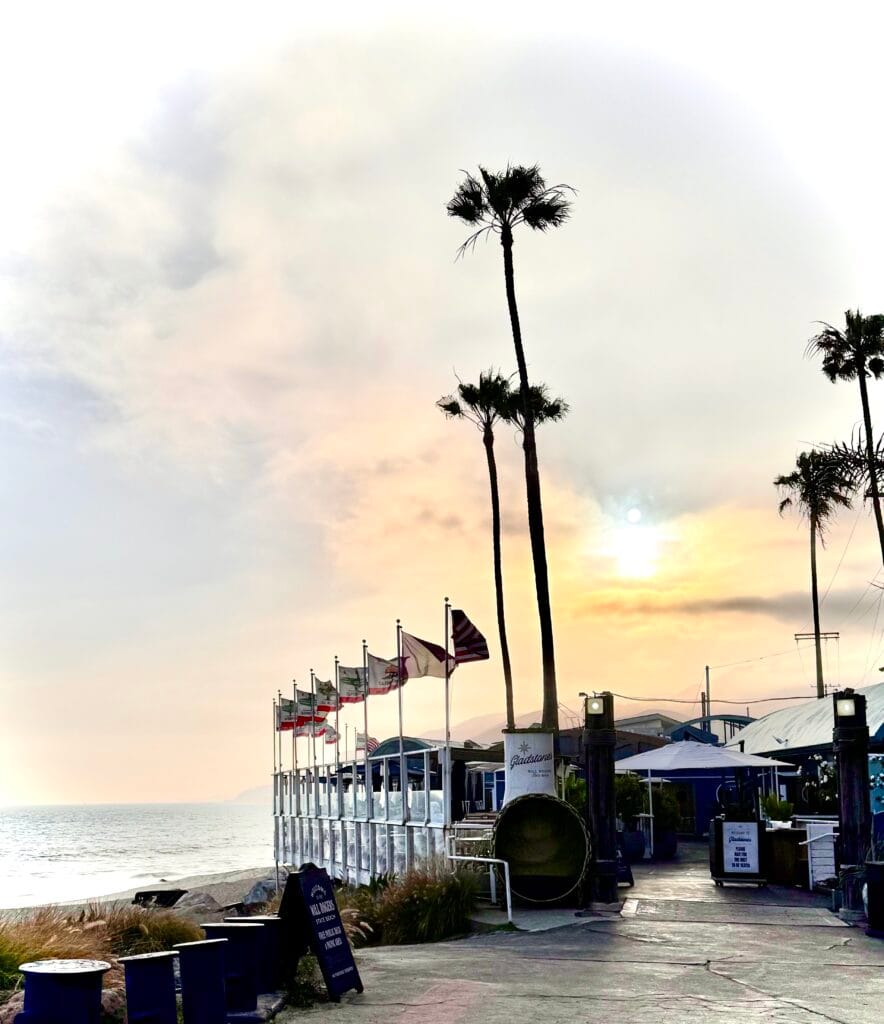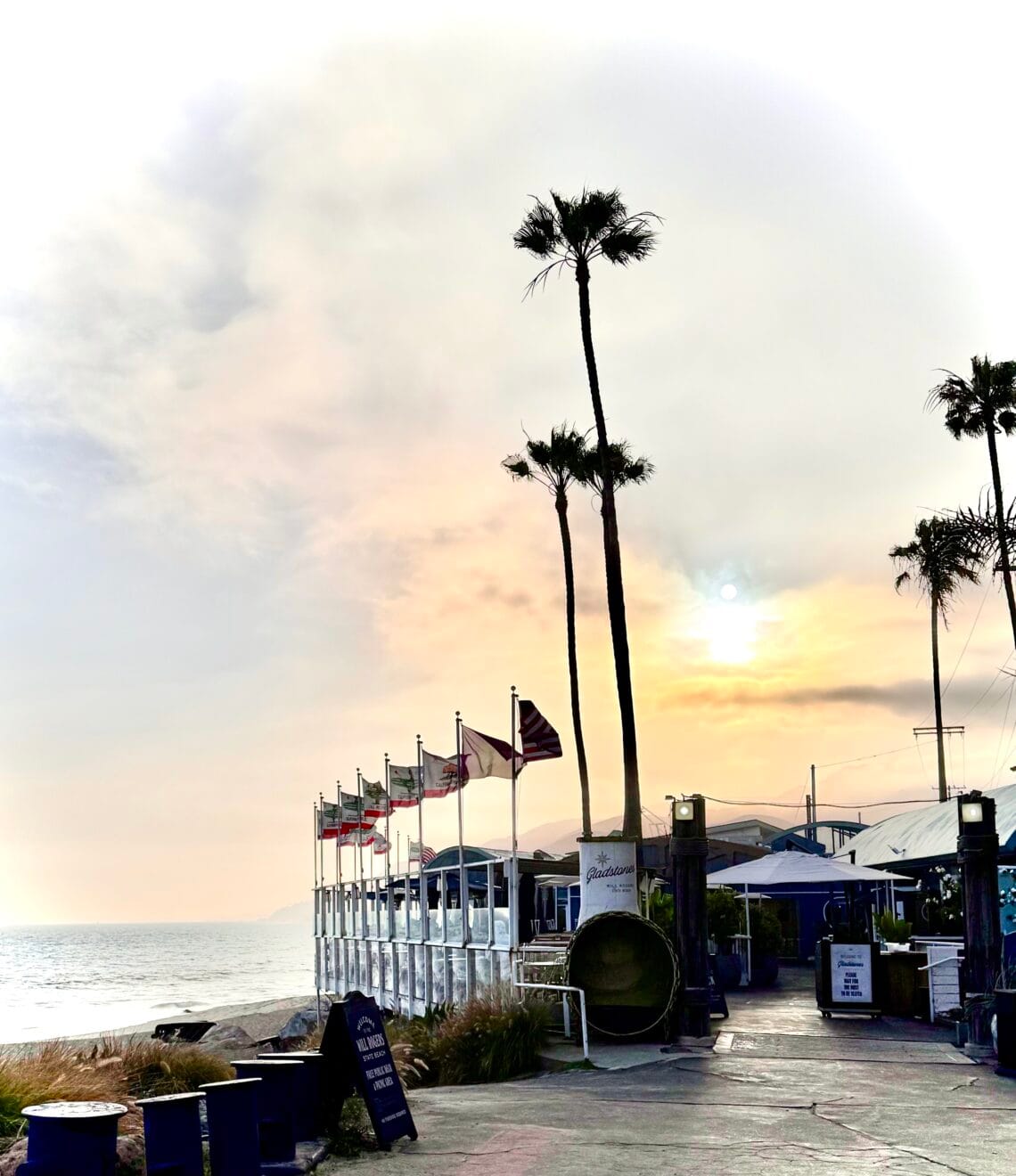
There are few places in Los Angeles where geography and history collide quite as dramatically as the intersection where Sunset Boulevard meets the Pacific Coast Highway. For over half a century, that collision has had a singular, sun-bleached epicenter: Gladstones Malibu.
For generations of Angelenos and coastal travelers, Gladstones has been a mandatory rite of passage. It’s the place where you went for massive platters of fried seafood, casual drinks on the water, and those iconic leftovers wrapped in elaborate, shiny aluminum foil shaped like swans or lobsters.
But if you haven’t driven up the coast to visit recently, the Gladstones of today looks vastly different from the raucous, cavernous landmark of the 1980s and 90s—and it is on the precipice of vanishing entirely.
With a monumental architectural transformation on the horizon, and a resilient present-day operation that survived the devastating Palisades Fire, there has never been a more urgent time to pull into that famous PCH parking lot.
Here is our first-hand guide to experiencing the nostalgia, the resilience, and the current open-air culinary reality of Gladstones Malibu before the sun sets on this era for good.
The Gladstones Elephant on the Coast: The Gehry & Puck Transformation
To truly appreciate a visit to Gladstones today, you have to understand the ticking clock overhead. The California Coastal Commission has unanimously approved a sweeping, multi-year redevelopment plan for the state-owned property.
The current 1972 structure is slated for decommissioning and demolition. In its place, a breathtaking, sustainable architectural masterpiece designed by LA’s own legendary Frank Gehry will rise. It will feature a brand-new culinary concept spearheaded by chef Wolfgang Puck.
This new place promises to be a stunning, world-class evolution for this stretch of beach. It also means that the casual, unpretentious, old-school Malibu beach-shack energy that Gladstones anchored for fifty years is in its final chapter. Visiting right now isn’t just about getting a bite to eat; it’s about capturing a piece of fading coastal lore.
Resilience on the Gladstones Deck: The Present-Day Experience
The fact that Gladstones is open at all today is a testament to incredible local resilience. Following the destructive path of the Palisades Fire, which threatened this very shoreline, the restaurant served as a vital staging ground for first responders.
Today, the main historic indoor dining room remains closed, but the heartbeat of Gladstones has migrated entirely outdoors. The current operation is driven by a dedicated legacy group of longtime employees who have kept the flame alive, running everything out of a streamlined auxiliary kitchen setup.
A Gladstones Masterclass in Sensory Resets
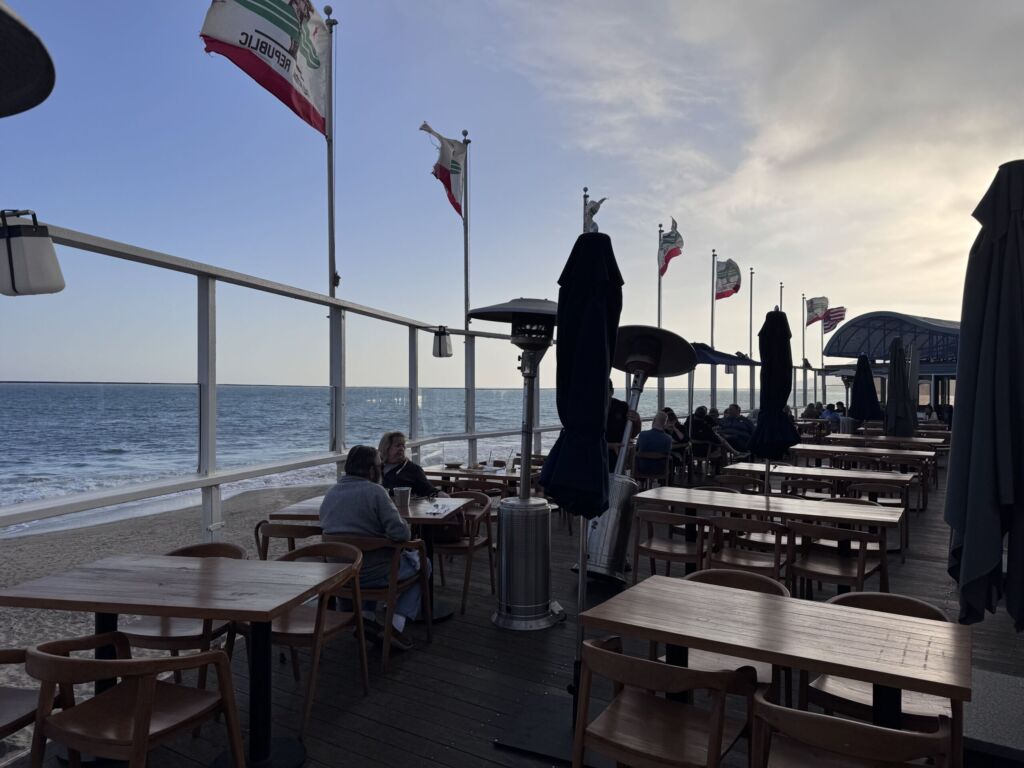
Stepping onto the remodeled deck—originally reimagined by architect Stephen Francis Jones—provides an immediate, visceral sensory reset.
As you walk out, your eyes are immediately drawn to four massive, panoramic murals painted by celebrated LA street artist Jonas Never. These striking murals pay a beautiful, poignant tribute to the community’s lost coastal businesses (including nearby icons like Cholada and The Reel Inn), grounding your visit in a deep sense of local history and solidarity.
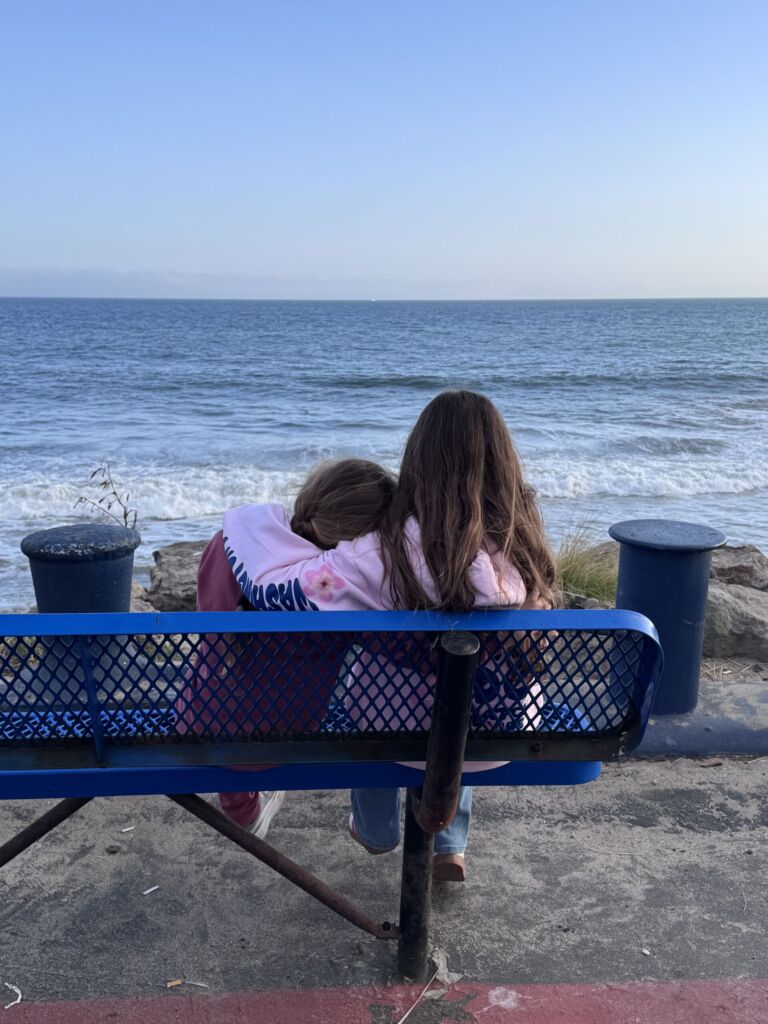
But the real showstopper remains the Pacific Ocean. Sitting on the wooden deck, you are hovering directly over the sand. The drama of the waves crashing blindly against the pilings beneath your feet, the crisp, salt-tinged marine air cutting through the afternoon heat, and the unobstructed 180-degree views of the horizon offer a mental decompression that only the Malibu coast can deliver.
The Culinary Critique: Simple Pleasures, Streamlined Execution
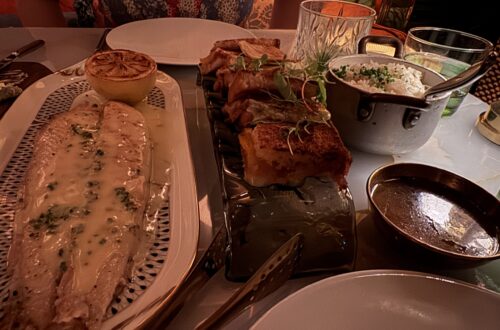
With the main kitchen out of commission, the menu has been smartly edited down to an open-air, beachside baseline. You won’t find the sprawling, multi-page menus or the massive, overwhelming weekend buffets of yesteryear. Instead, the focus is on straightforward, classic coastal execution.
[ STREAMLINED DECK HIGHLIGHTS ]
┌──────────────────────────┬──────────────────────────────────────────┐
│ Dish / Drink │ The Coastal Verdict │
├──────────────────────────┼──────────────────────────────────────────┐
│ New England Clam Chowder │ Rich, comforting, and properly seasoned; │
│ │ an absolute must as the fog rolls in. │
├──────────────────────────┼──────────────────────────────────────────┤
│ Traditional Lobster Roll │ Generous chunks of sweet meat on a soft, │
│ │ toasted roll. Clean, classic, no fuss. │
├──────────────────────────┼──────────────────────────────────────────┘
│ Signature Mai Tai │ Nostalgic, sweet, and packs a punch. │
│ │ Best enjoyed as the sky turns orange. │
└──────────────────────────┴──────────────────────────────────────────┘
Because everything is running out of a temporary, auxiliary kitchen space, the rhythm of hospitality is different. The pacing can occasionally reflect the logistical constraints of an outdoor-only setup during peak sunset rushes.
However, the service is carried by the genuine warmth of a staff that truly wants to be there. The food doesn’t aim for fine-dining molecular gastronomy; it aims for satisfying, nostalgic comfort that tastes best when paired with ocean spray and a cold cocktail. It’s casual coastal dining in its truest, most democratic form.
Know Before You Go: Tactical Logistics
To maximize your experience and ensure a seamless, high-quality visit, keep these local operational details in mind:
- Timing the Sun: Gladstones currently operates on a daylight-driven rhythm, generally open from 11:00 AM until sunset. To secure a prime table right on the deck railing without an excruciating wait you used to have to aim to arrive roughly 60 to 90 minutes before the scheduled sunset. Since the fire, people aren’t coming here that much so there really isn’t any wait.
- The PCH & Parking Strategy: The intersection of Sunset and PCH can experience heavy traffic bottlenecks on weekend afternoons. Give yourself an extra 20-minute buffer if you’re driving up from Santa Monica or the Westside. The parking lot is massive and county-interfaced; expect standard coastal parking fees, but the convenience of pulling right up to the deck is worth it. When we were here last night, we pulled into their parking lot, and scanned a bar code and paid on our phone. No Valet anymore.
- Malibu Micro-Climates: Do not let a warm, sunny afternoon in the city fool you. The moment the sun begins to dip below the Malibu horizon, the marine layer moves in fast, and the exposed deck gets remarkably brisk. Embrace a “smart-casual coastal” aesthetic: pair your favorite denim or midi-dress with a chic, heavy knit sweater or a structured light jacket so you can comfortably linger through the twilight hour.
Some Additional Nice To Know Info:
- Kid Friendly?: Yes! This place is very kid friendly. It has a kids menu with kid approved dishes. Your kids can breathe fresh air sitting out on the open deck. They will probably ask you to go play on the beach after your meal. It’s actually very convenient to walk down the sand to the ocean after you eat here. This can be a great incentive for the kiddos: (If you behave, we can play in the sand after!)
- Only Seafood?: Nope! They have a great burger and a chicken sandwich for you on the menu. They even have steak and a steak sandwich on the menu as well. If you are a vegetarian, your options may be limited to their Caesar salad and their sides. (I know it doesn’t sound exciting but the view makes up for it!)
The Verdict
Gladstones Malibu is currently in a beautiful, bittersweet limbo. It is caught between a storied, resilient past and a glamorous, Frank Gehry-designed future.
While the incoming culinary and architectural evolution will undoubtedly change the face of this intersection for the better, there is an irreplaceable magic to the raw, open-air, weathered deck experience happening right now.
Go for the history, stay for the Jonas Never murals, order a cold drink and a lobster roll, and toast to an LA institution before it changes forever.
Read More From Culinary Passages
If you loved exploring the changing tides of the Los Angeles coast, keep the journey going with these curated guides and culinary reflections:
- The Evolution of Westside Dining: Our Updated Review of Edgemar Santa Monica – Dive into our latest return visit to this high-profile Santa Monica hotspot and see how its culinary direction has shifted.
- Hidden in Plain Sight: An Inside Look at LA’s Exclusive Corridor 109 – Step away from the casual coast and step into one of the city’s most intimate, masterfully executed boutique dining experiences.
- The Fine Art of the Sensory Reset: Finding Peace in Pacific Northwest Luxury Lodges – Discover our favorite high-end, slow-travel escapes designed for deep mental decompression and spectacular hyper-local dining.
- Luxe Minimalist Entertaining: A Foolproof Timeline for Stress-Free Holiday Hosting – Learn how to structure, prep, and execute an elegant gathering at home without spending the entire evening trapped in the kitchen.
- Seamless Travel Logistics: The Insider’s Guide to Luxury Cruise Experiences – From boarding protocols to curated shore excursions, discover how to elevate your next open-water journey into a seamless, high-end getaway.
About the Author
Ginger Graham is the creator and editor of Culinary Passages. With fifteen years of clinical experience as a Registered Nurse, Ginger brings a unique perspective to the worlds of fine dining and luxury travel—viewing hospitality and travel logistics through a lens of quality, mindfulness, and the essential need for a true “sensory reset.” When she isn’t uncovering the best coastal dining gems or reviewing luxury escapes alongside her family, you can find her exploring the Westside of Los Angeles or planning her next sea-bound adventure.