There are restaurants in Los Angeles that exist almost entirely on the strength of their setting, and then there are places that back up the beautiful backdrop with actually good food. The Terrace at The Maybourne Beverly Hills promises both. After hearing about their Golden Hour happy hour from a friend who swore it was the most beautiful dinner deal in Beverly Hills, Brad and I loaded up Charlotte, Madeline, and our sense of adventure and went to find out for ourselves. The short version: the setting absolutely delivers. The food, however, did not.
What Is the Golden Hour at The Maybourne?
The Golden Hour is The Terrace’s daily happy hour, running from 5:00 PM to 6:00 PM every single day. The deal is impressive on paper: 50% off the entire food and drink menu, not just select items, not just well drinks, but everything. At a five-star hotel restaurant in Beverly Hills, that’s the kind of offer that makes you think you’ve found a loophole. We made a reservation, which I’d strongly recommend, because this happy hour fills up fast, and arrived just as the late afternoon light was doing exactly what the name promises.
Working long shifts as a nurse has made me a sucker for a deal that requires no mental math. Half off everything? Done. I’m in.
The Setting: Where The Maybourne Actually Delivers
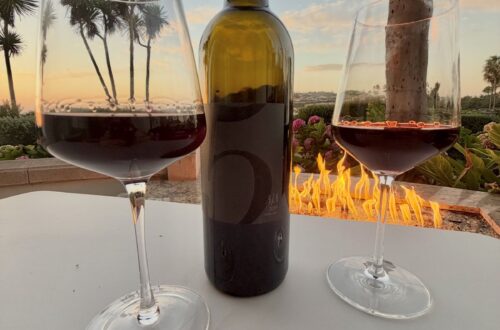
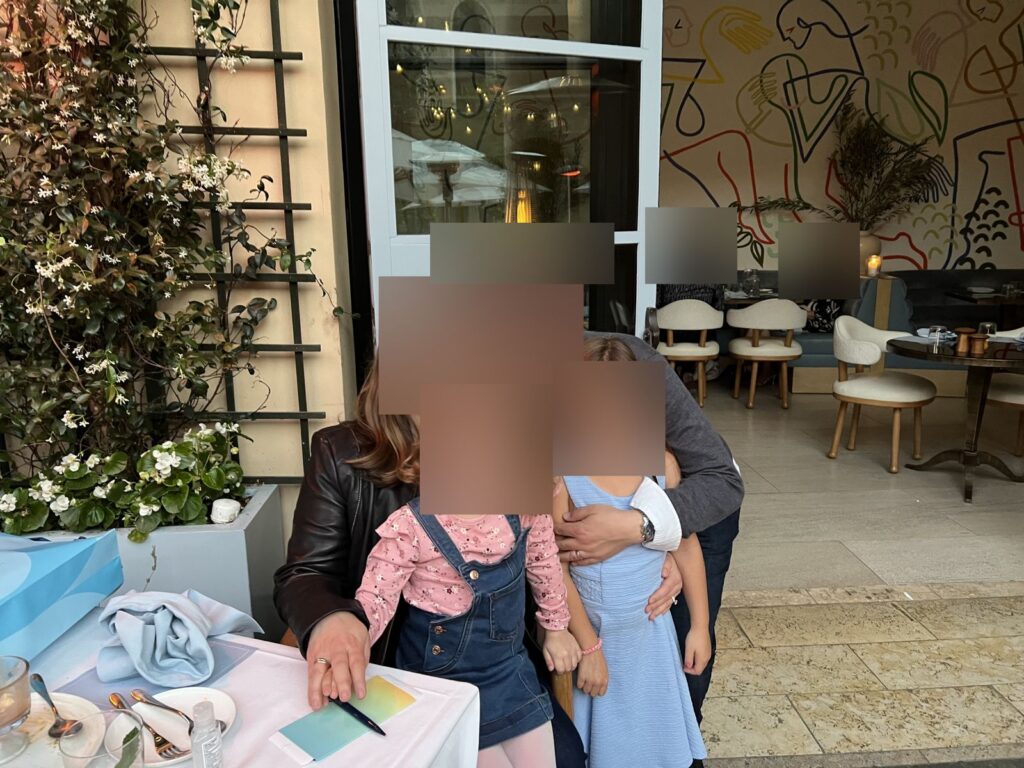
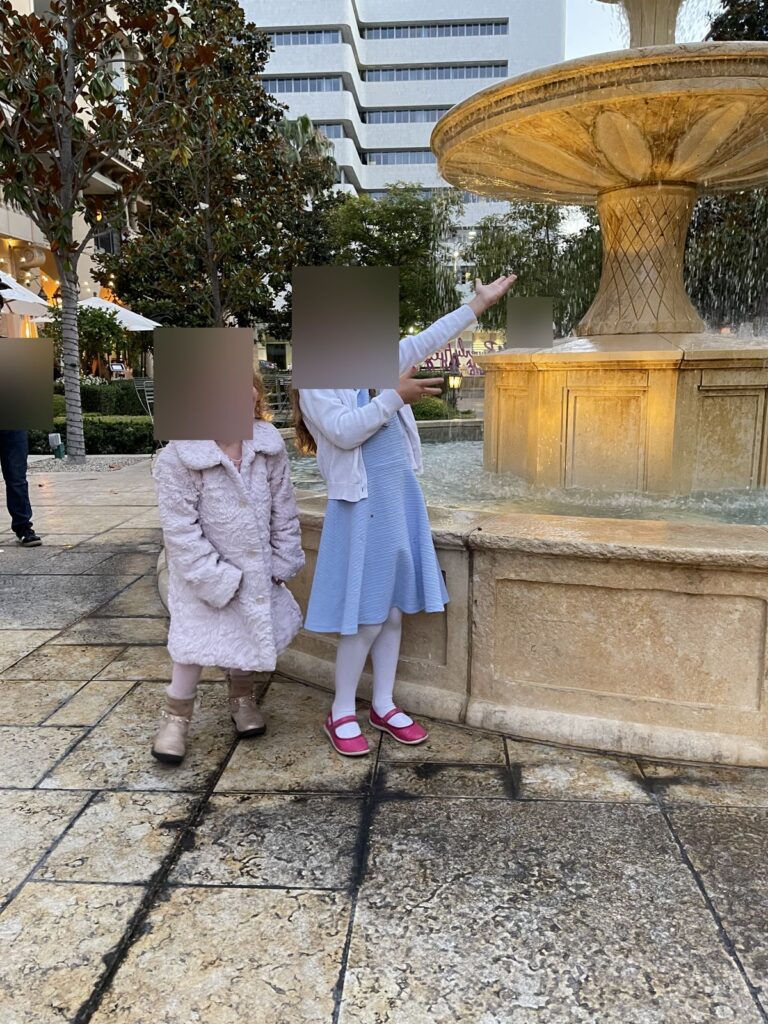
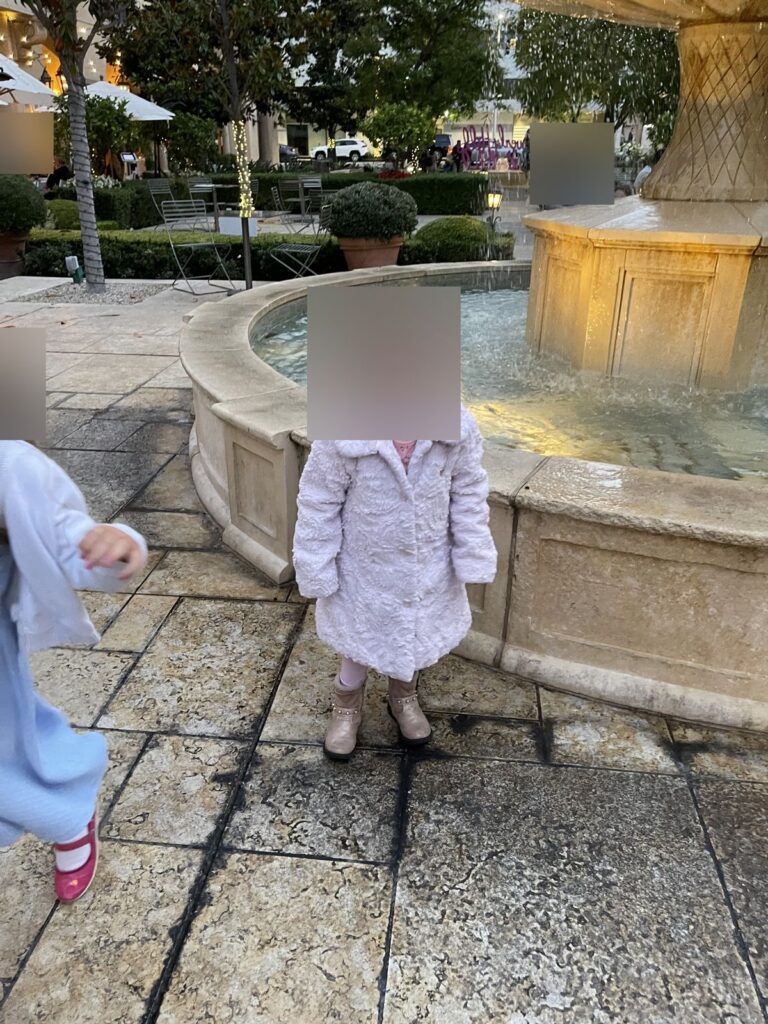
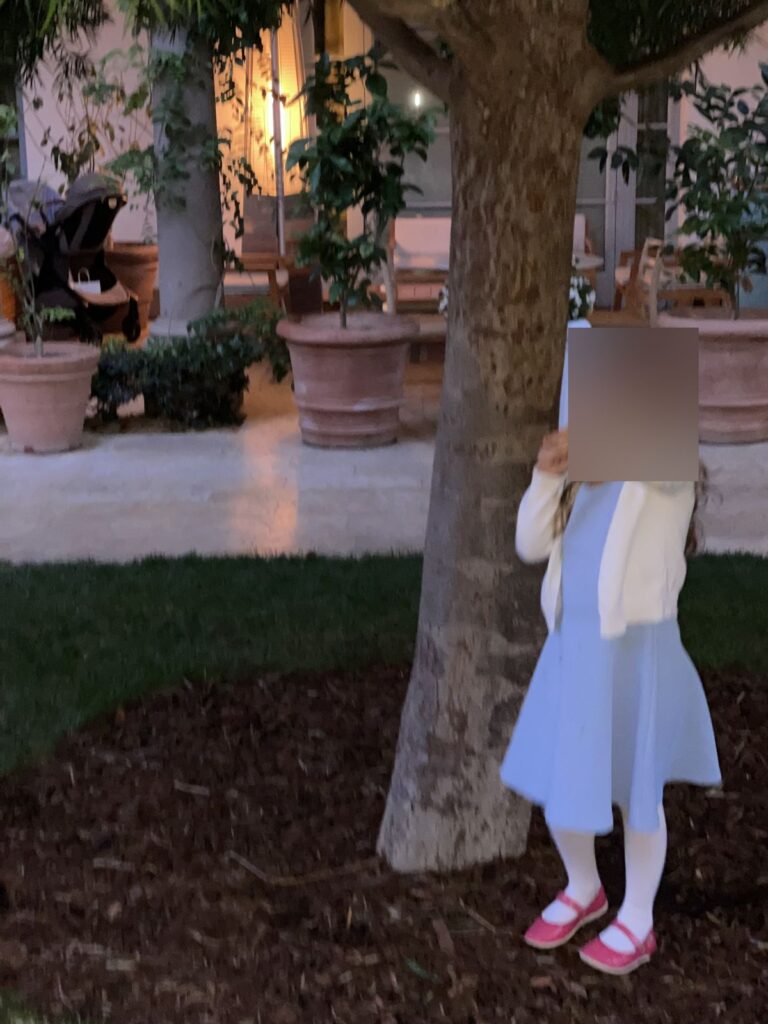
Let me be fair here, because The Terrace is one of the most beautiful outdoor dining spaces in Los Angeles. The Maybourne sits at the top of Canon Drive in Beverly Hills, and The Terrace is the outdoor courtyard space that opens up with a real Italian-garden feel: stone surfaces, lush greenery, the kind of atmosphere that makes you feel like you’ve been transported somewhere calmer and more European than the 90210 zip code outside the gate. When you’re sitting outside on a warm evening and the golden light is hitting the space just right, it’s legitimately stunning.
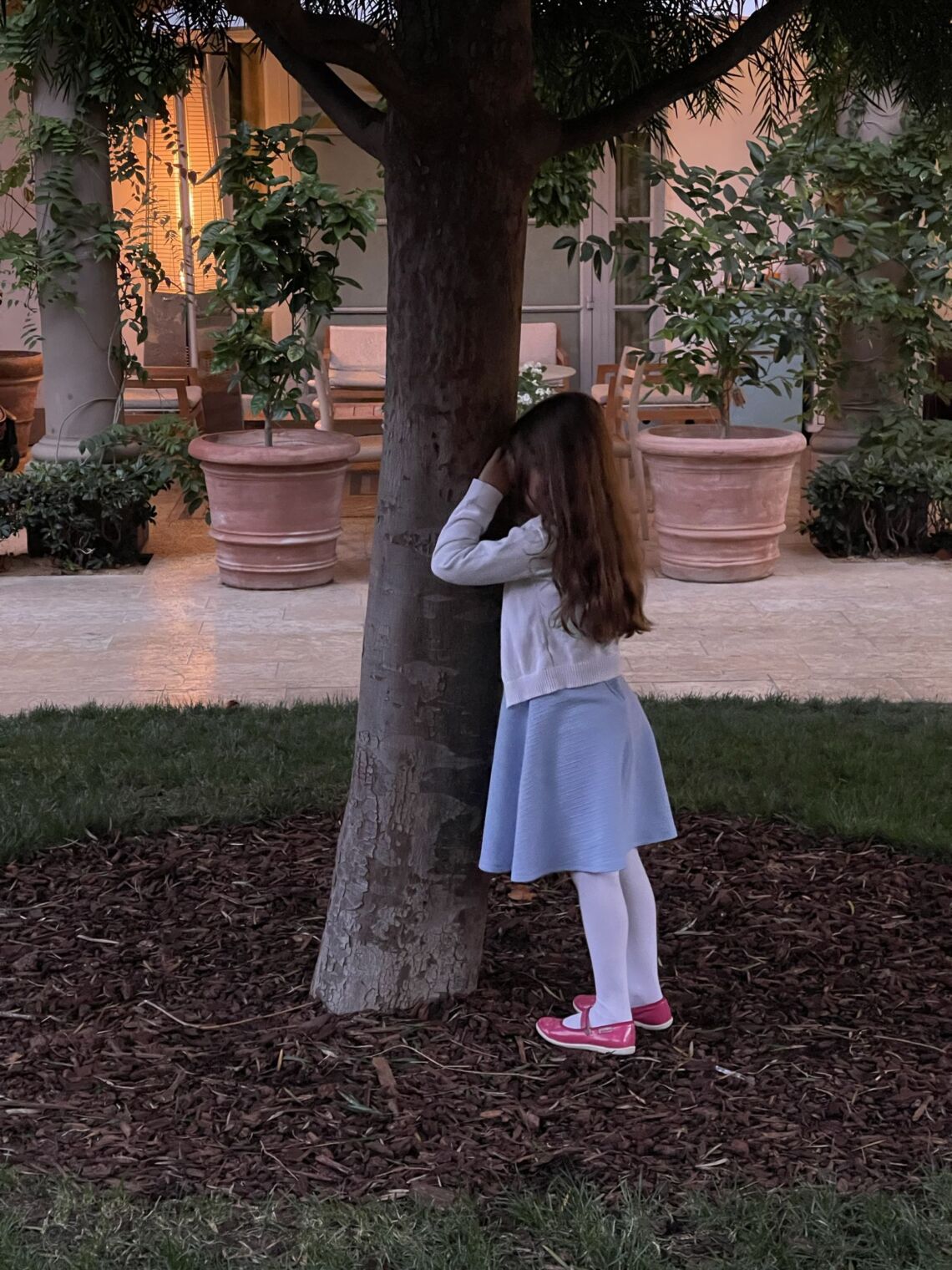
Charlotte and Madeline loved being able to wander the outdoor terrace while we waited for courses. That’s actually one of the underrated perks of dining here with kids: the outdoor space is walkable and contained enough that you can keep an eye on them while they explore, which takes the pressure off a meal at a very formal hotel setting. If they get restless, they have somewhere to go. That matters more than people realize when you’re trying to have an actual conversation over dinner.
What We Ordered for Dinner: The Golden Hour Menu
We ordered a mix of dishes to try different parts of the dinner menu, which felt like the smart move when everything was half off. We started with the Red Snapper Crudo, then moved to the Roasted Arctic Char and the Corn Agnolotti as our mains, and finished with dessert. The girls ordered off the kids menu and were most excited about the kids dessert: an ice cream whale that came out and absolutely delighted them. That was easily the highlight of the meal, and I mean that without sarcasm. When your kids are that excited about something at the table, it lifts the whole experience.
The crudo and the char were the seafood-forward choices, which in theory plays well at a hotel restaurant with resources and a kitchen that should be sourcing well. In practice, the fish didn’t taste as fresh as I expected. As someone who’s spent years paying close attention to details, occupational habit from nursing, I notice when something is slightly off. The freshness wasn’t there in a way that was hard to ignore. The Corn Agnolotti was the most enjoyable dish of the evening, and the one I’d go back and order again if I were somehow back in that dining room.
The Honest Verdict on Dinner and Service
Here’s the thing about Golden Hour dinner: even at 50% off, our bill came to over $280 for the four of us. That number stopped me in my tracks. We were at happy hour. We ordered thoughtfully. And we still spent nearly three hundred dollars. The service was mediocre and slow: not catastrophically bad, but not what you expect at a five-star Beverly Hills hotel. Nothing stood out as memorable. Nobody checked in at the right moments. The pacing was off in a way that made the meal feel longer than it needed to be.
My honest take: I would have been furious if we had paid full price. At half off, I was merely disappointed. That’s not the energy you want to leave a restaurant with.
I kept thinking about FIG at Five, the happy hour at the Fairmont in Santa Monica, which I’ve written about separately and which I love. The food there is better, the value is clearer, and the service has never let me down. The Terrace has a more dramatic setting, but FIG wins on every practical measure. If you’re choosing between the two for a date night happy hour in the Westside luxury category, go to FIG.
Beverly Hills Has Better Options
This is Beverly Hills. There is no shortage of restaurants doing exceptional food within a few blocks of The Maybourne. The competition is fierce, and for the money we spent, even at 50% off, I can name several places nearby that would have left us more satisfied with dinner. The Terrace is living on its location and its aesthetics, and for a certain kind of diner, someone who wants the photo, the ambiance, the hotel experience, that’s enough. For our family, it wasn’t. We have not been back since that visit, and I don’t anticipate returning anytime soon.
That said, I want to be clear: the girls had a good time. Charlotte and Madeline were happy, the ice cream whale was a triumph, and the outdoor terrace kept them entertained between courses. If your primary goal is a beautiful setting where the kids can move around and feel fancy for an evening, The Terrace accomplishes that. My disappointment was with the food and the value: not with the experience of being there.
Practical Notes Before You Go
Reservations are essential for Golden Hour dinner. Do not show up and expect to walk in. This happy hour fills up quickly, and the outdoor terrace doesn’t have unlimited capacity. Book ahead. You can check current hours and reserve directly through The Terrace’s official page.
Valet parking is available, and you can get it validated when you dine at the restaurant. In Beverly Hills, that’s not a small thing. Street parking in this neighborhood is its own exercise in frustration, so let them take the car.
The dress code is what I’d call nice casual, but read that with context: you are at a five-star hotel in Beverly Hills. This is not the place to show up in athleisure. Dress like you belong there: not black-tie, but pulled together. You’ll feel more comfortable if you do, and the experience will match the setting better.
For the best light, the Golden Hour timing is well-chosen. Arriving right at 5:00 PM in the warmer months catches the late afternoon sun in the courtyard at its most flattering. If you’re going for the aesthetic experience, the timing is intentional and it works.
The Terrace at The Maybourne: Need to Know
| Address | 225 N Canon Dr, Beverly Hills, CA 90210 |
| Golden Hour | Daily, 5:00 PM – 6:00 PM | 50% off entire food and drink menu |
| Reservations | Required for Golden Hour. Fills up fast |
| Parking | Valet available; validated with restaurant dining |
| Dress Code | Nice casual. You’re at a 5-star Beverly Hills hotel, dress accordingly |
| Budget | $280+ for a family of 4 at happy hour pricing |
| Best For | The ambiance and setting; outdoor terrace is family-friendly |
| Must Order | Corn Agnolotti; kids’ ice cream whale dessert |
| Skip If | You prioritize food quality over atmosphere. There are better options nearby |