Valentine’s Day has undergone a dramatic transformation in recent years. In 2026, as the “experience economy” reaches its peak, the demand for intimate, chef-driven spaces has never been higher. However, as many seasoned diners know, the most romantic day of the year often presents a paradox: the higher the demand, the more likely the service is to falter.
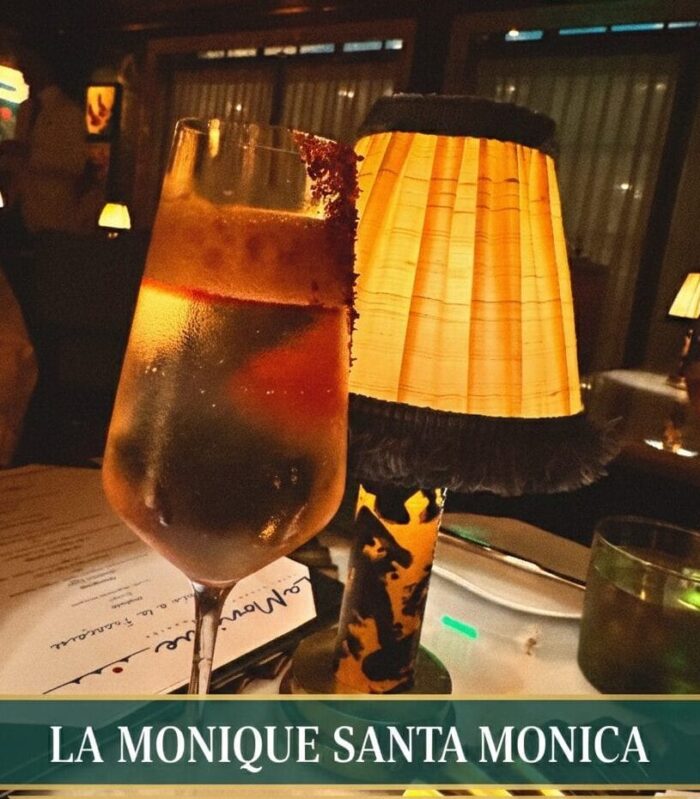
Among the myriad of options in Los Angeles, La Monique, located within the serene Oceana Hotel on Ocean Avenue, stands as a masterclass in “jewel-toned maximalism.” But does the reality of a Valentine’s Day prix-fixe menu live up to the Old Hollywood glamour of the setting?
The Economics of Affection: Why Your Table Choice Matters
To understand the significance of a reservation at a place like La Monique, we must first look at the broader landscape of romantic spending. According to recent data from the National Retail Federation (NRF), Americans spent an estimated $25.8 billion on Valentine’s Day in 2026, with dining out emerging as the single largest expenditure category.
While the average spend per person has risen, the focus has shifted toward “memory-making” experiences. However, this surge in demand comes with a challenge: the cost of a traditional Valentine’s dinner has increased significantly, and restaurants often struggle to maintain their standard of excellence under the weight of back-to-back reservations.
The Valentine’s Day Prix-Fixe: A Symphony in Four Acts
For Valentine’s Day 2026, Chef David Fricaud designed a specific narrative through a set menu. While prix-fixe menus are designed for kitchen efficiency, they also allow a chef to showcase a cohesive story. At La Monique, that story was divided into four distinct acts.
The Prelude and Romance
The evening began with a Prelude: an Eclair with Confit Vegetable Mousse. This savory take on a French classic was a sophisticated nod to the restaurant’s Parisian soul, offering a delicate, earthy start to the meal.
For the Romance course, guests were given two distinct paths. The first was The Perfect Egg, a masterclass in texture featuring wild mushrooms, French toast, and a vibrant green espuma. The second option was the Asparagus Agnolotti, which paired the brightness of the vegetable with the decadence of langoustine sashimi, finished with tarragon brown butter and a sharp pecorino cheese. This course was arguably the highlight of the menu, demonstrating the “coastal spirit” of Santa Monica through a French lens.
Est Si Ca Durait: The Main Event
The main course offered a choice between land and sea. The Filet Mignon & Lobster was a sophisticated “surf and turf” consisting of Angus beef, a lobster quenelle, leek cremeux, pomme anna, and a rich morel sauce. Alternatively, the Roasted Wild Sea Bass provided a lighter, yet equally complex, profile with caramelized celery, broccolini risotto, and a luxurious lemon butter caviar.
The Final Flourish: Cheese and Dessert
A true French meal requires a cheese course, and the Joe Tamie Moi Non Plus (a playful linguistic wink) featured a Brillant-Savarin Truffle. This led into the Le Final Amour, where diners chose between a Chocolate Heart—composed of a chocolate biscuit and mousse with salted caramel—or the Mac-Love, a vibrant raspberry macaron with lychee sorbet and rose coulis.
The “Valentine’s Day Trap”: A Candid Review of Service
While the menu read like a dream, the execution revealed a common industry truth: fine dining restaurants are often “intimidated” by Valentine’s Day.
There is a documented phenomenon in the hospitality industry where the quality and service of high-end establishments tend to dip on major holidays. The pressure of turning tables and the rigid nature of a prix-fixe menu can lead to a mechanical, rushed atmosphere. La Monique, unfortunately, was no exception.
Despite the beautiful surroundings of the Oceana Hotel, the service felt strained. The seamless, invisible hospitality one expects at this price point was replaced by a palpable sense of rush. It appeared the staff was overwhelmed by the holiday demand, which is a common pitfall noted in research regarding the psychology of fine dining; when a restaurant loses its “rhythm” due to high-volume holidays, the guest’s perception of “luxury” is the first thing to suffer.
I left feeling that I need to return to La Monique when it is not Valentine’s Day. To truly judge Chef Fricaud’s talent, one must experience the restaurant when it isn’t shackled by a pre-set menu and the frantic energy of a holiday crowd.
The 2026 Valentine’s Day “Value Index”
When evaluating a prix-fixe menu at this price point, it is essential to look beyond the total bill and analyze the “utility” of the experience. Below is a breakdown of how the Valentine’s Day offering at La Monique compares to a standard evening at the Oceana Hotel.
| Metric | Valentine’s Prix fixe Menu | Standard À La Carte (Estimated) | Value Shift |
| Cost Per Person | $175 – $225+ | $110 – $140 | +60% Increase |
| Time Allotted | 90 – 105 Minutes | Unlimited | Significant Reduction |
| Menu Flexibility | 2 Choices per Course | 15+ Options | High Limitation |
| Service Ratio | High Guest-to-Server | 1:3 Server-to-Table | Noticeable Dip |
| Exclusivity | 100% Occupancy | 60-70% Occupancy | Higher Noise Floor |
Why the Oceana Hotel Location Still Matters
Despite the service hiccups, the location remains one of the best in Southern California. Situated on a quieter stretch of Ocean Avenue, the hotel feels like a private residence. For those seeking a pre-dinner stroll along the Palisades Park bluffs at sunset, the setting is unbeatable. This natural beauty is part of why these restaurants are so heavily booked, even if the service struggle is a known risk.
Comparison: The “Holiday Standard”
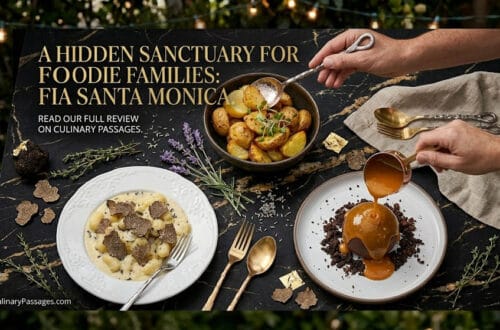
While Santa Monica is home to legendary spots like Fia or Élephante, the “holiday dip” is a city-wide issue.
- Fia offers a lush garden vibe, but the noise levels on Valentine’s Day can make conversation impossible.
- Élephante provides the “scene,” but you often feel like a number rather than a guest.
- La Monique offers the most transportive physical environment, but it currently needs to master the art of the “high-pressure” service to match its stunning décor.
🛑 The Valentine’s Day “Service Tax”: A Reality Check
While the décor at La Monique is nothing short of breathtaking, my experience on February 14th highlighted a growing trend in the Los Angeles dining scene:
- The Holiday Performance Gap. > When a restaurant moves from an à la carte menu to a rigid prix-fixe structure to accommodate a holiday rush, three things typically suffer. At La Monique, we experienced all three:
- The “Conveyor Belt” Pacing: Rather than the meal being timed to our personal rhythm, courses arrived with a mechanical speed that suggested the kitchen was clearing space for the next seating. The art of the “linger” is lost when the staff is visibly checking their watches.
- Staff Intimidation: Fine dining requires a certain level of poise and “invisible service.” On Valentine’s Day, that poise was replaced by a palpable sense of stress. When the servers are intimidated by the volume of the room, the guest feels the tension.
- The Prix-Fixe Quality Dip: Cooking for 14 tables at different intervals is an art; cooking the same “Perfect Egg” 50 times in a row is a factory line. Even at a high price point, the “soul” of the dish often gets lost in the assembly-line execution.
- The Verdict: If you are looking for a true representation of Chef David Fricaud’s talent, do not go on a holiday. Wait for a quiet Tuesday in March when the team isn’t battling a calendar-induced deadline.
Practical Tips for Your Next Visit
- Avoid the “Big” Holidays: If you want to see what La Monique is truly capable of, book a Tuesday or Wednesday night in March.
- The “Lavender Butter” Constant: Regardless of the day, the warm baguette and lavender-flavored butter remain a highlights.
- Request a Corner Table: With only 14 tables, the corner spots offer the most privacy and the best views of the Martin Brudnizki-designed interior.
Read More on Culinary Passages
If you found this honest review helpful, please explore more…:
- 6 Brutally Honest Rules for Los Angeles Dining: How to Eat Like a Local (And Score the Best Tables)
- A Great Michael Mina Heartbreak: The Downfall of ORLA
- How to Survive a Family Trip to The Venetian: Amazing Grand Suites and the Checkout Truth
- The Luxury Goldendoodle Survival Guide:
About the Author
Ginger Graham is the founder and lead writer for Culinary Passages. With a background in nursing and a passion for the “Small Plate Renaissance,” Ginger explores the intersection of travel, dining, and luxury living. Based in Southern California, she is known for her candid, “no-nonsense” reviews of the most exclusive dining destinations in Los Angeles, Santa Monica, and Las Vegas.