Welcome to the modern era, where the price tags are escalating toward the stratosphere and the quality of literally everything is plummeting into the Earth’s mantle. If you feel like you’re paying for a Ferrari and receiving a tricycle with a missing wheel, you aren’t alone. We are currently living through the “Golden Age of Mediocrity,” and quite frankly, I’ve reached my limit.
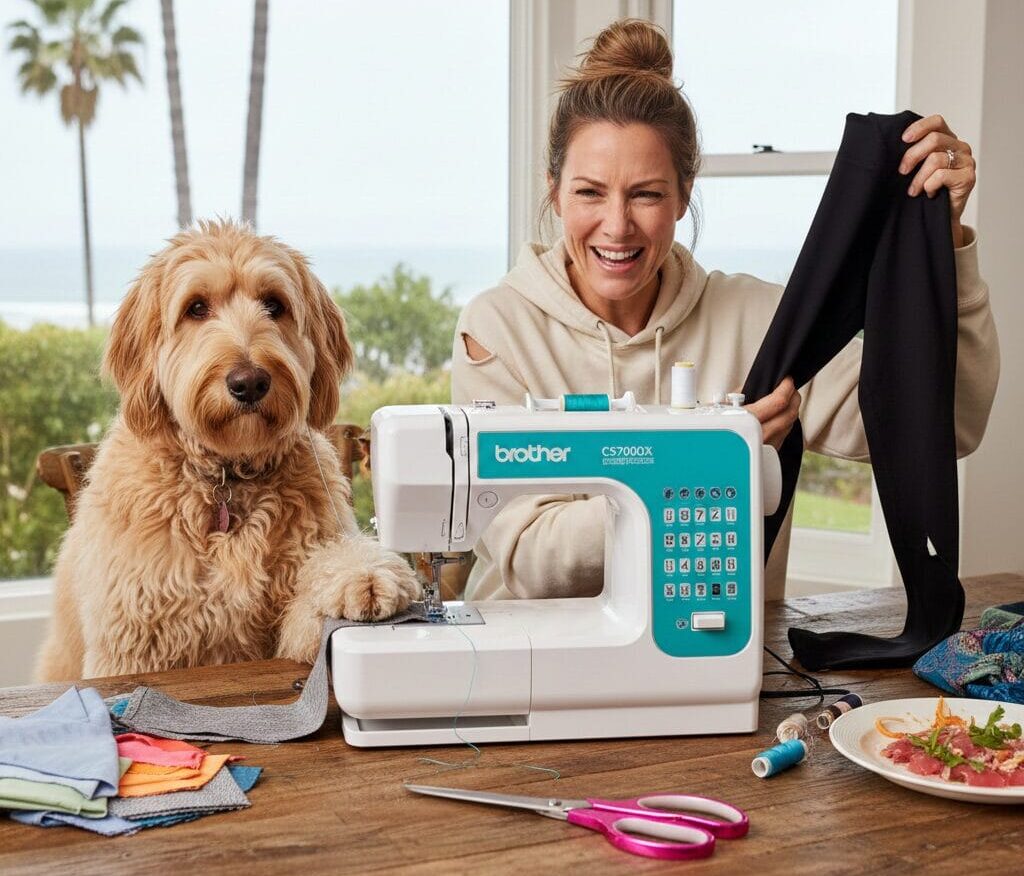
I’m a blogger, a mother, and a person who generally enjoys things that actually work. But lately, it feels like every transaction is a gamble where the house always wins, and the “house” is a multinational corporation that forgot how to provide a service. My frustration has reached such a fever pitch that I am currently sitting next to a Brother CS7000X sewing machine. I don’t know how to sew. I don’t even know how to thread the needle. But I bought it because I am officially “opting out” of the system. I am taking my power back, one bobbin at a time.
The Whole Foods Quality Hunger Games
Let’s start with the basics: food. I have been a loyal Whole Foods devotee for years. Every week, I do the modern suburban dance: I pull up the app, select my organic kale, and wait for the delivery to arrive at my gate. Simple, right? In the “before times,” it was a seamless convenience. Now? It’s a high-stakes episode of Survivor where the reward is a head of lettuce that isn’t slimy.
In theory, grocery delivery is a miracle. In reality, for the past few months, opening the brown paper bags has become a game of “Is it a bell pepper or a science experiment?” More often than not, it’s a science experiment. We’re talking moldy berries that look like they’ve developed their own ecosystem, wilted greens that have given up on life, and cuts of meat that look like they were carved with a butter knife by someone in a very big hurry. It’s as if the “personal shoppers” have been instructed to pick the exact item I would have hidden at the back of the shelf if I were there in person.
But this past weekend was the final straw. My delivery driver arrived at our home, looked at the locked pedestrian gate, and apparently thought, “You know where these expensive organic groceries belong? On the sidewalk of a busy major street.” He didn’t ring the bell. He didn’t call. He didn’t even attempt to wait for thirty seconds. He just dumped several bags of food—vulnerable to theft, tampering, or the local stray cat population—right there on the concrete for all of Los Angeles to see.
This isn’t just a “decline in service”; it’s a “total abandonment of logic.” According to recent economic observations regarding “Skimpflation,” companies are increasingly cutting back on the services they provide while keeping prices high, a phenomenon that perfectly explains why my groceries were left to fend for themselves on a public sidewalk. We are paying more for the “privilege” of having our eggs potentially stepped on by a jogger.
The Mystery of the Circling Pizza
When the grocery delivery fails, you order pizza. That’s the rule. Friday night called for Fresh Brothers in Brentwood. We kept it simple: pizza and wings. Nothing fancy, just the fuel required to survive a long week. We watched the little delivery icon on the map like it was the Super Bowl.
Our driver entered the neighborhood. Then she circled. Then she circled again. It was like watching a confused pigeon try to find a breadcrumb. We called the restaurant, and even they were baffled. “She’s right there,” they said. “We can see her.” Yes, we can see her too; she’s currently doing donuts in a cul-de-sac three blocks away.
As it turns out, our driver was juggling multiple deliveries via a third-party app. She had forgotten an item for another customer and decided—in a stroke of logistical genius—that instead of delivering our food while it was hot and she was on our street, she would drive all the way back to the restaurant, pick up the missing item, and deliver to the other person first.
By the time the pizza arrived, it was stone-cold. Cold pizza is fine for breakfast when you’re twenty-two and have no standards; it is not fine when you’ve paid a premium for a Friday night family treat. This drop-off in reliability isn’t a fluke; many experts point to the decline in the American Customer Service Index (ACSI) as evidence that consumer satisfaction is at its lowest point in nearly two decades. When the infrastructure of service relies on people who aren’t even employed by the brand you’re buying from, the accountability vanishes into the ether. Fresh Brothers eventually offered to send another one, and my husband and I spent the next thirty minutes praying to the delivery gods that it wouldn’t be the same woman returning to our house.
When “Fine Dining” is Just “Fine-ish” Quality
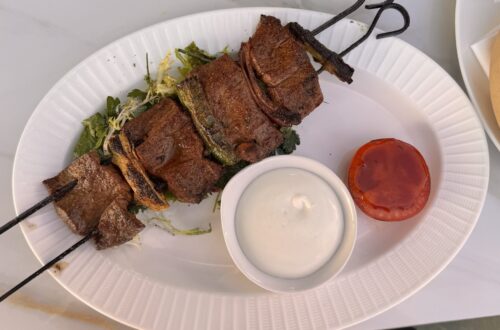
Since we are on a roll with disappointing meals, let’s talk about ORLA in Santa Monica. We went in with high hopes. We left with a bill that suggested a luxury experience and a stomach that suggested we had eaten at a poorly managed cafeteria. The food was mediocre, the freshness was non-existent, and the atmosphere felt like it was trying too hard to mask the fact that the kitchen had checked out hours ago.
This is the central theme of 2026: The “Nice Mediocre Restaurant.” You know the ones. They have the velvet booths, the dim lighting, and the $24 cocktails, but the actual substance is missing. It’s a performative version of luxury. You sit there, looking at your $45 entree of “fresh” fish that clearly spent a bit too much time in a freezer, and you wonder: When did we all agree to just accept this?
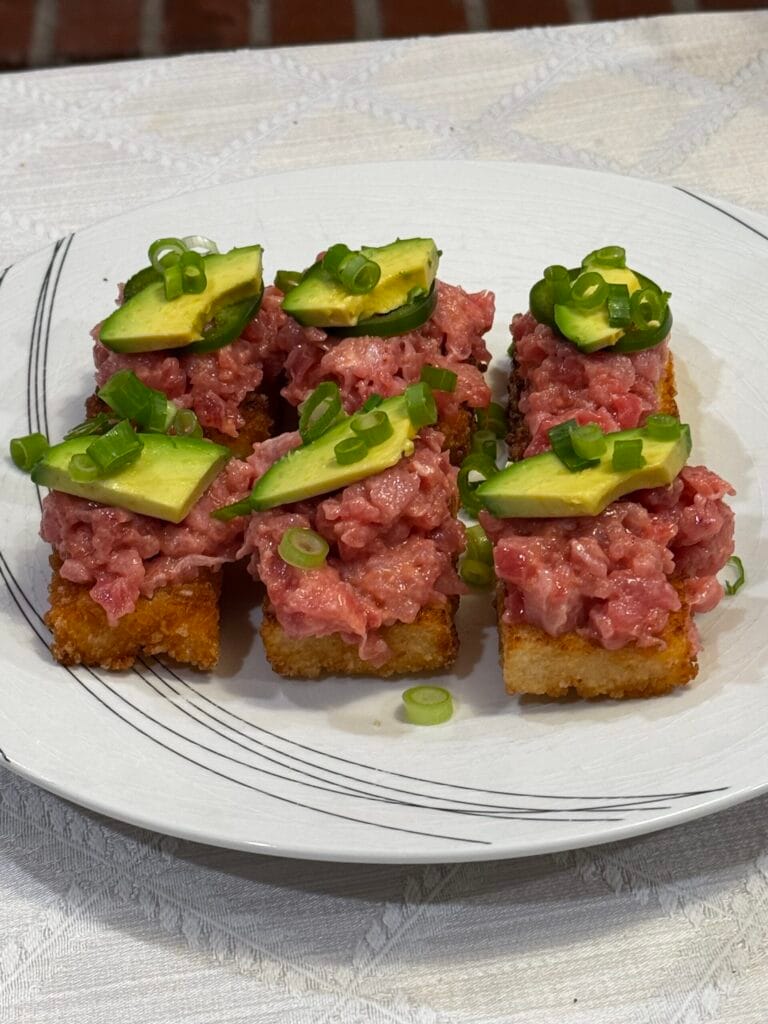
Frustrated and hungry, we took matters into our own hands the next day. We went to Santa Monica Seafood, bought our own Tuna and Toro, and brought it home. We had a chef prepare Tuna Crudo and Spicy Tuna crispy rice right in our own kitchen.
The result? The seafood was incredibly fresh, the service (from ourselves and our chef) was impeccable, and we actually spent less than we did at the “nice” restaurant the night before. This is the shift I’m making. If the world is going to charge me a premium for mediocrity, I will find a way to circumvent the middleman. This trend of paying more for less is a hallmark of modern retail and dining strategies where brand prestige is used to justify declining manufacturing and culinary standards. It’s called “Premium Mediocrity,” and it is the plague of our decade.
The Legging Betrayal and the Quality Customer Service Void
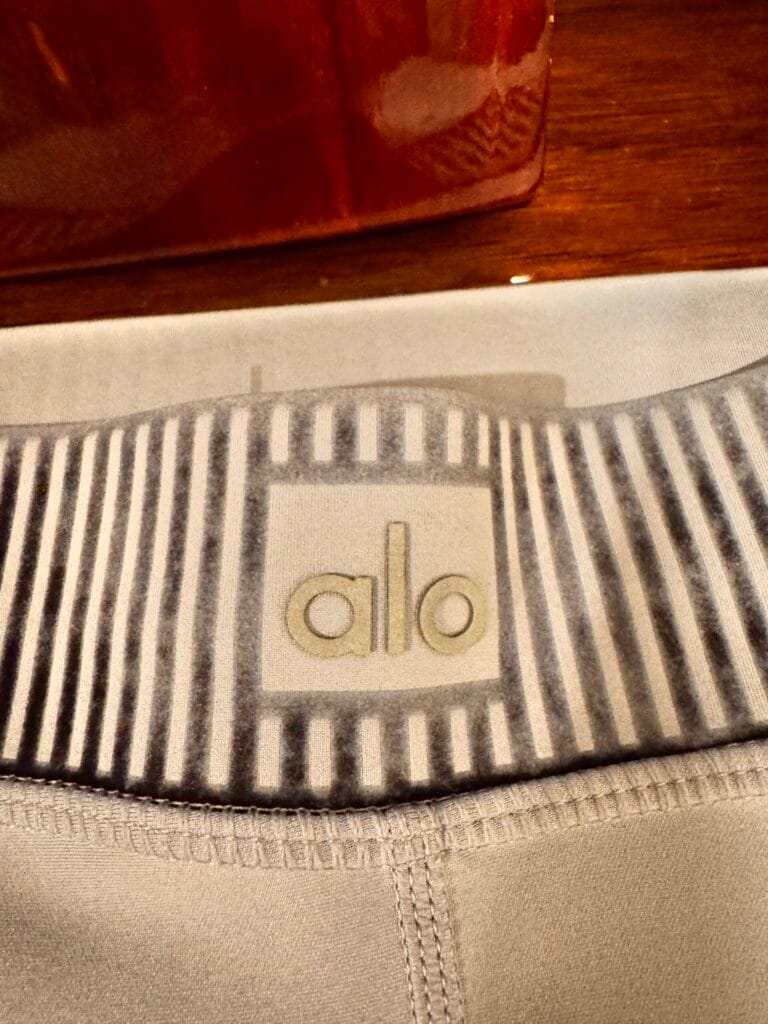
It’s not just the food. It’s the clothes. It’s the things we wear that are supposed to withstand at least one cycle in a modern washing machine. I recently had a run-in with Alo Yoga that left me questioning my sanity. I bought a pair of leggings—not exactly a budget purchase—and after one wash, the seams unraveled. I thought maybe it was a fluke, a Monday-morning-at-the-factory kind of error, so I got another pair. This time, the striping on the sides started to fade after a single wear.
Dealing with their customer service was like trying to negotiate a peace treaty with a brick wall. It took me nearly two months to get a price adjustment for what was clearly a defective, poor-quality item. I spent hours on hold, sent emails into the “we’ll get back to you in 3-5 business days” abyss, and provided enough “proof of purchase” photos to fill a gallery.
Why is it that as prices go up, the human element of service disappears? We are being pushed toward AI chatbots that don’t understand nuance and “self-service” portals that are designed to make you give up out of sheer exhaustion. This is a documented shift in how corporations handle us; research shows that companies are intentionally making it harder to reach human beings as a cost-saving measure, even as they report record profits. They are betting on your fatigue. They are banking on the fact that you’ll eventually say, “Forget it, it’s just a pair of leggings,” and let them keep your money.
The Spite Machine: My New Best Friend To Get The Quality I Want
This brings me back to the Brother CS7000X sitting on my dining table.
I was so tired of things falling apart, so tired of waiting months for customer service to acknowledge a basic error, and so tired of the general lack of craftsmanship in the world, that I bought a sewing machine out of pure, unadulterated spite.
I don’t even know how to operate a sewing machine. I am looking at the manual like it’s written in Ancient Greek. I am intimidated by the various dials, the ominous-looking foot pedal, and the fact that there is a needle moving at high speeds near my fingers. But there is something incredibly empowering about looking at a loose seam and saying, “I will fix this myself because the world has forgotten how to make things that last.”
I am adapting. I am taking my own action. If the world wants to give me subpar leggings, I will reinforce the seams myself. If the restaurants want to give me subpar fish, I will source the freshest Toro in the city and eat it on my own patio. We are all living through this frustration together—watching the world get more expensive and less reliable simultaneously.
Final Thoughts: Finding Quality in a “Meh” World
Everyone I talk to is experiencing this. We are all collectively gaslit into thinking that maybe our expectations are too high. But they aren’t. Expecting your groceries to be delivered to your actual door instead of a sidewalk isn’t “entitlement.” Expecting a $120 pair of leggings to stay together for more than twenty minutes isn’t “demanding.” Expecting hot pizza when you pay for delivery is the bare minimum.
This struggle is real, and it’s why I’ve pivoted so much of Culinary Passages to focus not just on where to go, but how to find actual quality in a sea of “meh.” This blog has always been about discovery, but lately, the biggest discovery is that sometimes the best quality is the kind you curate yourself. Whether it’s sourcing your own seafood, vetting restaurants more strictly, or learning to stitch a hem, we have to find our own “passages” through this landscape of declining standards.
I’m sick of paying higher and higher prices for less and less quality. I’m done with the “nice” restaurants that have stopped trying and the “luxury” brands that have stopped caring. If you need me, I’ll be in my kitchen with some fresh-caught tuna, or perhaps hunched over my sewing machine, trying to figure out what a “bobbin” is. Either way, I’m getting what I paid for.
Read More on Culinary Passages:
- The Great Santa Monica Decline: Why my favorite coastal city is starting to feel like a tourist trap with no soul.
- ORLA Review: A Masterclass in Mediocrity: Why you might want to skip the velvet booths and stay home instead.
- How to Survive a Family Trip to The Venetian: Navigating luxury travel when the service doesn’t always match the price tag.
- The Truth About Vegas “Quick Bites”: When a “cheap” snack costs more than a three-course meal.
- Taikun Omakase: A Rare Quality Win: One of the few places left that actually understands what high-end service looks like.
About the Author
Ginger Graham is the founder of Culinary Passages and Nurse Thoughts, a blogger, and a mother of two who has officially reached her “limit.” When she isn’t hunting down the best family-friendly upscale dining in LA or managing the whims of her Goldendoodle, Barnaby, she can be found staring suspiciously at her new sewing machine and wondering if she can use it to fix the entire service industry. She believes in high standards, fresh Toro, and that groceries belong on the kitchen counter—not the sidewalk.