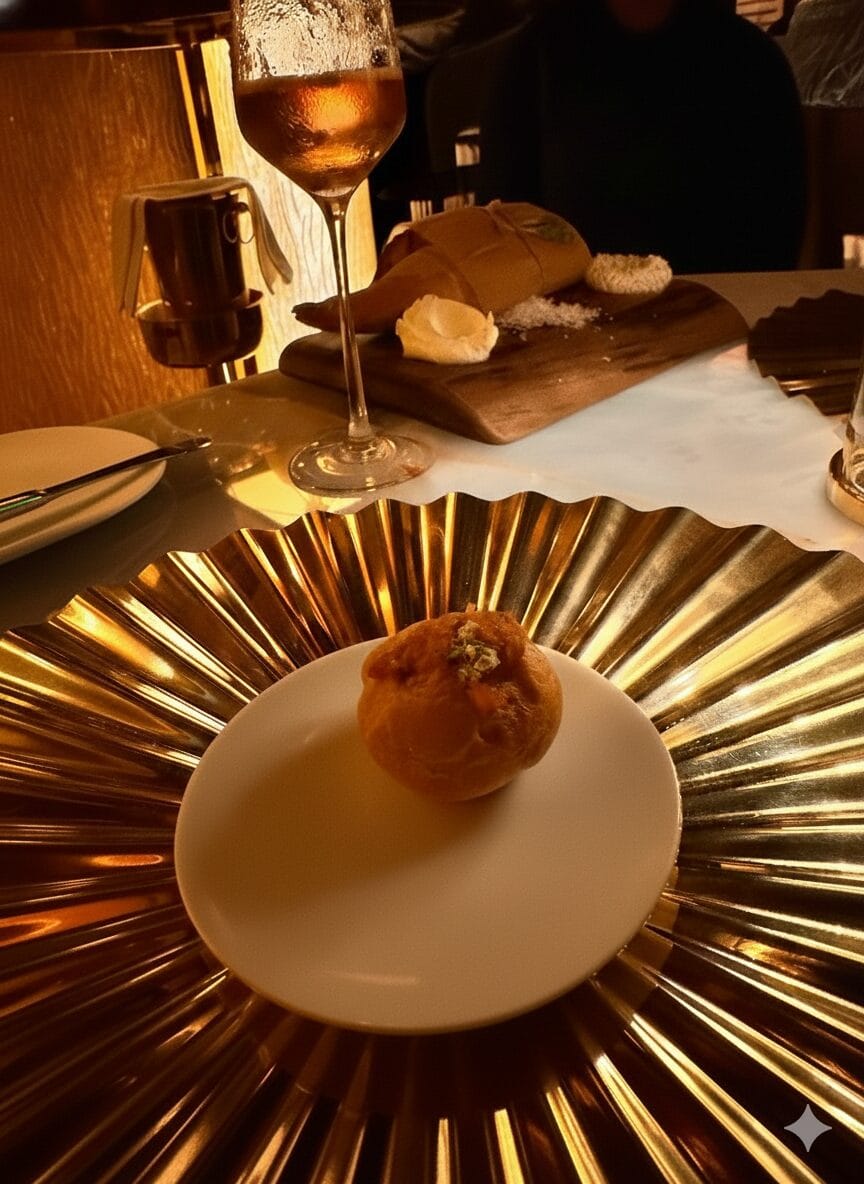
We have all been there. You walk into a fine dining restaurant where the lighting is so dim you need a miner’s headlamp to see your lap, the napkins are heavier than your high school weighted vest, and the menu looks like it was written by a medieval alchemist with a penchant for French vowels.
You’re sitting across from your spouse or a client, trying to look sophisticated, but inside you’re screaming, “What is a gastrique, and why is it touching my pork chop?” As a nurse who has spent fifteen years decoding doctor’s handwriting and complex medical jargon, I’ve realized that fine dining menus are basically the clinical charts of the food world. They use big words to describe things that are actually quite simple, mostly so they can justify charging you $18 for a single heirloom carrot.
But don’t panic. I’ve spent enough time in high-end Los Angeles and Las Vegas dining rooms to know that “fine dining” is just a language. Once you learn the vocabulary, you stop being intimidated and start realizing that “hand-massaged forest moss” is usually just parsley with a better publicist.
Here is your ultimate “decoder ring” for the modern fine dining menu. Let’s break down the terms that make us feel like we’re back in 10th-grade French class, so the next time you’re at a white-tablecloth establishment, you can order with the confidence of a woman who knows exactly how many milligrams of sodium are in that “artisanal sea salt.”
1. The Dining Prep Work: Understanding “The How”
Before we get to the ingredients, let’s talk about how the kitchen is actually punishing—err, preparing—your food.
Sous-Vide (soo-veed)
What it sounds like: A very expensive brand of French luggage.
What it actually is: Science-fair cooking. The chef seals the food in a vacuum-tight bag and drops it into a temperature-controlled water bath. It’s basically a hot tub for your steak.
The Benefit: It’s impossible to overcook. The meat is perfectly pink from edge to edge. According to the experts at the Culinary Institute of America, sous-vide allows for precision that traditional grilling just can’t match.
The Nurse’s Take: It’s basically an IV bag for flavor. It keeps everything hydrated and consistent.
Confit (kon-fee)
What it sounds like: A secret you tell a priest.
What it actually is: Slow-cooking something in its own fat. Usually duck, but sometimes garlic or even highly-stressed vegetables.
The Benefit: It makes everything fall-apart tender and incredibly rich. If you see “Duck Confit,” just know you are about to eat the most decadent, cardiac-arrest-inducing thigh of your life.
The Nurse’s Take: It’s a literal fat bath. Delicious? Yes. Will I need to check your cholesterol after the appetizers? Also yes.
Braised (bray-zd)
What it sounds like: What happens to your knees if you fall off a bicycle.
What it actually is: Searing the meat at a high temperature and then letting it simmer in liquid for a long, long time.
The Benefit: This is how you turn “tougher” cuts of meat (like short ribs or lamb shanks) into butter.
The Nurse’s Take: It’s the “extended care” of the kitchen. Low and slow is the way to heal a tough cut of meat.
2. The Dining Sauces: Liquid Gold or Fancy Vinegar?
The sauce is where the “upcharge” lives. If you understand these terms, you’ll know if you’re getting a rich gravy or a tart drizzle.
Gastrique (ga-streek)
What it sounds like: A very painful stomach condition.
What it actually is: A fancy word for a sweet-and-sour sauce. It’s usually sugar or honey reduced with vinegar and fruit.
The Benefit: It cuts through the fat of dishes like duck or pork belly. It adds a “zing” that keeps the dish from feeling too heavy.
The Nurse’s Take: Don’t let the name scare you; it has nothing to do with your GI tract, though the acidity might give you a little heartburn if you overdo it.
Velouté (vuh-loo-tay)
What it sounds like: A brand of luxury velvet curtains.
What it actually is: One of the five “mother sauces” of French cuisine. It’s a savory sauce made from a light stock (chicken, veal, or fish) thickened with a butter-and-flour roux.
The Benefit: It’s smooth, silky, and tastes like a warm hug.
The Nurse’s Take: It’s the “normal saline” of sauces—stable, classic, and goes with almost everything.
Reduction
What it sounds like: A budget cut at the hospital.
What it actually is: Taking a liquid (like wine or balsamic vinegar) and boiling it until half of it is gone. This leaves behind a thick, syrupy, intense version of the original flavor.
The Benefit: You get a massive punch of flavor without a plate full of liquid.
The Nurse’s Take: It’s concentrated medication. A little goes a long way.
3. The “Wait, What is That?” Dining Ingredients
Sometimes the menu lists things that sound like they were pulled from a Victorian botany textbook.
Carpaccio vs. Crudo vs. Tartare
This is the “Raw Trio.” If you don’t like raw food, avoid these three like a flu outbreak in January.
- Carpaccio: Thinly sliced raw meat or fish, usually drizzled with oil and lemon.
- Crudo: The Italian word for “raw.” It’s usually fish, dressed very simply with olive oil, sea salt, and citrus.
- Tartare: Chopped (not sliced) raw meat or fish, often mixed with seasonings and sometimes topped with a raw egg yolk.
Amuse-Bouche (ah-mewz boosh)
What it sounds like: A very small, very pretentious clown.
What it actually is: A tiny, one-bite gift from the chef. You don’t order it; it just appears.
The Benefit: It’s free! (Well, it’s built into the $150 prix-fixe price, but let’s pretend it’s free).
The Nurse’s Take: It’s a “loading dose” for your palate.
4. How to Navigate the Dining “Market Price” Trap
If you see “MP” or “Market Price” next to the lobster or the Wagyu steak, proceed with caution. This is the “blank check” of the dining world.
According to James Beard Foundation guidelines, restaurants use market pricing for items that fluctuate in cost daily. However, as a consumer, you have the right—and the responsibility—to ask what that price is. Do not be embarrassed. Asking “What is the market price on the sea bass tonight?” doesn’t make you look poor; it makes you look like a person who understands economics.
I once sat through a dinner in Las Vegas where a friend ordered the “Market Price” Tomahawk steak without asking. When the bill came, that steak was $245. He looked like he needed a defibrillator. Save yourself the chest pain: Ask the price.
5. The “Tasting Menu” Dining Survival Guide
In high-end spots, you’ll often see a “Chef’s Tasting” or “Prix-Fixe” (pronounced pree-feks).
- Prix-Fixe: A multi-course meal for a set price. You usually get a few choices for each course.
- Tasting Menu: A long procession of small plates (sometimes 10 or 12!) chosen entirely by the chef.
Pro Tip: If you’re doing a tasting menu, clear your schedule. This isn’t a “quick bite before the movies.” This is a three-hour marathon. Wear pants with a little bit of stretch—I call them my “post-op recovery leggings”—and pace yourself. If you eat all the bread in the first twenty minutes, you will regret it by course seven.
The “Fine Dining Decoder” Cheat Sheet
| Term | What it is | Think of it as… |
| Al Dente | Firm to the bite | Not mushy |
| Agnolotti | Small, pinched pasta | Fancy ravioli |
| Coulis | Thick fruit or veg purée | Fancy ketchup |
| En Papillote | Cooked in parchment paper | A steam bag |
| Mignardise | Tiny desserts at the end | The “Parting Gift” |
| Nage | A flavored broth | A shallow pool |
| Umami | Savory, “meaty” taste | The “X-Factor” of flavor |
Final Thoughts: Don’t Let the Menu Bully You
At the end of the day, remember that you are the one paying the bill. If you don’t know what a “deconstructed forest floor with nitrogen-infused truffle foam” is, ask the server. A good server in a high-end restaurant is like a good Charge Nurse: they are there to coordinate your care and ensure you have the best possible outcome. They want to explain the menu to you. If they make you feel small for asking a question, then they aren’t actually good at their job, and you shouldn’t feel bad about not knowing their “secret language.”
Food should be an adventure, not a test. So go ahead, order the Sous-Vide Octopus with a Yuzu Gastrique. Now that you speak the language, you can actually enjoy the meal instead of wondering if you just ordered a side of tentacles and cleaning supplies.
Happy Dining!
Read More on Culinary Passages
- 6 Brutally Honest Rules for Los Angeles Dining: How to Eat Like a Local
- Why Porto’s Bakery Glendale is the Ultimate Los Angeles Food Pilgrimage: 7 Secrets to the Perfect Visit
- Why Larsen’s Steakhouse Woodland Hills is the Ultimate “No-Kids” Sanctuary
- How to Host a Luxury “Grown-Up” Tapas Night: 7 Secrets to a Perfect 2026 Tablescape
- Amazing Popovers, Consommé, and Culture
About the Author
Ginger Graham is a Registered Nurse with 15 years of experience who swapped her scrubs for a dinner napkin (though she still carries hand sanitizer everywhere). As the founder of Culinary Passages, she explores the intersection of luxury travel, fine dining, and the “no-nonsense” reality of being a mom and a healthcare professional. When she isn’t decoding menus or traveling with her husband Brad and their two daughters, you can find her trying to convince her Goldendoodle, Barnaby, that he is not actually a human entitled to a seat at the table.
Medical Disclaimer
The “Nurse’s Note” on This Content: While I am a Registered Nurse, the information shared on Culinary Passages is for entertainment and informational purposes only. I am a nurse, but I am not your nurse. The content on this blog is not intended to be a substitute for professional medical advice, diagnosis, or treatment. Always seek the advice of your physician or other qualified health provider with any questions you may have regarding a medical condition or dietary restrictions—especially before attempting to conquer a 12-course tasting menu or testing the limits of your “butter capacity.” Never disregard professional medical advice or delay in seeking it because of something you have read on this website.