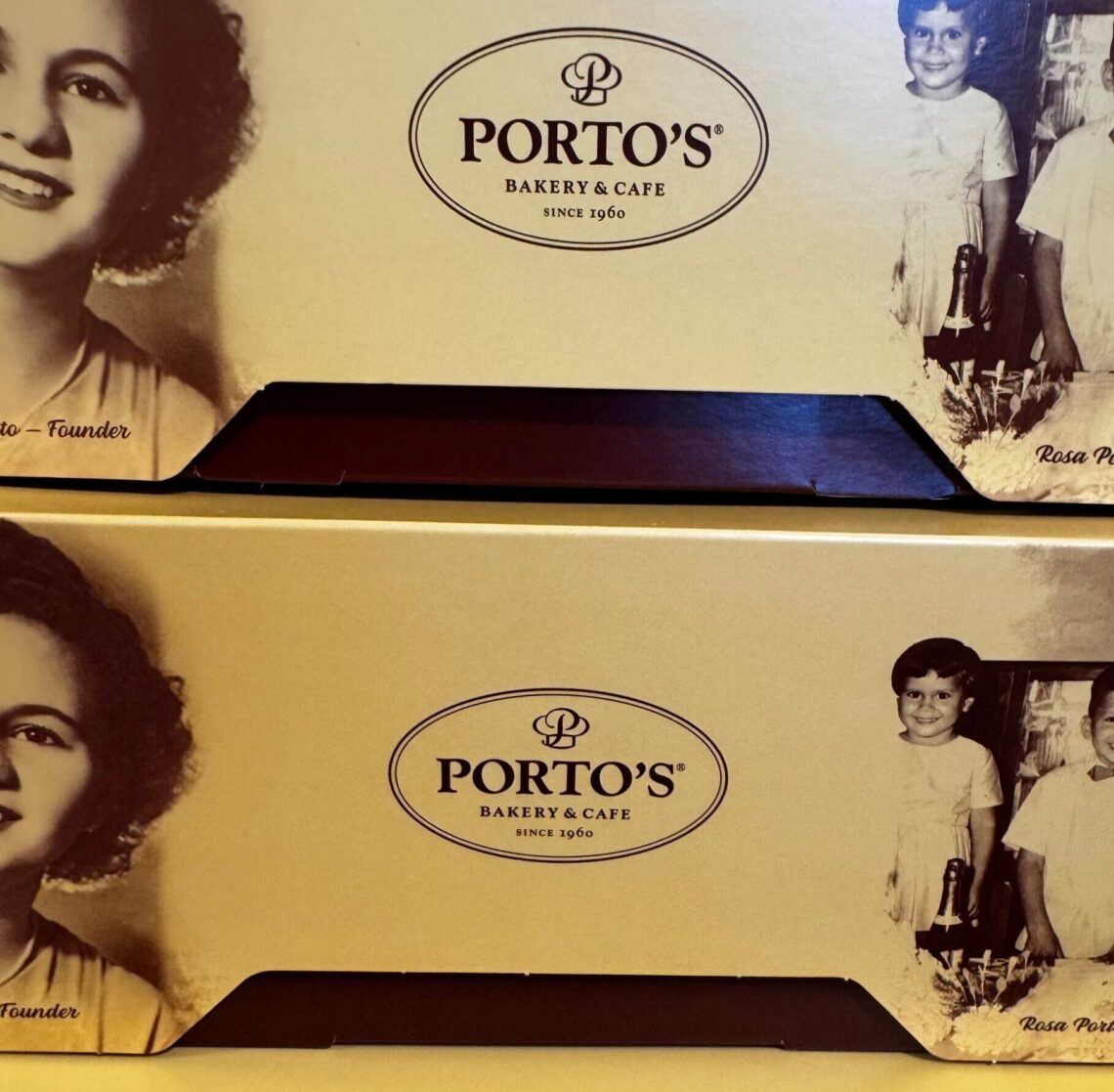
Close-up of yellow Porto’s Bakery & Cafe boxes featuring a vintage black and white portrait of founder Rosa Porto and her children.
Dining

Why Porto’s Bakery Glendale is the Ultimate Los Angeles Food Pilgrimage: 7 Secrets to the Perfect Visit

In the vast, sprawling landscape of Southern California dining, few names evoke as much fervor as Porto’s Bakery & Cafe. For those navigating the culinary passages of Los Angeles, the Glendale location is not merely a storefront; it is a cultural cathedral of Cuban-American heritage. With lines that frequently snake around the block and a pace that rivals a high-frequency trading floor, Porto’s has mastered the art of high-volume, high-quality hospitality.

But what transformed a humble family operation into a multi-million dollar empire that consistently tops national review sites? To truly appreciate Porto’s, one must understand the journey from the labor camps of Cuba to the bustling streets of Glendale.

The Resilience of Rosa Porto: A Legacy Built on Secret Cakes

To understand the “Value” of Porto’s, you must first understand the grit behind the brand. The story begins in Manzanillo, Cuba, where Rosa Porto first discovered her passion for baking. Following the Cuban Revolution, life became a struggle for survival. While her husband, Raul Sr., was sent to a labor camp, Rosa began baking cakes in secret to support her three children.

As documented by Wikipedia’s biography of Rosa Porto, these early years were defined by “underground” commerce. Her baking was technically illegal under the regime, and neighbors would often help hide her equipment when secret police conducted raids. This period of adversity forged the high standards and community-focused ethos that still define the brand today.

When the family was finally allowed to emigrate in 1971, they arrived in Los Angeles with nothing but their recipes. Rosa began selling cakes from her home, and by 1976, the family opened their first 300-square-foot bakery in Silver Lake. The move to Glendale in 1982 marked the true turning point, allowing the family to expand their menu and become what the Los Angeles Times calls “the most beloved bakery in all of Los Angeles.”

The Porto’s Architecture of a Menu: A Deep Dive into Cuban Classics

The Porto’s menu can be broken down into its essential savory and sweet pillars.

1. The Savory Pastries: The Famous “Papas Rellenas”

The Potato Ball (Papa Rellena) is the undisputed cornerstone of the Porto’s experience. It is a masterclass in texture: a crispy, panko-style breading gives way to creamy mashed potatoes, which encase a center of savory, seasoned ground beef (picadillo) with peppers, onions, and olives.

  • The Spicy Variation: For those who prefer a kick, the Spicy Potato Ball features the same beef filling but is infused with a blend of peppers that provides a slow, manageable heat.
  • Chicken Croquettes: Often overlooked, these are a silky blend of chicken and bechamel, breaded and fried to perfection. They represent the Spanish influence on Cuban cuisine.

2. The Sweet “Refugiados” and Guava Traditions

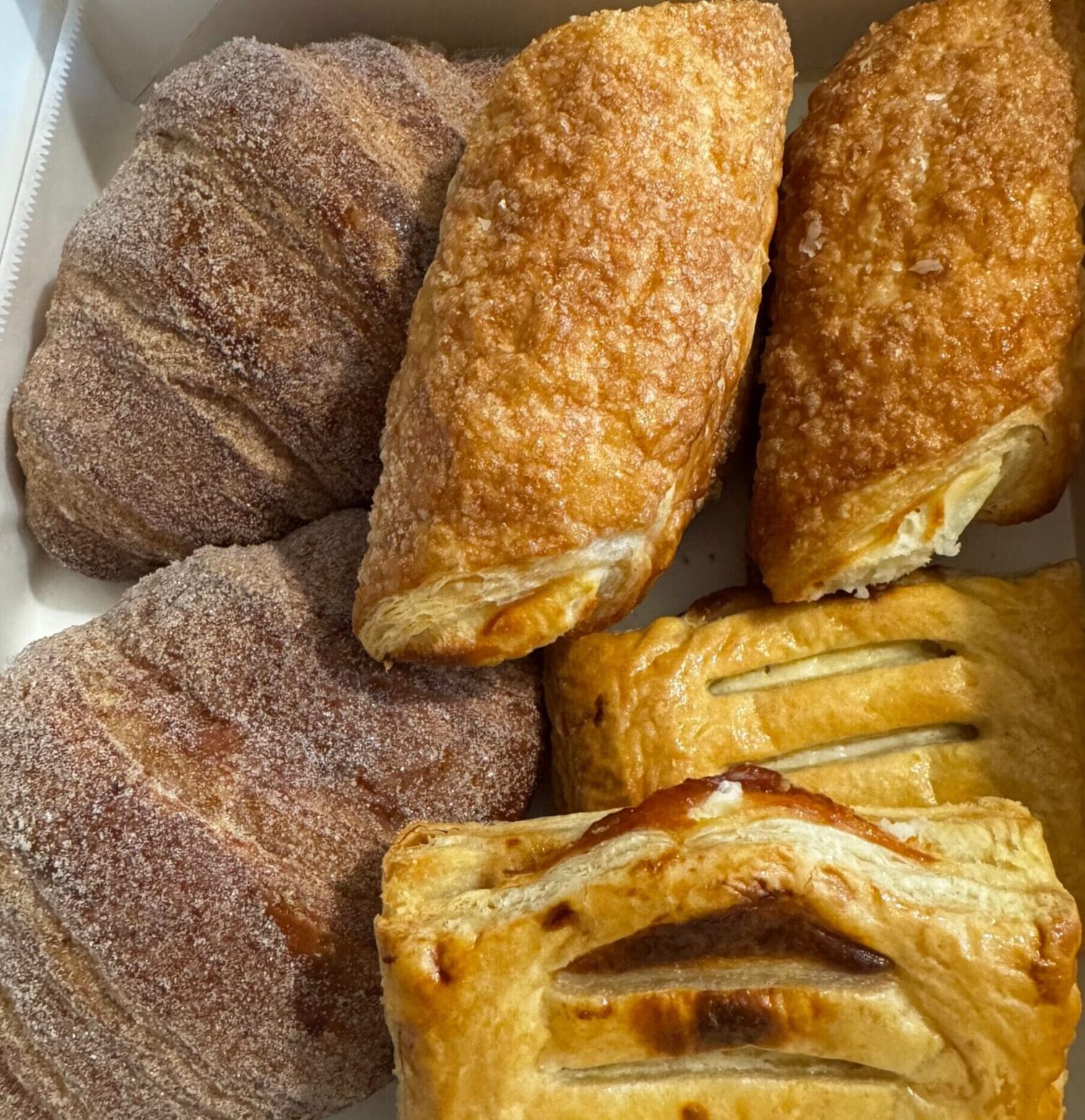
An overhead view of a Porto’s white pastry box filled with sugar-dusted guava and cheese strudels (Refugiados)

The word “Refugiado” means refugee, and this pastry represents the marriage of Cuban flavors and American opportunity. The Guava and Cheese Strudel is the bakery’s top seller for a reason. The puff pastry is incredibly light, flaking into a thousand buttery layers, while the tartness of the guava jam cuts through the richness of the cream cheese.

  • Besito Cookies: These “little kisses” are buttery, melt-in-your-mouth shortbread cookies filled with dulce de leche.
  • Cheese Rolls: A simpler, yet equally addictive option for those who want the pastry without the fruit.

3. The Porto’s Cafe Menu: More Than Just Baked Goods

Many visitors make the mistake of only visiting the bakery counter. However, the cafe side offers some of the most authentic Cuban sandwiches in the city.

  • The Cubano: Porto’s stays traditional here, using slow-roasted pork, ham, Swiss cheese, pickles, and mustard on their house-made Cuban bread, which is pressed until the crust is shatteringly crisp.
  • The Pan con Lechon: This is the choice for the “purist”—roasted pork seasoned with garlic and mojo, topped with grilled onions and served on a toasted roll.

Porto’s Accolades and National Recognition: Why the Data Matters

When we discuss a restaurant, we look at external validation. Porto’s isn’t just popular; it is statistically significant in the world of hospitality.

  • The Yelp Phenomenon: In 2016, Yelp officially named Porto’s Bakery & Cafe the #1 Business in the U.S. out of millions of listings. This wasn’t just in the bakery category—it was across the entire platform.
  • Eater LA Rankings: Eater LA consistently maintains Porto’s on its list of “Essential Los Angeles Bakeries,” noting that the Glendale location manages a level of quality control that is nearly impossible for most high-volume establishments.

The Science of the “Porto’s System”

Have you ever wondered how Porto’s manages to serve thousands of people a day without the quality dropping? It’s a logistical marvel. The Glendale location employs a “hub and spoke” model for their baking. While many items are baked fresh on-site, the prep work is handled with industrial precision that mirrors a high-end manufacturing plant. This ensures that a Potato Ball in Glendale tastes exactly like one in Buena Park.

The Culinary Science of Porto’s Signature Doughs

What truly separates Porto’s from the thousands of other bakeries in Southern California is their mastery of specialized doughs. To appreciate a Potato Ball or a Refugiado, one must understand the technical precision required to maintain consistency at a scale of thousands of units per day.

The Porto’s Lamination Process of the Refugiado

The Refugiado (Guava and Cheese Strudel) relies on a classic French lamination technique, but with a tropical twist. Lamination is the process of folding butter into dough repeatedly to create hundreds of ultra-thin layers. When the pastry hits the high-heat ovens in Glendale, the moisture in the butter turns to steam, puffing the layers apart to create that signature shatter-crisp texture.

Porto’s maintains a strictly controlled temperature in their dough rooms to ensure the butter doesn’t melt prematurely—a common failure in smaller home kitchens. This technical “passage” from raw dough to golden pastry is what allows the sweet guava jam to remain encased without making the bottom of the pastry soggy.

The Physics of the Perfect Potato Ball

The Papa Rellena presents a different technical challenge: structural integrity versus creaminess. The exterior must be sturdy enough to be handheld, yet the interior must remain a soft, pillowy mash.

Porto’s uses a specific starch-to-moisture ratio in their potatoes. If the mash is too wet, the ball will burst in the deep fryer; if it is too dry, it loses its “melt-in-your-mouth” appeal. The breading is a double-coat system—a fine flour dust followed by a specific panko-style crumb that creates a moisture barrier. This is why a Porto’s Potato Ball stays crispy for hours, unlike many competitors’ versions that become greasy within minutes.

The “Sponge and Dough” Method for Cuban Bread

Finally, we cannot overlook the bread used for their famous Cubanos. Porto’s utilizes a traditional “Sponge and Dough” method, where a portion of the dough is fermented for several hours before being mixed into the main batch. This long fermentation period develops the complex, slightly tangy flavor and the characteristic airy-yet-chewy crumb that can withstand the heavy pressing of a commercial sandwich press.

The Glendale Experience: A Survival Guide for the Modern Visitor

Glendale is the “flagship” experience, but it can be intimidating. To ensure your “passage” is smooth, follow these veteran tips:

Navigating the Lines

There are typically three lines at Porto’s Glendale:

  1. The Bakery/Cafe Line: The main line for pastries, sandwiches, and coffee.
  2. The Pick-Up Line: For those who have ordered online (the smartest way to visit).
  3. The Cake Line: Specifically for those picking up whole cakes or placing custom orders.

The Best Time to Visit

To experience the bakery without the 45-minute wait, aim for a “Tuesday Sweet Spot”—specifically between 2:00 PM and 4:00 PM. Weekends, especially Sunday mornings after church services, are the busiest times of the week.

The Art of the “Bake at Home”

For those who live outside of Southern California or want to host a party with these flavors, Porto’s launched “Porto’s Bake at Home.” This service ships frozen pastries nationwide. This is great for any readers who might be reading this from outside of LA.

The Future: From Glendale to Downtown Disney

While Glendale remains the heart of the brand, the Porto family continues to expand. The most anticipated upcoming project is the new location at the Downtown Disney District in Anaheim, scheduled to reach completion in 2026. This expansion represents the final stage of the brand’s evolution: from an illegal home kitchen to a global destination within the world’s most famous theme park resort.


Read More from Culinary Passages

Explore more of our curated guides to help you discover the best dining and lifestyle experiences in Southern California:

  1. ORLA Santa Monica Review: Is Michael Mina’s Newest Spot Worth It? – Our latest critique of the beachfront luxury scene.
  2. A Luxury Afternoon at the Ritz-Carlton Marina del Rey – Discover the best quiet luxury escape in the Marina.
  3. How to Survive a Brutal LA Week: Comfort Food Passages Every Parent Needs – A guide to the spots that offer more than just a meal.
  4. 8 Genius Party Favor Ideas: The Secret to Giving Gifts Guests Actually Love – Elevate your hosting game with these “Practical Luxury” tips.
  5. The Great Santa Monica Decline – A candid look at the changing landscape of one of our favorite neighborhoods.

About the Author

Ginger Graham is the founder of Culinary Passages and a dedicated critic of the Southern California hospitality scene. As a website publisher and lifestyle blogger, she specializes in identifying “quiet luxury” and authentic family experiences that stand the test of time. Ginger lives in the Los Angeles area with her husband, Brad, their two daughters, and their Goldendoodle, Barnaby. Her mission is to help readers navigate the complex “passages” of modern dining and travel with grace and discernment.

Leave a Reply

Your email address will not be published. Required fields are marked *