
Every year around Thanksgiving, the same kitchen trick resurfaces online: drying your poultry skin with a hairdryer before it goes in the oven. I had never tried it myself until I went looking into it, and I want to be clear from the outset about what this post is. This is not a technique I am presenting as tested science or as anything an official food-safety authority recommends. It is a thing home cooks talk about, and if you are the kind of person who finds kitchen experiments fun, it is an interesting one to understand.
The hairdryer trick is not a scientifically validated or officially endorsed method. No food-safety agency recommends it. What I can do is explain the actual food science behind why dry skin crisps better, describe how people say they do the hairdryer version, and walk through the sensible safety cautions so that anyone curious enough to try it does so thoughtfully. If that is not your thing, the established, expert-backed method further down will get you excellent skin without any appliances from the bathroom.
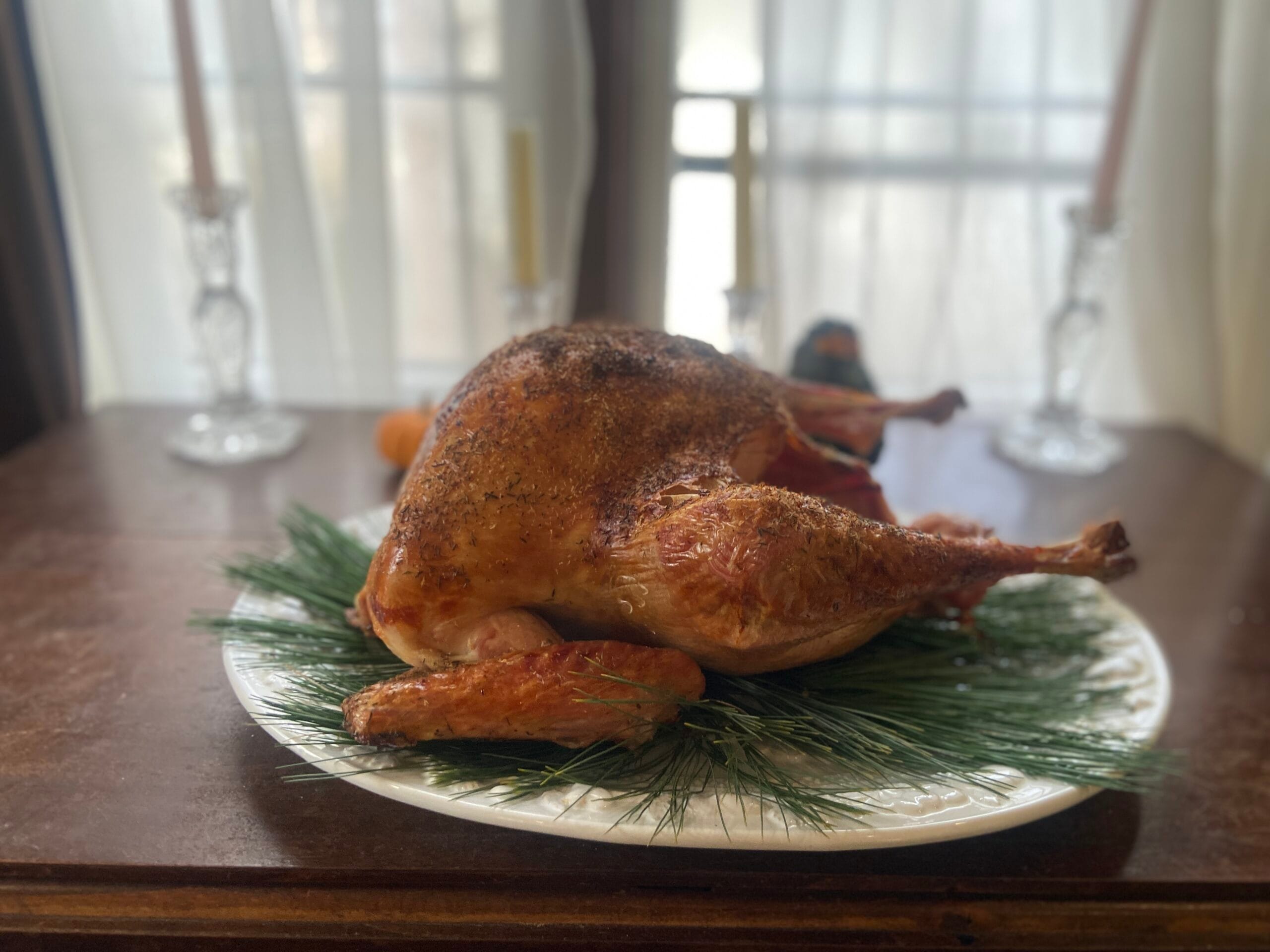
Why Dry Skin Crisps: The Real Science
This part is not folklore — it is straightforward kitchen chemistry. Crispy poultry skin requires dry skin. Any moisture sitting on the surface of the bird has to evaporate before the skin can begin to brown and crisp, because water on the surface converts to steam and holds the skin’s temperature down while it boils off. Only once the surface is dry can it climb past the temperature where the Maillard reaction — the browning that creates flavor and color — really gets going.
The practical consequence is a timing problem. A wet-skinned bird spends the first stretch of roasting essentially steaming itself dry, which delays browning and can leave you with a bird that is cooked through on the inside before the skin has crisped on the outside. Anything you can do to get the surface genuinely dry before it goes in the oven means the skin starts browning sooner, crisps more evenly, and does not force you to overcook the meat chasing color. That is the whole principle, and it is why every serious method for crispy skin is, at heart, a method for drying the skin.
The Proven Method: Dry-Brine Beats the Hairdryer
Before we get to the hairdryer, here is the technique that actually has broad support from the recipe developers I trust. Rub the bird with kosher salt — roughly a teaspoon per pound is a common guideline — and leave it uncovered in the refrigerator for at least 24 hours, ideally closer to 48 — which is exactly the kind of step that’s easy to fit in if you’re already working from a make-ahead timeline. The salt draws moisture to the surface, and the cold, dry, moving air of the fridge wicks that moisture away over the course of a day or two. The result is skin that is noticeably drier than when it started, and meat that is seasoned all the way through.
In head-to-head tests I have read, this uncovered-in-the-fridge dry-brine (some cooks add a little baking powder to the salt) is consistently the winner for crispy skin. If you do nothing else from this post, do this. It is safe, it is simple, and it works. The hairdryer, if you use it at all, is only ever a finishing touch on top of this — never a replacement for it.
How People Say They Do the Hairdryer Version
So where does the hairdryer come in? The idea, as it circulates online, is that even after a day or two in the fridge there can be a little residual surface moisture tucked into the crevices, and a few minutes of moving air blows it off before roasting. The trick apparently traces back to cooks drying duck skin this way for extra-crisp results, and it resurfaces every Thanksgiving as a turkey hack. Here is how people describe doing it:
- Dry-brine first, as above, so the hairdryer is only finishing an already-dry bird.
- Use the hairdryer on its cool setting — not hot — held several inches from the surface, moving steadily so you never linger in one spot.
- Pay attention to the crevices that trap moisture: around the thigh-body joint, under the wings, and the cavity opening.
- Pat away any remaining visible moisture with a paper towel afterward.
- Then roast as you normally would, cooking to a safe internal temperature.
People who swear by it say the skin browns faster and more evenly. Whether that marginal improvement over a good dry-brine is real or mostly the satisfaction of having fussed over the bird, I genuinely cannot tell you — and neither can anyone else, because as far as I can find, nobody has rigorously tested it. Treat it as a fun experiment, not a guaranteed upgrade.
The Food-Safety Cautions That Matter
This is the part the nurse in me will not let slide, and it is the reason I would never present this as a casual recommendation. Raw poultry is a food-safety-sensitive item, and anything you do to it out on the counter deserves care:
- Mind the danger zone. Bacteria multiply fastest in the 40°F to 140°F “danger zone”. Do not let a bird sit out warming for a long stretch; the hairdryer step, if you do it, should be brief, and use cool air rather than warm so you are not actively heating the surface into that zone.
- Use cool, not hot. Blowing hot air on raw poultry is exactly the wrong move — it warms the surface without cooking it, which is the opposite of what you want for safety.
- Contain the splatter. Moving air over raw poultry can aerosolize surface moisture, so do this over a sink or a surface you will thoroughly clean, keep it away from other food, and wash your hands and everything the bird touched.
- Never share the appliance. If you try this, dedicate a cheap hairdryer to kitchen use only; it should not go anywhere near hair afterward, and vice versa.
- Cook it fully. None of this changes the finish line: poultry must reach an internal temperature of 165°F, measured with a thermometer, to be safe to eat.
To say it one more time, because it matters: this is entertainment and general information, not food-safety guidance or medical advice. If any of the above makes you uneasy, skip the appliance entirely and lean on the dry-brine method, which delivers the crispy-skin goods without the extra handling.
Does the Hairdryer Trick Work on Chicken?
The same principle applies to any bird — a whole roasting chicken, or the duck that started the whole idea. Duck in particular has a thick, fatty skin that benefits enormously from being bone-dry before roasting, which is likely why the trick took hold there first. For a weeknight roast chicken, honestly, a good salt rub and a few hours uncovered in the fridge gets you most of the way, and I would not fire up a hairdryer for a Tuesday. Save the fuss, if you are going to fuss at all, for the big holiday centerpiece where the skin is the star.
Frequently Asked Questions
Is the hairdryer hack safe?
It can be done carefully, but it is not officially recommended, and it adds handling of raw poultry that carries some risk. Keep it brief, use cool air, work over a cleanable surface, dedicate the appliance to the kitchen, and always cook the bird to 165°F. If in doubt, skip it.
Do I really need it for crispy skin?
No. The dry-brine-and-uncovered-fridge method is the proven route to crispy skin and requires no gadgets. The hairdryer is, at most, an optional finishing flourish for people who enjoy the ritual.
Why does drying the skin matter so much?
Because surface water has to boil off before the skin can brown. A dry surface starts crisping almost immediately in the oven, while a wet one steams first, delaying browning and risking overcooked meat.
So that is the viral hairdryer hack, laid out honestly: a fun bit of internet kitchen lore built on a very real principle, wrapped in cautions I would want any friend to hear before trying it. The science of dry skin is solid; the appliance is optional and unproven. Dry-brine your bird, keep it cold and clean, cook it to temperature — and if you want to blow-dry your turkey for the story, do it carefully and enjoy the eye-rolls from everyone in your kitchen. And if the turkey is the easy part compared to wrangling the rest of the meal, my guide to getting help hosting covers the rest.