So, you’ve decided to eat in Los Angeles. Bless your heart. You’ve seen the TikToks of shimmering gold-leaf tacos and celebrities “casually” exiting Giorgio Baldi, and you thought, “I can do that. I have a mouth. I have a credit card. How hard could it be?”
Oh, sweet summer child.
Dining in LA isn’t just about the food; it’s a high-stakes competitive sport involving digital reflexes, psychological warfare with valet attendants, and the ability to digest a $24 kale salad while sitting three inches away from a screenwriter having a creative meltdown. If you want to survive—and actually enjoy a meal—you need more than a GPS. You need a manifesto.
Welcome to the definitive, slightly cynical, but entirely necessary guide to navigating the Los Angeles dining scene.
Phase 1: The Digital Gauntlet (How to Get a Table)
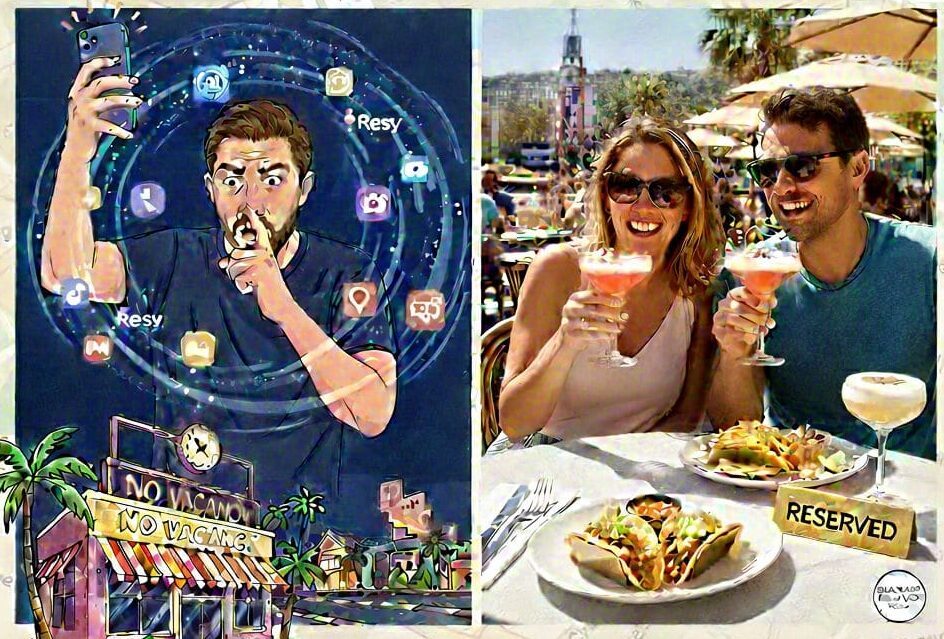
In most of the civilized world, if you want to eat at 7:00 PM, you call the restaurant and ask for a table at 7:00 PM. In Los Angeles, asking for a 7:00 PM reservation at a “buzzy” spot is like asking for a private audience with the Pope—possible, but you’d better have some serious connections or a miracle.
Most LA hotspots use Resy or OpenTable. If you aren’t hovering over your phone at midnight (or whenever the “books” open), you’re already behind. To snag a seat at the heavy hitters like Bestia or Bavel, you need the finger speed of a professional gamer.
Pro-Tip: If the app says “Notify Me,” click it. People in LA are notoriously flakey. They will cancel their reservation thirty minutes before the “late fee” kicks in because they decided their “energy” wasn’t right for Italian food that night. That is your moment to pounce.
However, if you can’t get a reservation, don’t panic. There is a sacred tradition in LA called the Early Bird or the Night Owl. Show up at 5:00 PM sharp when the doors open. You might feel like you’re eating dinner with your grandparents in Florida, but you’ll get a seat at the bar, and the service will actually be attentive because the staff hasn’t been crushed by the 8:00 PM rush yet. Alternatively, show up at 9:30 PM. Sure, you’ll be digesting pasta in your sleep, but at least you saw the interior of the building.
Phase 2: The Valet Paradox Just To Eat
Let’s talk about the most stressful part of LA dining: The Valet.
In Los Angeles, “street parking” is a myth whispered by elders to frighten children. If you find a spot, it’s probably a trap. The signs will say something like: No Parking 2 PM – 4 PM Tuesday except for vehicles with Permit 42-B on alternate leap years. Do not trust it.
Just pull into the valet. Yes, it will cost you $15 before you’ve even seen a menu. Yes, they will park your car four feet away in a spot you could have easily navigated yourself. Just pay the tax. It is the price of sanity. Always keep a few five-dollar bills for the tip, because even though you paid the flat fee, the “unspoken” rule is that the guy who didn’t crash your car deserves a little extra love.
Phase 3: The Menu Translation Layer
When you finally sit down, you will be handed a menu that looks like a minimalist poem. It might just say: Carrot. Soil. Citrus. Do not ask “Where is the rest of the carrot?” This is “Chef-Forward” dining. In LA, we don’t just eat; we participate in the chef’s “journey.”
You must also be prepared for the Dietary Inquisition. Your server will inevitably ask, “Are there any allergies or sensitivities we should be aware of?” This is the moment where you can admit you’re gluten-free, dairy-free, or joy-free. LA chefs are used to it. In fact, if you don’t have a dietary restriction, the server might look at you with suspicion, as if you’re a government plant sent to investigate their butter usage.
For a deeper dive into the cultural significance of our obsession with specialized diets, many food anthropologists point to the city’s history as a hub for wellness movements. According to some scholarly perspectives on food culture, the way a city eats often reflects its collective anxieties and aspirations. In LA, we aspire to live forever, which apparently requires eating a lot of fermented cabbage.
Phase 4: Tipping and the “Hidden” Eat Fees
This is where things get spicy. When the check comes, you will notice some math that doesn’t quite add up.
In addition to the standard 20% tip (yes, 20% is the baseline here, unless the server literally set your hair on fire), you will often see a 3% or 4% “Healthcare Surcharge” or “Service Fee.”
Do not be the person who argues about this. This fee is designed to provide health insurance for the kitchen staff and servers. Some people think this should be baked into the food prices; the restaurants think it should be transparent. Regardless of your political stance on the matter, deducting this fee from the server’s tip is a “villain move.” If you can afford a $19 cocktail, you can afford the 80-cent healthcare contribution.
If you’re curious about the economic landscape of the restaurant industry, you can check out reports from the National Restaurant Association which detail the rising costs of labor and supply chains that lead to these creative billing solutions.
Phase 5: Timing to Eat is Everything
If you want to eat at a legendary spot like Langer’s Deli for a #19 pastrami sandwich, do not go at noon on a Saturday unless you enjoy standing on a sidewalk in MacArthur Park questioning your life choices.
The Golden Rule of LA Timing:
- Breakfast/Brunch: Go on a Tuesday. If you go on Sunday at 11 AM, you will wait two hours for eggs. Is any egg worth two hours? No.
- Taco Trucks: The magic happens after 9 PM. If the truck doesn’t have a line and a slightly terrifying cloud of spicy smoke billowing from it, move on.
- Grand Central Market: Go at 10:30 AM. You’re between the breakfast crowd and the jury duty/office lunch crowd. It’s the sweet spot of productivity.
To understand the logistics of urban food distribution and why certain hubs like Grand Central Market become so congested, the Urban Land Institute offers fascinating insights into how “food halls” are revitalizing downtown cores across America.
Phase 6: The “Vibe” Check
In LA, the “vibe” is often more important than the salt content. You might find yourself at a restaurant that is essentially a concrete box with ear-shattering acoustics and stools that were clearly designed by someone who hates backs.
Why are we here? Because the lighting makes everyone look like they just finished a 10-day juice cleanse.
If you find yourself in a place where you can’t hear your dining partner, don’t try to shout. Just lean in, nod occasionally, and take photos of the food. That is what everyone else is doing. If you actually want to talk to your friends, look for “Old School” LA spots—think Musso & Frank or Dan Tana’s. These places have red booths, dim lighting, and servers who have seen things you wouldn’t believe. They understand that a meal is a social contract, not just a content-creation opportunity.
The preservation of these historic dining spaces is a major topic for groups like the Los Angeles Conservancy, which works to ensure that the city’s architectural and culinary history isn’t completely replaced by minimalist avocado toast bars.
Final Words of Wisdom
Los Angeles is a city of contradictions. You can have the best meal of your life at a plastic table in a strip mall next to a dry cleaner, or a mediocre meal on a rooftop with a view of the entire basin.
The secret to Los Angeles dining is flexibility. Don’t get married to one plan. If the wait at the “it” spot is too long, look around. Some of the most incredible Thai food in the world is hiding in Thai Town strip malls. Some of the best sushi is in a nondescript building in the Valley.
Bring your patience, bring your portable phone charger (you’ll need it for the menus and the photos), and for the love of all that is holy, bring your valet cash.
Happy eating. May your reservations be honored and your tacos be plentiful.
Read More on Culinary Passages
- A Nurse’s No-Nonsense Guide to Luxury Cruise Wellness
- Why Porto’s Bakery Glendale is the Ultimate Los Angeles Food Pilgrimage: 7 Secrets to the Perfect Visit
- How to Host a Luxury “Grown-Up” Tapas Night: 7 Secrets to a Perfect 2026 Tablescape
- A Great Michael Mina Heartbreak: The downfall of ORLA
- A Luxury Afternoon at the Ritz-Carlton Marina del Rey
About the Author: Ginger Graham
Ginger Graham is a professional nurse by day and a culinary explorer by night. When she isn’t busy managing the chaos of the healthcare world (and writing about it over at Nurse Thoughts), she’s traveling with her husband, Brad, and their two daughters. Ginger started Culinary Passages to document her family’s adventures in food and travel, usually with their cream-colored Goldendoodle, Barnaby, in tow. She believes that a good meal can fix almost anything, but a bad valet experience can ruin a perfectly good Sunday.